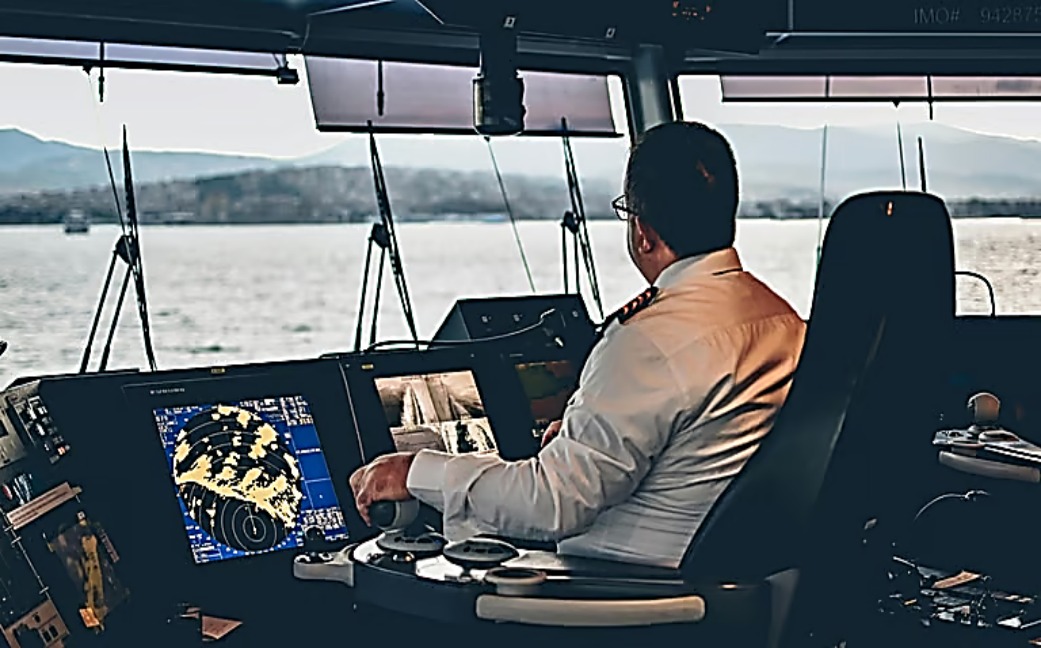
ISM Code – documented procedures disconnects crew’s experience.

Before the Port State Control was invented, the only code which was recognised was the Morse Code. Samuel Morse, the inventor of the Morse code and the electric telegraph, which used a system of dots and dashes to represent letters and numbers, now known as Morse code. In 1844, he had transmitted the first telegraph message, “What hath God wrought?”, from Washington to Baltimore.

Now the International Safety Management Code (ISM Code) has become long in the tooth and according to the IMO, requires updating and reform. Addressing a need for adequate oversight of ship management that was identified in 1987 as one of the consequences of the loss of the Ro-Pax ferry Herald of Free Enterprise, the ISM Code was finally mandated in phases, commencing in 1998 with passenger ships and high-speed craft. By July 2002, the remainder of the world fleet had implemented the code, which covered the organisation and specific procedures for shipping companies to control the safe operation of ships and the prevention of pollution.
There are four pillars of the ISM Code: Safety of Life at Sea (SOLAS) Convention; International Convention for the Prevention of Pollution from Ships (MARPOL); Standards of Training; Certification, and Watchkeeping for Seafarers (STCW).
The ISM Code in its current form was adopted in 1993 by resolution A.741(18) and was made mandatory with the entry into force, on 1 July 1998, of the 1994 amendments to the SOLAS Convention, which introduced a new chapter IX into the Convention.
Amendments to the ISM Code:
- 2000 by resolution MSC.104(73), these amendments entered into force on 1 July 2002.
- 2004 by resolution MSC.179(79), these amendments entered into force on 1 July 2006.
- 2005 by resolution MSC.195(80), these amendments entered into force on 1 January 2009.
- 2008 by resolution MSC.273(85), these amendments entered into force on 1 July 2010.
- 2013 by resolution MSC.353(92), these amendments entered into force on 1 January 2015.
It was a major change to the way the industry operated; detailed and quite complex, with a whole range of practical provisions, effectively codifying what the very best practitioners were already hopefully doing, but in ways that lent themselves to proper external audit. There were important obligations put on flag states, maritime administrations, ship managers and others, which extended to issues of liability and responsibility.
There is a disconnect between documented procedures and what crews experience. However, the shipping world in the last decade of the old century was very different to that of today, which is why there are now calls for the updating of the ISM Code to reflect present realities, rather than merely modernising the paperwork.
Has the code served its purpose? As with other regulatory matters, it might be suggested that those within the ambit of the code fall into one of three categories. There are those who would, because of their very high standards, fulfil every last facet of its requirements, which they regard as an absolute minimum. There are those who are compliant and will do what is necessary to remain so and, at the bottom of the pile, those who will go to considerable lengths to avoid and evade the code’s requirements, relying on useless flag states, hopeless port states and a practice of hoping for the best when an ISM inspection is due.
Some very trenchant remarks about the need for root and branch reform have come from the Columbia Group’s ship managers, who have pointed out that there is very unequal enforcement of the code’s provisions. Captain Saurabh Mahesh, the group’s director of crewing suggests, that there is a disconnect between documented procedures and what the crews experience. One can only hope that what is produced reflects modern practices. Reality has become separated from the paperwork and more needs to be done than just changing the language. Compliance, he says, has often just become “box ticking.”
It is undeniable that crews have become smaller, ships are run more intensively, and the pressure always is to deliver. The Columbia director points out that nowhere has this disconnect between procedure and reality become starker than with the falsification of rest hours records, which needs an injection of up to date technology to maintain their veracity and end the current scandal. It is perhaps unsurprising that this particular issue has come to the fore, with recent studies by the World Maritime University, given additional impetus by casualties involving exhausted watchkeepers. Many will agree that safe manning assessments need to reflect the age and trading patterns of the ships and that what are described as “adaptive work patterns” need to be taken up and properly enforced.
Crews, say the Columbia team, need flexible rest options, particularly in extreme weather or congested port calls. Busy ships, they suggest, need relieving officers, who can ease the burdens on the regular crew in such circumstances.
Surely this is both sensible and civilised? The IMO has tasked various working groups with the job of an ISM Code update over the next three years and one can only hope that what is produced reflects modern practices. Of course, one might suggest that sensible operators really don’t have to wait that long and if the industry is to find good people to run its ships and shore-side operations, working conditions and operating practices should be those acceptable to a 2025 workforce, rather than those that were just about tolerable in the past century.
Team Maverick






Shivakumar Says Congress United, Assures Women Will Get Cabinet Berth
Bengaluru, Aug 2026 : Karnataka Chief Minister D.K. Shivakumar on Monday sought to dismiss…

Shivakumar Says Congress United, Assures Women Will Get Cabinet Berth
Bengaluru, Aug 2026 : Karnataka Chief Minister D.K. Shivakumar on Monday sought to dismiss …