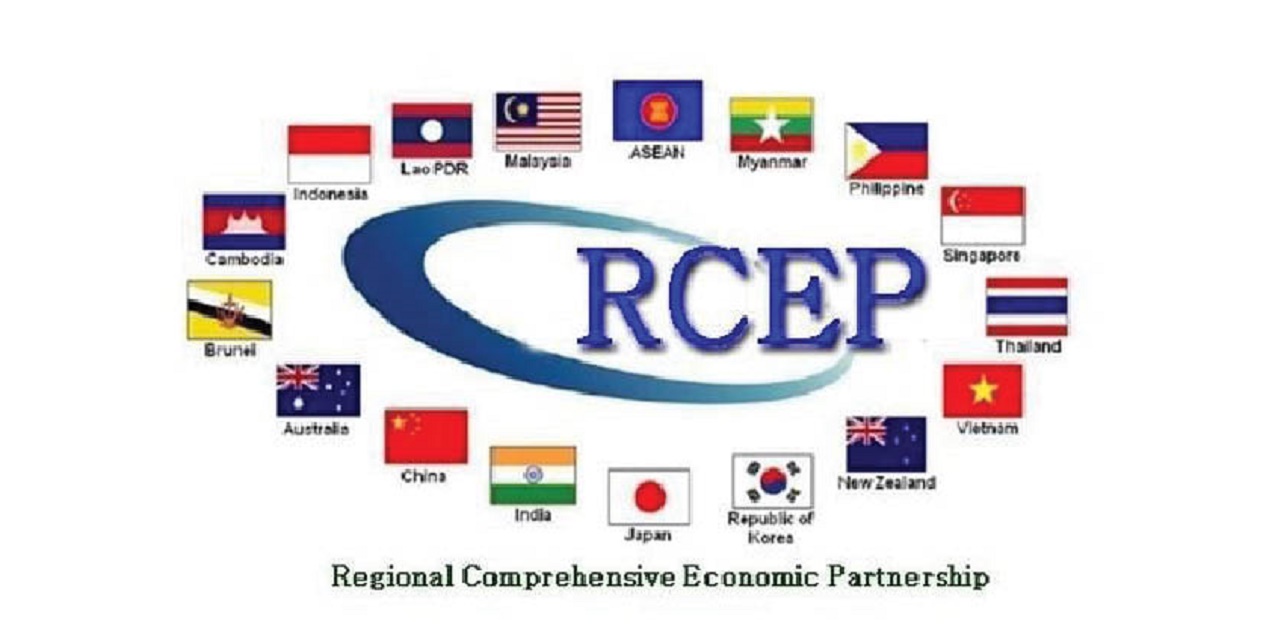
India should join RCEP, can target 7% GDP growth by focusing on East Asia.

American economist Jeffrey Sachs has urged that India must join Regional Comprehensive Economic Partnership (RCEP), stating that it would be a very dynamic way to grow for years to come. With the United States imposing a 50% tariff on Indian goods, Sachs reaffirmed that India could target 7% GDP growth in the coming decade by focusing on East Asia.
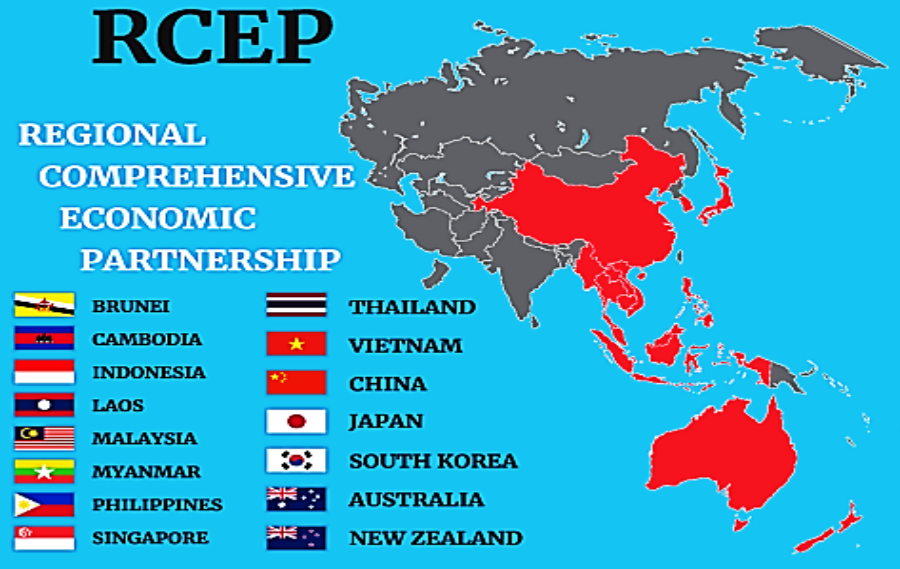
“I would recommend that India take a look once again at RCEP. RCEP constitutes 15 economies, including China, Japan, Korea, ASEAN, Australia, and New Zealand. India should be the 16th. Nation. India should be part of that. And that would be a very dynamic way to grow for years to come“, he said while addressing the Press.
He further added, “India needs a strategy that does not depend on export growth to the US market. You’re in the fast-growing part of the world. India should be achieving about 7% per year GDP growth in the coming decade. It can’t do that. But to do that, trade with China. Trade with Austria. Deepen the relations in East Asia“.
India in 2019 decided not to join RCEP, as the agreement was not addressing its concerns. During the 3rd. RCEP Leaders’ Summit, which was held on 4 November 2019 in Bangkok, India stated that the current structure of RCEP did not reflect the RCEP Guiding Principles or address the outstanding issues and concerns of India. In light of this, India did not join RCEP.
Sachs said US President Donald Trump’s policies “are doomed to fail”, saying they would not improve the American economy and isolate the country diplomatically. “From an economic point of view and a geopolitical point of view, Trump’s policies are doomed to fail. They will not improve the US economy. They will isolate the United States geopolitically. They will strengthen the BRICS and other groups“, he said.
He further stressed that India must maintain an independent position in its foreign policy. “India is so big, so important, such a great power. It should say we don’t ally with the United States against China. We have our own relations. We need our bilateral relations with China”.
On the US-China trade conflict, Sachs said Washington cannot win, “No, US can’t win a trade war with China. US can’t win a trade war with China. Not even close. I found after two days, the first time around, China said, No. And the US said, Okay, we’ll delay it”.
Donald Trump had first announced 25% tariffs on Indian goods in July, even as there were hopes of an interim India-US trade deal that would have otherwise helped avoid elevated tariffs. He imposed 25% additional tariff shortly after, citing India’s continued imports of Russian oil, taking the total to 50%.
India and the US initiated talks for a just, balanced, and mutually beneficial Bilateral Trade Agreement (BTA) in March this year, aiming to complete the first stage of the Agreement by October-November 2025. The US is keen on greater access to India’s sensitive agriculture and dairy sectors, which provide livelihood to a large section of people. On April 2, 2025, President Trump signed an executive order for reciprocal tariffs on various trade partners, imposing varied tariffs in the range of 10% – 50%. He subsequently kept the tariffs in abeyance for 90 days, while imposing a 10% baseline tariff, providing time and space for making trade deals. The deadline was initially set to end on July 09th., but the US administration later pushed it to August 01st.
The full 50% tariffs on India were announced ahead of the deadline. Earlier this month, Commerce and Industry Minister Piyush Goyal told Parliament that the government is examining the impact of tariffs and will take all necessary steps to safeguard the national interest.
Team Maverick


Deepti’s Five-Wicket Magic Powers India to Dominant Win Over Pakistan
Birmingham, June 2026 : India launched their ICC Women’s T20 World Cup 2026 campaign in co…
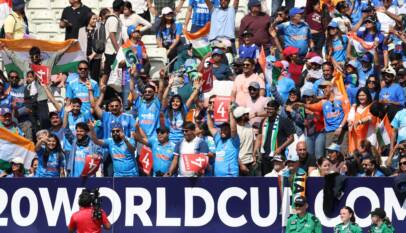
Deepti’s Five-Wicket Magic Powers India to Dominant Win Over Pakistan
Birmingham, June 2026 : India launched their ICC Women’s T20 World Cup 2026 campaign …