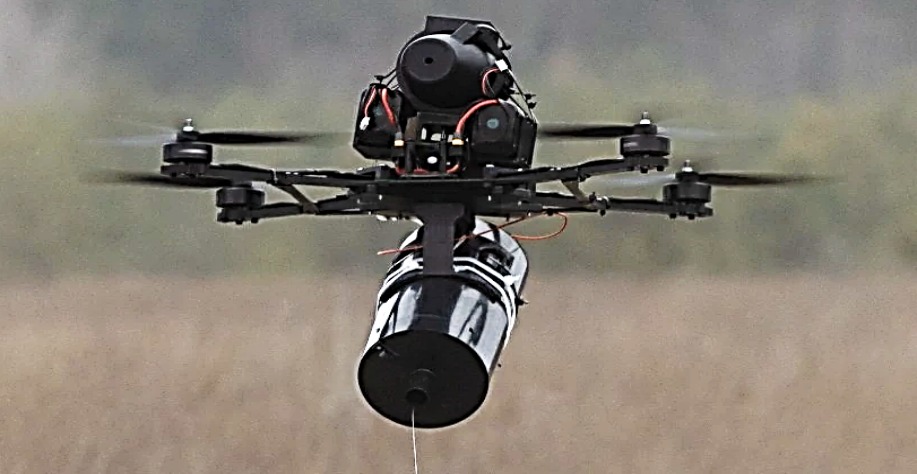
Ukraine’s New 100-Km FPV Drone Ditches Radio to Outsmart Jamming.

Ukrainian firm Fold is developing a fibre-optic first-person view (FPV) drone that could fly nearly 100 kilometres (62 miles), doubling the reach of current models. Fold’s fibre-optic design is based on FPV quadcopters, small commercial systems that cost only a few hundred dollars but can carry enough explosives to take out armored vehicles.
Instead of relying on radio frequency links vulnerable to jamming, the drone uses a long spool of cable to stay connected to its operator, keeping it effective even under electronic attack. That resilience leaves defenders with few counters. Shotgun fire is often the only option, and even then, success may depend largely on luck. While fibre-optic drones are not entirely new in Ukraine, the latest development marks a significant milestone: enabling greater range despite being physically tethered by a cable.
Fold began developing drones that flew about 5 kilometres (3 miles), later pushing to 15 and 25 kilometres (9 and 16 miles). It also explored 40 to 50 kilometre (25 to 31 miles) designs for mid-range strike missions. Now, the company is pushing the limits with a second generation expected to reach up to 100 kilometres (62 miles). That extended reach, however, comes with trade-offs. Spools can snag on obstacles, add weight that reduces payloads, and demand larger frames that drive up costs and limit agility.
Even so, Ukraine has pressed ahead with testing fibre-optic FPV designs from several domestic manufacturers, with operators evaluating versions capable of carrying warheads of up to 3 kilograms (6.6 pounds). “Today, war has changed”, Fold co-founder Volodymyr, who asked to be identified only by his first name for security reasons, told Media. “The flight range of 10-15 kilometres is often insufficient to destroy large enemy targets”.
Team Maverick








India Accuses China of Violating Sovereignty Through Illegal Projects in Jammu & Kashmir and Ladakh
New Delhi, July 2026 : India on Friday strongly accused China of violating its sovereignty…

India Accuses China of Violating Sovereignty Through Illegal Projects in Jammu & Kashmir and Ladakh
New Delhi, July 2026 : India on Friday strongly accused China of violating its …