Argentinian Currency Peso plunges after President Milei’s rhetoric comparison with Paraguay.

Argentine markets fell on Thursday as the government downplayed a central bank intervention the day before while facing heightened opposition to President Javier Milei’s agenda in Congress and on the streets as critical elections approach. Moreover, as reported by Maverick News earlier, that President was found rhetorically critical about his country’s economic performances while drawing a sharp contrast with that of Paraguay.
Pressure has mounted on Argentina’s Peso, as investors move to convert their holdings into dollars, with the local currency hitting a record low on the parallel exchange market after the central bank intervened in the wholesale currency market for the first time in five months. Since April, when Argentina inked a $20 billion deal with the International Monetary Fund, the exchange rate has operated within a daily floating band, and the central bank must step in when the currency hits the upper or lower limits.
On Wednesday, the monetary authority sold $53 million as the country’s risk index – a measure of investor confidence – climbed to 1,300 basis points, the highest level in the past year. On Thursday, the risk index jumped to 1,429 basis points, according to data from traders, while Argentina’s benchmark stock index fell more than 4%, and sovereign bond prices were down an average of 3.3%, continuing a downward trend.
As of 14:45 GMT, the interbank exchange rate was stable at 1,474.5 pesos per dollar under the central bank’s close watch. The central bank has begun publicly announcing the band’s limits, which for Thursday were set at 1,474.83 for sales and 948.76 for purchases.
According to the country’s brokers, the market is “testing the ceiling” of the band ahead of midterm elections scheduled for October 26. The central bank’s own projections show the top end of the band reaching 1,494.04 pesos per dollar by October 27, the day after the elections, and further devaluing to 1,526.6 by year-end. Demand for the dollar, a traditional safe-haven asset for Argentines, has spilled over into the parallel or “blue” market. There, traders on Thursday reported the peso fell to a historic intraday low of 1,505 per dollar.
Milei’s spokesman Manuel Adorni on Thursday sought to ease concerns about Wednesday’s central bank intervention. “The economic program, which includes fiscal, monetary and exchange-rate policies, is consistent, and the fundamentals are correct“, Adorni stated at a press conference. “The system is designed to avoid any problems when operating within the established currency band“.
Analysts, however, warned that continued intervention by the central bank would deplete the country’s international reserves. Selling pressure on Argentine government bonds has picked up amid concerns the country may struggle to meet upcoming debt obligations. Preliminary official data show Argentina’s reserves at around $39.78 billion. Argentine sovereign bonds as high-risk, with interest rates that reflect the country’s economic challenges. While long-term bonds could see significant gains if Argentina’s risk profile improved, such a scenario appears unlikely without a substantial buildup of reserves. Moreover, the external debt payments through 2027 total $34 billion. To cover these obligations without pushing net reserves below zero, Argentina would need an additional $27 billion beyond its current reserves.
Argentines in just over a month will vote to replace chunks of both chambers of Congress, which is currently controlled by Milei’s opposition. The upcoming election has created anxiety in markets, as a recent defeat for the ruling party in a local election in the influential province of Buenos Aires triggered a rush to buy dollars, a collapse in asset prices, and a spike in the country risk.
Recent legislative defeats for Milei’s administration in Congress have also raised doubts about the government’s ability to maintain its planned fiscal surplus. As thousands of Argentines filled the streets of downtown Buenos Aires on Wednesday to demand increased funding for universities and pediatric care, Congress approved two bills to increase budgets for health and education – sectors subject to Milei’s sharp spending cuts.
Team Maverick
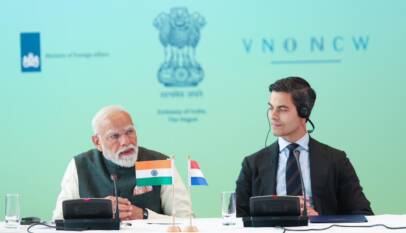


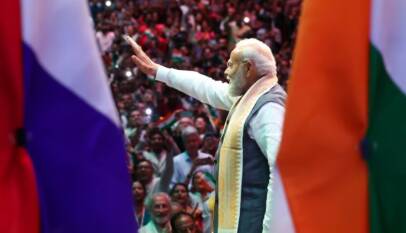



India–Netherlands Elevate Ties to Strategic Partnership, Unveil Ambitious 5-Year Roadmap for Cooperation
The Hague, May 2026: In a landmark diplomatic development that signals a new phase in Indi…
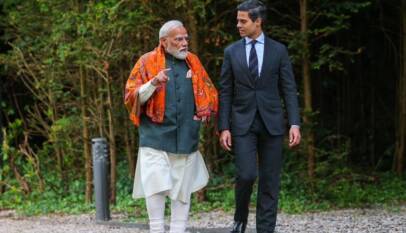
India–Netherlands Elevate Ties to Strategic Partnership, Unveil Ambitious 5-Year Roadmap for Cooperation
The Hague, May 2026: In a landmark diplomatic development that signals a new phase …