University of Cambridge marks birth centenary of IVF pioneer Sir Robert Edwards.

“Scientists studying human reproduction at the University of Cambridge
today are building on Sir Bob Edwards’ incredible legacy” # Kathy Niakan.
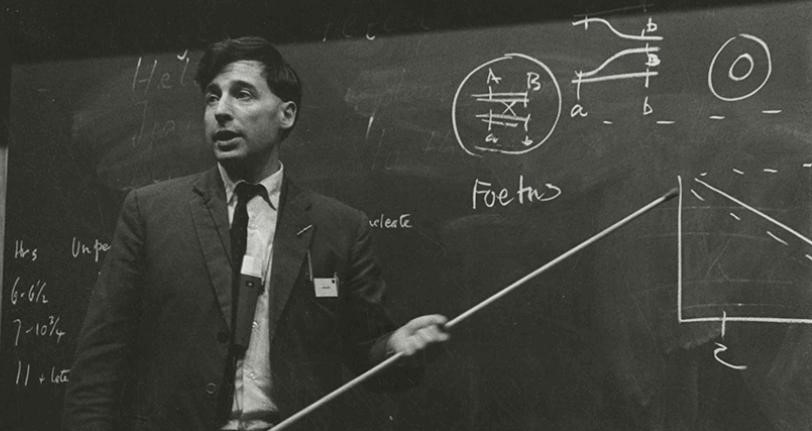
Sept 2025 : On 26th. September, 2025; Celebrations at the University of Cambridge were staged to honour the life, work and legacy of Sir Robert Edwards, whose work revolutionised fertility treatment through the invention of in vitro fertilisation. Sir Robert Edwards was born on 27th September, 1925.
A Nobel prize-winner and one of the most influential scientists of the twentieth century, Edwards spent much of his career in the Department of Physiology at the University of Cambridge. Researchers have estimated that till date there have been over 13 million babies born from IVF worldwide.
Together with gynaecologist Patrick Steptoe and technician and embryologist Jean Purdy, Edwards pioneered the technique of IVF, in which eggs are fertilised by sperm in a laboratory, creating an embryo that is transferred into a woman’s womb to achieve pregnancy. Their breakthrough came when the first IVF baby, Louise Brown, was born in July 1978, marking the beginning of a new era of medicine.
The celebration commenced with speeches and discussion, embracing science and clinical practice, at the Physiology Lecture Theatre, the building where Edwards succeeding in fertilising a human egg in a test tube, involving clinicians and scientists who were trained or inspired by Edwards. This was followed by an evening panel discussion which was open to the public at Churchill College, Cambridge, where Edwards was a Fellow from 1979 and a Member from 1974.
Among the evening panellists, Louise Brown – the first IVF baby, Dr. Jenny Joy – the second of Edwards’ five daughters, Emma Barnett – British Broadcaster and Journalist with a young IVF child, and Dr. Mike Macnamee – former CEO of the world’s first IVF clinic, Bourn Hall Clinic, which was established in 1980 by Edwards together with Steptoe and Purdy.
“Scientists studying human reproduction at the University of Cambridge today are building on Sir Bob Edwards’ incredible legacy. Many of their careers overlapped with his, and now they’re developing his science further, and also building on his pioneering contributions to the ethics of assisted reproduction”, said Professor Kathy Niakan, Director of the University of Cambridge’s Loke Centre for Trophoblast Research, who has chaired the scientific sessions at Friday’s event. She added: “To be part of this field today is a unique opportunity for discovery and innovation, and a great honour to carry forward Sir Bob Edwards’ vision in advancing our understanding of human reproduction”.
Dr Jenny Joy, Edwards’ daughter, said, “Our family is delighted to be involved in this event, working with the Loke Centre in the Physiology Department and Churchill College, which both meant a great deal to our father”.
Edwards joined the University of Cambridge in 1963, and went on to win the Nobel Prize in 2010 for his work, by which time around four million people had been born following IVF treatment. Edwards died in 2013, aged 87.
Infertility affects over 10% of all couples worldwide, and IVF is now one of the most commonly used and successful fertility treatments available.
Team Maverick







Bethell, Brook Power England to Thrilling Four-Wicket Win Over India, Take Series Lead
Manchester, July 2026 : England produced a remarkable comeback with the bat as Jacob Bethe…

Bethell, Brook Power England to Thrilling Four-Wicket Win Over India, Take Series Lead
Manchester, July 2026 : England produced a remarkable comeback with the bat as Jacob …