NATO’s Hypersonic Defense Problem Is Industrial, Not Technological.

Oct 2025 : Russian drones crossing into Poland and forcing NATO intercepts have ended the illusion that the Alliance’s air defences can be tested safely in exercises. This is no simulation: Moscow is probing NATO’s borders with live ordnance, and each incursion turns Poland’s skies into a frontline. The Alliance is being stress-tested in real time, whether it is ready or not.
Russia fired its new Oreshnik missile at Dnipro in November 2024, the strike mattered less for the damage than for what it revealed: Moscow can field and employ new hypersonic-class systems in combat. NATO took notice.
The Alliance is not defenceless. Ukrainian Patriot batteries have already intercepted Kinzhal, missiles once marketed by Russia as “unstoppable”. But the Oreshnik strike underscored a more immediate danger. NATO’s defences are not keeping pace with the threat environment because our industrial and procurement timelines are too slow. This is not primarily a question of physics. It is a question of production, stockpiles, and speed.
Russia and China are both pressing their advantages. Russia fields a mix of fast and manoeuvrable systems namely Kinzhals, Zircons, and Iskanders those which stresses Ukrainian and NATO defences daily. China’s missile arsenal is larger and more systematic. Its DF-17 glide vehicle and anti-ship ballistic missiles (DF-21D and DF-26) are designed to hold U.S. and allied forces at risk. None of these weapons are magical, but they are being produced and deployed at scale.
The Alliance’s challenge is less about invention than about execution. NATO has the building blocks in place. The United States already operates space-based infrared satellites that can detect launches globally, and new layers like the Hypersonic and Ballistic Tracking Space Sensor and the Space Development Agency’s Tracking Layer are beginning to provide continuous tracking of manouvering threats. Interceptors like Patriot have already destroyed Kinzhals in combat. Glide-phase interceptors are in development through the U.S.–Japan program, and Europe has its own concept study in HYDIS².
The problem is timelines. Glide Phase Interceptor is scheduled for the 2030s. HYDIS² is still at the drawing board. European programs like SAMP/T upgrades remain incremental. Meanwhile, Russian, and Chinese missiles are in service now. The real bottleneck is industrial. Ukraine demonstrates economics daily. A single PAC-3 interceptor costs around $4 million. Defenders typically fire two per incoming missile. Russia is estimated to build Kinzhals for roughly $10–15 million each. The exchange is survivable in isolated cases but unsustainable in sustained campaigns. NATO has already ordered up to 1,000 Patriot interceptors through its support agency, a $5.5 billion contract, but that only begins to close the gap.
This is where political urgency must shift. NATO cannot treat hypersonic defence as a research project stretching into the next decade. We need immediate investment in production capacity for interceptors across the Alliance. That means more PAC-3s, more SM-6s, more Asters, and faster fielding of upgrades. It means hardening and dispersing bases so fewer interceptors are needed in the first place. It means decoys and deception as standard operating procedure. Europe has taken important steps. Germany’s Sky Shield initiative, NATO’s joint Patriot procurement, and French–Italian modernization of SAMP/T show a renewed seriousness about air and missile defence. HYDIS², though still in its early phases, is at least a recognition that Europe needs its own counter-hypersonic capabilities. But the pace of these programs remains out of sync with the speed of the threat.
Unless European governments accelerate procurement and expand industrial output, NATO will remain too heavily reliant on U.S. assets. That is not about replacing American leadership; it is about ensuring the Alliance’s deterrence rests on broad, shared capabilities. Congress also has a role to play.
Appropriations for HBTSS, SDA Tracking Layer, and Glide Phase Interceptor must remain fully funded and shielded from delays. At the same time, U.S. lawmakers should press allies to match American urgency. Co-funding agreements, multinational production lines, and joint stockpiling should become the norm, not the exception. The lesson of Oreshnik is not that NATO is defenceless. It is that NATO’s defence will be decided in the factories, not in the labs. The technologies exist. What matters now is how quickly the Alliance can produce, procure, and deploy them at scale.
The danger is not a single “unstoppable” missile. The danger is running out of interceptors on day five of a conflict because we spent a decade studying the problem instead of building the solution. NATO has no time for complacency. The only acceptable response is acceleration.
Team Maverick








France Likely to Respond by Mid-August on India’s Mega 114-Rafale Fighter Jet Proposal
New Delhi, July 2026 : France is expected to submit its official response by mid-August to…
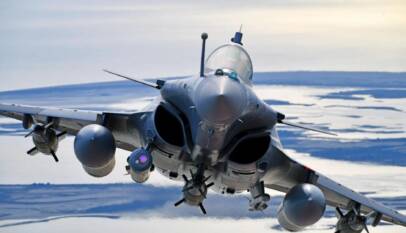
France Likely to Respond by Mid-August on India’s Mega 114-Rafale Fighter Jet Proposal
New Delhi, July 2026 : France is expected to submit its official response by …