In landmark Labour Case, International Court of Justice weighs in on Right to Strike.

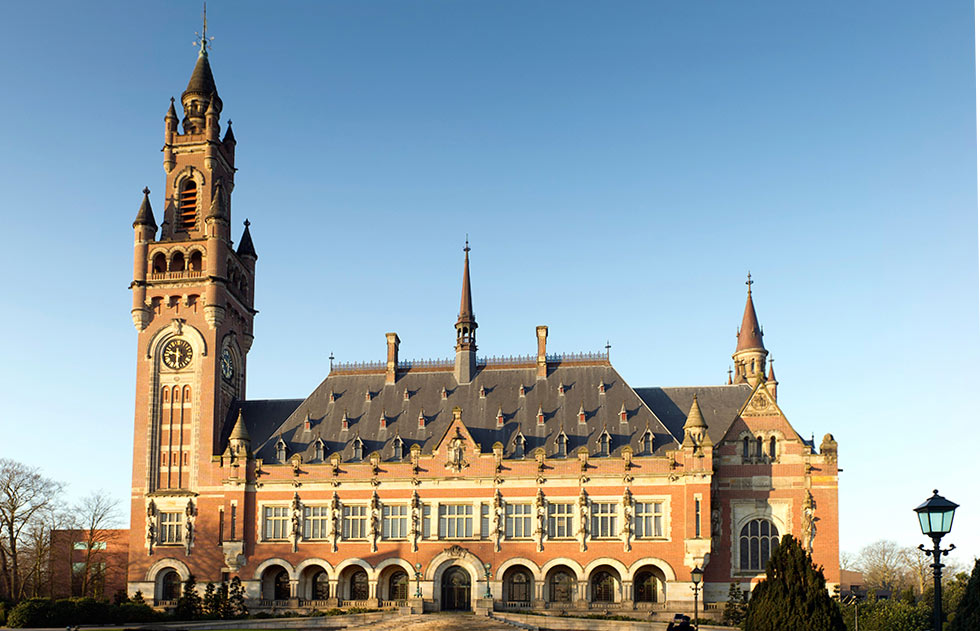
The International Court of Justice (ICJ) opened hearings on Monday to determine whether the right to strike is protected under international law. It is the first time that the world’s top court has been asked to weigh in on the balance between workers’ rights and employers’ interests.
The case stems from a 2023 request by the Governing Body of the International Labour Organization (ILO), which asked the Court for an advisory opinion on whether the Freedom of Association and Protection of the Right to Organise Convention, 1948 (No. 87) includes the right to strike.
Adopted in the aftermath of World War Two, Convention 87 is a cornerstone of international labour law, guaranteeing workers and employers the right to form and join organisations of their choosing. It does not explicitly mention strikes, but advocates have long interpreted freedom of association to include that right.
ICJ President Yuji Iwasawa began Monday’s proceedings by reading the formal question to the judges, referencing the ILO’s resolution and the Court’s procedural authority. He noted the “tripartite structure of the ILO, which is comprised of representatives of governments, employers and workers”.
Tomi Kohiyama, ILO Legal Adviser, recalled that the ILO had not appeared before the ICJ in a consultative capacity since 1932, underscoring the rarity of such requests. She said the ILO Secretariat would not take a position on subject but would assist the Court by clarifying institutional context and interpretative approaches under the Vienna Convention on the Law of Treaties.
“The participation of organisations of employers and workers, is without precedent in the history of your august institution”, she added, referring to the ILO’s tripartite nature.
Founded in 1919, the ILO is unique within the UN system for its tripartite structure, bringing together representatives of governments, employers and workers to set international labour standards. That balance, however, has sometimes led to deadlock, most notably in 2012, when employer groups challenged whether Conventions No. 87 and 98 recognise a right to strike.
Paapa Danquah, speaking for the International Trade Union Confederation (ITUC), described strikes as a timeless expression of collective action. “Strike action has been our vital tool to improve labour conditions and to defend our human dignities”, he told the court. He further argued that the right to strike is inherently part of freedom of association and thus should be recognised as protected under Convention No. 87.
In contrast, Roberto Suárez Santos, on behalf of the International Organisation of Employers (IOE), asserted that while the right to strike is not objectionable in principle, Convention No. 87 neither explicitly nor implicitly covers the right to strike. He warned that to read it into the Convention now would impose a prescriptive regime, thereby defining modalities of strike, that could disrupt nuanced national labour systems. He expressed that the proper path would be consensus within the ILO’s tripartite bodies, not unilateral judicial elevation of standards.
ICJ advisory opinions –
Over three days of hearings, 21 countries and organisations are expected to take the stand, with 31 written statements already filed in the ICJ Registry – reflecting global interest in the outcome. The Court’s advisory opinion, expected in the coming months, will not be legally binding but could profoundly influence international and national labour law.
Team Maverick


Trump Says Netanyahu May Visit White House Soon as US Pushes to Reset Middle East Strategy
Washington, July 2026 : US President Donald Trump has indicated that Israeli Prime Ministe…
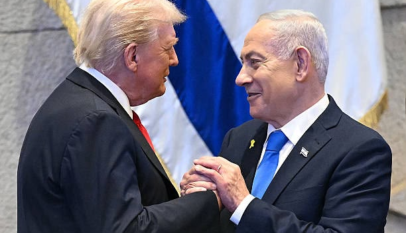
Trump Says Netanyahu May Visit White House Soon as US Pushes to Reset Middle East Strategy
Washington, July 2026 : US President Donald Trump has indicated that Israeli Prime Minister …