Will Brussels Finally Suspend Georgia’s Visa Free Regime?

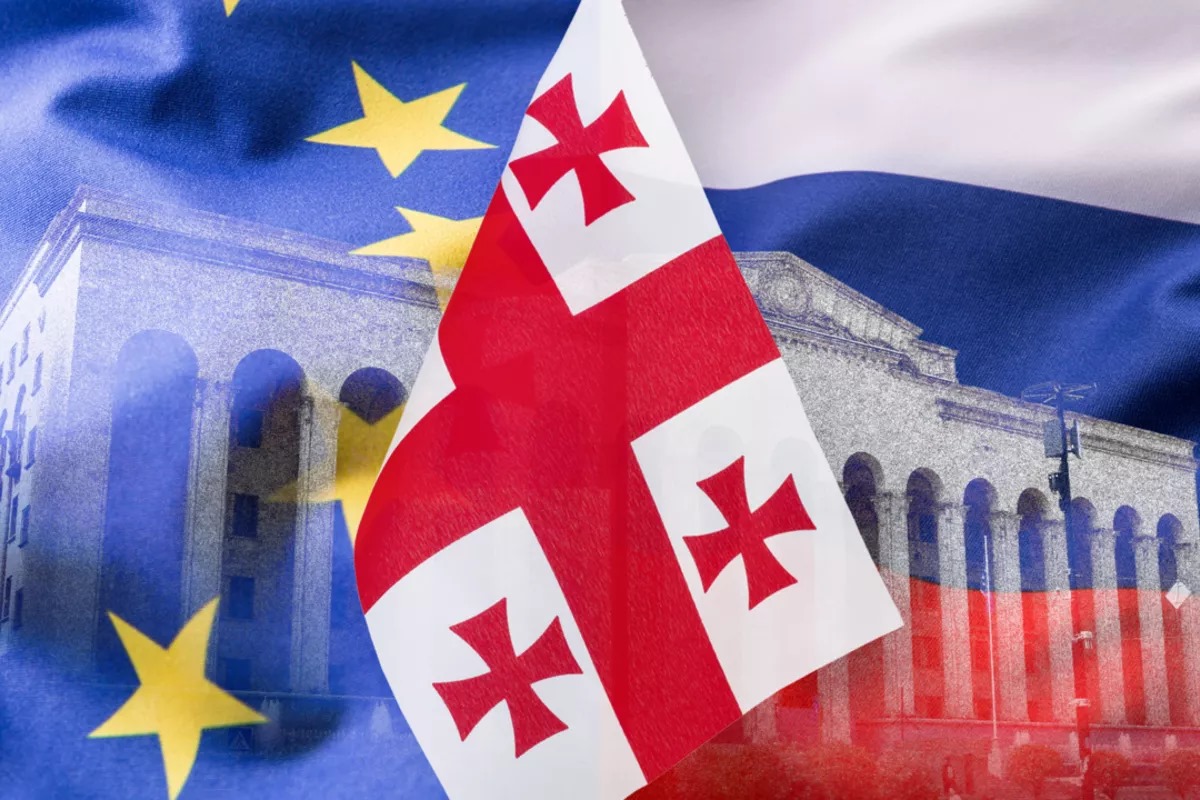
The European Union is set to approve new rules that would make it easier to suspend visa liberalisation for third-country nationals traveling into the bloc, a measure aimed in large part at Georgia amid signs Tbilisi is drifting away from democratic reforms and back toward Moscow’s sphere of influence.
The European Parliament is expected on October 7 to give its approval to the new legislation and EU member states are expected to follow suit on November 17 with the new rules set to enter into force in December. The measures will apply to all 61 countries that enjoy a visa-free regime within the bloc, including all the EU hopefuls in the Western Balkans, Moldova, and Ukraine. But European diplomats admit that the proposed updated rules, at least partly, target another country still enjoying EU visa liberalisation: Georgia.
The South Caucasus republic has been on a collision course with Brussels for a long time with Tbilisi adopting both anti-LGBT legislation and a so-called “foreign agent” law, while similar legislation has been used by the Kremlin to crack down on free speech and civil society last year amid heavy EU criticism. The relationship deteriorated further after parliamentary elections in October last year in which the ruling Georgian Dream party controversially clung on to power and then decided to halt accession talks while adopting what many including Brussels see as Russia-friendly policies.
The situation prompted massive demonstrations, which were put down violently by authorities. Local elections over the weekend, where Georgian Dream further cemented its grip on power, reignited demonstrations. Riot police responded with water cannons to break up what officials claim was “an attempted coup planned by foreign intelligence services“. Further demonstrations are expected in the Georgian capital on October 6.
Since the October 2024 elections, the EU has refrained from high-level political contacts and made it easier for EU member states to impose national visa restrictions for high-ranking Georgian officials. Brussels has, however, failed to impose sanctions on high-ranking Georgian politicians as Hungary and Slovakia repeatedly have vetoed the move, which requires unanimity among the 27 member states.
The bloc has instead looked into targeting the country’s visa-free regime, in place since 2017, as this doesn’t require consensus. The European Commission warned the Georgian government about this in a letter in July, asking for a number of clarifications by the end of August. Tbilisi responded but, according to several EU officials, Brussels was unimpressed with the response.
In the meantime, EU member states and the European Parliament have spent the first half of 2025 negotiating new rules to trigger the visa-liberalisation suspension mechanism, which may be used on Georgia later this year. The new rules open ways to trigger the mechanism. The reasons currently are tied mainly to classic “home affairs issues” such as large numbers of nationals from a country that enjoys visa-free travel overstaying the 90 days they are allowed to stay in the bloc, or even using the opportunity to seek asylum in the EU.
A new ground for suspension includes a lack of alignment of a country’s visa-free regime with the EU’s visa policy. An example of this would be that a country that has visa-free travel with the EU and also has visa freedom for Russian citizens. With Brussels keen to limit the influx of Russian citizens, the new legislation would allow the EU to close a potential alternative route into the bloc.
Another new ground for suspension is if a third country runs an investor citizenship scheme, known as “golden passports”.
“Hybrid threats” is a third, new criteria. This can be something like what the EU calls “state-sponsored instrumentalisation of migrants”, an example being Belarus (which doesn’t enjoy visa liberalisation with the EU) flying in people from Asia and Africa to Belarus and then pushing them toward the borders of Latvia, Lithuania, and Poland.
But it is the fourth new reason that appears to be the one that puts Tbilisi’s visa liberalisation in the crosshairs: a deterioration in the EU’s external relations with a third country, notably when it comes to human rights and fundamental freedoms.
There are also a few other notable changes to the visa suspension rules. Visa liberalisation suspension is always temporary at first. In the current legislation the temporary suspension is for 09 months and can be extended for a further 18 months.
In the new proposal, the initial suspension will be 12 months and the prolongation 24 months, bringing the potential total to 03 years. EU diplomats say this is to give extra time for the European Commission to engage with the third country to rectify any issues.
But there is another change that specifically targets Georgia. Under the current legislation, one can limit the visa-free suspension to decision-makers such as ministers and officials in the first temporary suspension period, with it affecting a country’s entire population during the prolongation period.
Under the new rules, the entire population may be unaffected during the entire three-year period, thus sparing ordinary citizens. This is relevant for Georgia as many in Brussels are wary of hitting the population for something they feel is the responsibility of the government. Regular citizens would only
be affected if their country fails to be removed from the visa-free list after the three-year period.
It is worth remembering that for a temporary suspension, the European Commission can make the decision on its own, without a vote in the European Parliament or among EU member states. It is, however, common practice that the commission consults widely with national capitals. A qualified majority (55% of EU member states comprising 65% of the total EU population) is required to remove a country’s visa-free regime with the club. From official sources it has been learned that as many as 19 EU member states would consider supporting at least a temporary suspension.
The European Parliament plenary is in full swing this week, and it’s worth watching out for Greenland Prime Minister Jens-Frederik Nielsen’s address to the chamber on October 8. US President Donald Trump has expressed an interest in the giant Danish island ever since he re-elected to the White House earlier this year but Greenlanders seemingly rebuffed American overtures in parliamentary elections earlier this year. They might instead seek closer ties with the EU after withdrawing from the EU’s predecessor, the European community, back in 1985.
Team Maverick




Trump Says US Delayed Planned Iran Strike After Gulf Nations Sought More Time for Diplomacy
Washington, May 2026 : US President Donald Trump said that he postponed a planned military…
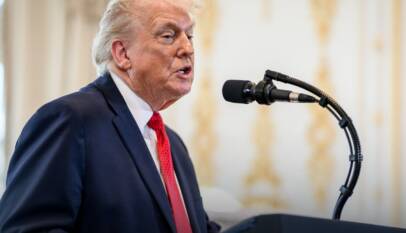
Trump Says US Delayed Planned Iran Strike After Gulf Nations Sought More Time for Diplomacy
Washington, May 2026 : US President Donald Trump said that he postponed a planned …