European Union to announce the 19th sanction package against Russia on 23rd October.

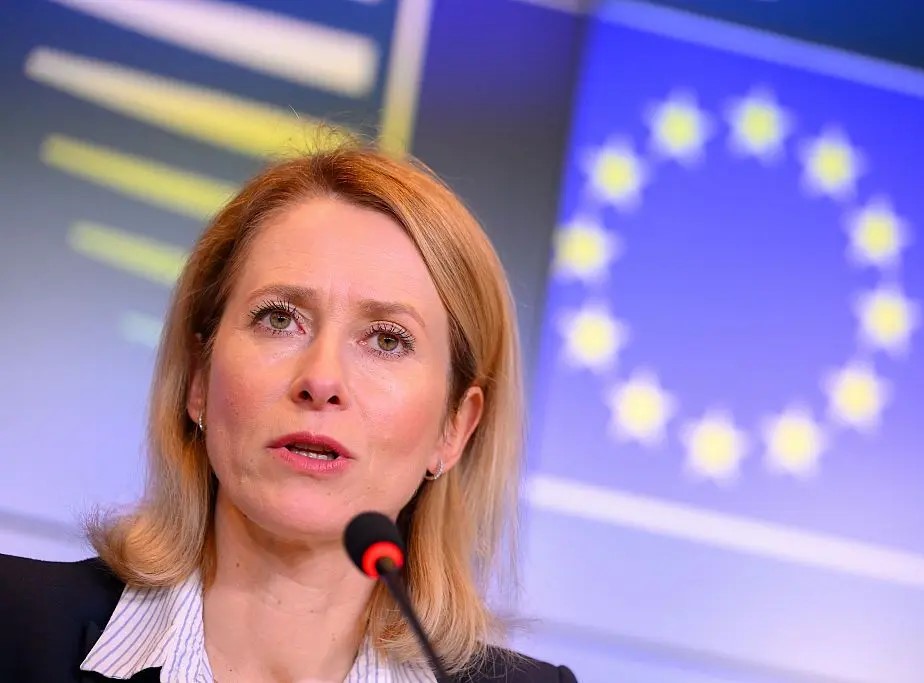
The European Union’s 19th package of sanctions against Russia would be announced on October 23rd, as asserted by the EU Foreign Policy Chief Kaja Kallas during a meeting of EU foreign ministers in Luxembourg today.
The package, unveiled by the European Commission on September 19th, targets Russian banks, energy revenues, and networks involved in circumventing existing restrictions imposed over Moscow’s full-scale war against Ukraine. “We are expecting this week, also, to adopt a 19th package of sanctions. Unfortunately, not today, but we have also a leaders’ meeting coming up on Thursday (October 23rd)“, Kallas said.
Austria dropped its opposition earlier this week, removing a key obstacle to the bloc’s agreement. Vienna had held up the sanctions over demands that the EU compensate Austria’s Raiffeisen Bank for losses linked to Russian countermeasures, a proposal which have been rejected by other member states.
Slovakia, which had also voiced reservations, remains the only country blocking the sanctions, according to EU diplomats. Bratislava has requested that the issue be addressed at the upcoming EU leaders’ summit on October 23rd. The European Commission is expected to communicate with Slovakia in an effort to resolve the deadlock.
Meanwhile, the proposed sanction package includes:
- a complete import ban on Russian liquefied natural gas (LNG), with the measure expected to take effect in January 2027, which is a year earlier than the previously planned phase-out of Russian energy imports.
- a full transaction ban on Russia’s state energy companies Rosneft and Gazpromneft, sanctions on 118 vessels of the so-called “shadow fleet”, and penalties against third-country traders and refineries, particularly in China.
For the first time, the EU will also impose restrictions on crypto platforms and on banks in Russia and other countries that facilitate sanctions evasion. The package further targets 45 Russian and third-country companies accused of supplying Moscow with dual-use goods.
The previous sanctions package, approved on July 18, was described by EU officials as the “strongest to date”, focusing on curbing Russia’s oil revenues by lowering the price cap on seaborne exports to $47.60 per barrel and sanctioning over 100 vessels involved in sanction evasion.
Alongside the sanctions on Russia, Ukraine is striving to strengthen its militia against Russia. Volodymyr Zelensky is looking to acquire 25 more Patriot air defence systems in a long-term arrangement with the United States, as he had briefed the media today. “I consider this a very positive story, a complex one, but a long-term one“, he stated.
First delivered to Ukraine under the Biden administration in 2023, the Patriot surface-to-air missile system remains critical for defending against mass Russian missile attacks on Ukrainian military targets and civilian infrastructure.
Zelensky’s comments came after a whirlwind trip to Washington, where, on top of a reportedly tense meeting with U.S. counterpart Donald Trump, he has also met with defence industry representatives, including Patriot manufacturer Raytheon. “We devoted a lot of time to communication with companies, and to conversations at the White House and personally with the President“, Zelensky said.
It is mention worthy that since the assumption of office, Trump’s 2.0, no new major U.S. funding packages for new military aid to Ukraine have been passed, raising concerns about Kyiv running out of key systems like the Patriot.
In response, European countries have agreed to pick-up the bill, with the new Prioritised Ukraine Requirements List (PURL) mechanism launched this fall between the U.S. and other NATO member states. Still, despite the new initiatives, overall deliveries of foreign military aid to Ukraine dropped dramatically over the last months, according to research reports published on October 14th.
With Russian mass missile attacks into Ukraine’s rear once again targeting energy infrastructure ahead of winter, and air defence stocks stretched by years of regular barrages, Ukraine’s ability to field Patriot systems is seen as crucial for its continued resistance to Russia’s aggression.
As the most advanced Western-manufactured air defence system and the only one capable of consistently shooting down Russian ballistic missiles, the Patriot is in high demand, with years-long waiting lists both for the batteries themselves and for the interceptor missiles.
Given the constraints, Kyiv hopes to prioritise the delivery of Patriots stationed by the U.S. in Europe, Zelensky said. According to the President, the proposed contract for 25 Patriot systems would be carried out over several years with different quantities each year.
Currently, losses notwithstanding, Ukraine has been delivered at least seven full Patriot batteries, including by the U.S., Germany, the Netherlands, and Romania, as well as an unannounced battery of Israeli origin that was reported by Zelensky to have begun working in Ukraine around late summer.
Team Maverick





Chandrababu Naidu Reviews Preparations for PM Modi’s August 1 Inauguration of Bhogapuram International Airport
Amaravati, July 2026 : Andhra Pradesh Chief Minister N. Chandrababu Naidu on Monday conduc…

Chandrababu Naidu Reviews Preparations for PM Modi’s August 1 Inauguration of Bhogapuram International Airport
Amaravati, July 2026 : Andhra Pradesh Chief Minister N. Chandrababu Naidu on Monday conducted …