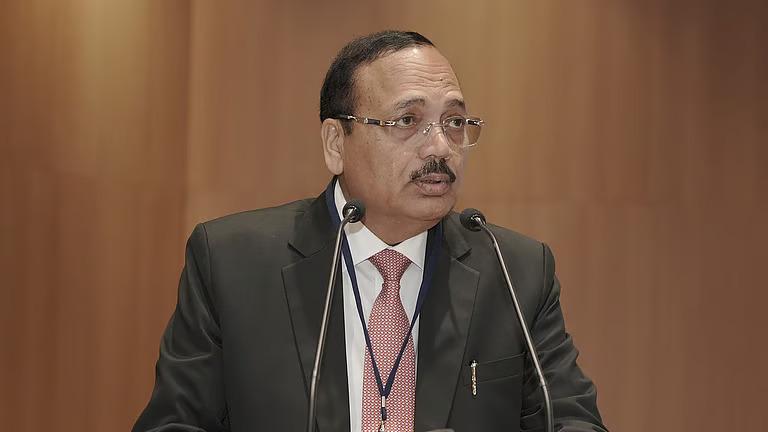
Justice Surya Kant to Take Oath as 53rd Chief Justice of India, Prioritises Reducing Case Backlog

New Delhi, Nov 2025 : Justice Surya Kant will be sworn in on Monday as the 53rd Chief Justice of India (CJI), beginning what will be a 14-month tenure at the helm of the country’s judiciary. President Droupadi Murmu will administer the oath of office at Rashtrapati Bhavan. Justice Kant succeeds outgoing CJI Bhushan R. Gavai, who retired on Sunday upon attaining the age of 65.
President Murmu appointed Justice Surya Kant under clause (2) of Article 124 of the Constitution, acting on the recommendation of CJI Gavai. With this, the long-standing convention of naming the senior-most Supreme Court judge as the next Chief Justice has been maintained.
A Distinguished Legal Journey
Born on February 10, 1962, in a middle-class family in Haryana, Justice Surya Kant began his legal practice in Hisar in 1984 before shifting to Chandigarh to appear before the Punjab and Haryana High Court. Over the years, he handled a wide range of constitutional, civil, and service matters, representing universities, corporations, banks, statutory boards, and even the High Court.
In July 2000, he became the youngest Advocate General of Haryana. A year later, he was designated a senior advocate. On January 9, 2004, he was elevated as a permanent judge of the Punjab and Haryana High Court. He subsequently served as Chief Justice of the Himachal Pradesh High Court from October 2018 until his elevation to the Supreme Court on May 24, 2019.
Since November 2024, he has also served as Chairman of the Supreme Court Legal Services Committee, contributing to expanding access to justice.
Priorities as the New Chief Justice
Speaking to the media on Saturday ahead of assuming office, Justice Surya Kant emphasised that reducing pendency across the judiciary will be his “foremost priority”. He noted that one of his first actions as CJI would be to engage with High Courts to identify structural and administrative challenges in district and subordinate courts — where the majority of delays persist.
He announced that Constitution Benches of five, seven, and nine judges will be constituted “in the next few weeks” to hear long-pending constitutional matters requiring authoritative interpretation. Many of these cases have awaited resolution for years.
Strengthening Mediation and Alternative Dispute Resolution
Justice Surya Kant reiterated his commitment to strengthening alternative dispute resolution (ADR) mechanisms. “Mediation will be implemented effectively to reduce the burden of millions of cases,” he said, adding that community mediation must be encouraged, particularly in disputes between state governments and between the Centre and the states. “A conducive environment must be created for this,” he noted.
Views on Artificial Intelligence in Courts
On the use of artificial intelligence (AI) to reduce case pendency, the CJI-designate expressed cautious optimism. He acknowledged AI’s advantages in procedural work but noted concerns about its role in substantive decision-making. “It can be used in procedural matters. However, everyone wants their case to be decided by a judge,” he said.
A Judicial System Under Strain
India’s judiciary continues to grapple with an enormous pendency. According to the National Judicial Data Grid (NJDG), as of July 21, a total of 5.29 crore cases remain pending across courts. Of these, 4.65 crore are before district and subordinate courts, 63.30 lakh in High Courts, and 86,742 cases in the Supreme Court.
As he prepares to take charge, Justice Surya Kant steps into the role at a time of both immense challenges and significant opportunity, with expectations high for judicial reforms and systemic improvements in the months ahead.






Trump Declares Strait of Hormuz Reopened Under US Protection, Imposes Full Blockade on Iranian Shipping
Washington, July 2026 : US President Donald Trump on Tuesday announced that the Strait of …
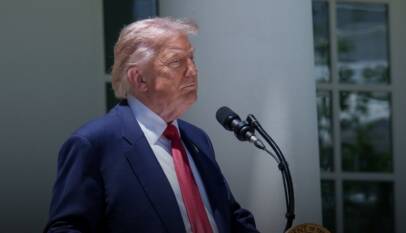
Trump Declares Strait of Hormuz Reopened Under US Protection, Imposes Full Blockade on Iranian Shipping
Washington, July 2026 : US President Donald Trump on Tuesday announced that the Strait …