In Pursuit Of Accountability.

Buenos Aires; December 2025: For the first time, victims of Iran’s Woman, Life, Freedom protests have filed a criminal complaint against 40 officials of the Islamic republic, accusing them of crimes against humanity. It’s a bold move, and one that takes the fight for accountability, several thousand kilometres away, to the capital city of Argentina – Buenos Aires.
The criminal complaint against 40 officials of the Islamic Republic was submitted with help from the Iran Human Rights Documentation Center and the Strategic Litigation Project at the Atlantic Council. They chose Argentina because its courts recognise something called universal jurisdiction, basically, the idea that some crimes are so serious, any country’s court can investigate them, no matter where they happened.
The complaint asks Argentinian judges to look into the role of senior intelligence, security, and military officials, including the Islamic Revolutionary Guards Corps (IRGC), in what it describes as a widespread and coordinated assault on civilians during the 2022 protests that followed the death of Mahsa Amini. Amini died in police custody after being detained for allegedly flaunting Iran’s dress code for women.
For now, the list of accused names is sealed, but Shahin Milani from the Human Rights Documentation Center told Media Representatives that those details will be released once Argentina’s prosecutor officially opens the investigation. The accusations include targeted shootings, intentional blinding of protesters, arbitrary arrests, torture, and even executions, abuses those which are still continuing at present, the complaint notes.
In a 2024 report, Sara Hossain, who leads the UN’s Independent Fact-Finding Committee on Iran, said the government was directly responsible for the violence that led to Mahsa Amini’s death. The committee went further, calling Iran’s broader actions against women “crimes against humanity.” Iran has accused the committee of bias.
Why It Matters: Argentina’s judiciary has a long record of pursuing international justice cases. Its courts have invoked universal jurisdiction in dozens of human rights trials over the past decade and are currently handling cases from 16 countries.
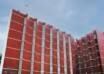
Notably, Argentina is also familiar with Iran-related cases: earlier this year, an Argentinian judge ordered in absentia trials for 07 Iranian and 03 Lebanese suspects over the 1994 AMIA bombing in Buenos Aires, which killed 85 people and injuring around 300 more. The gruesome culpable homicide where a powerful explosion destroyed the seven-story building housing the Jewish Mutual Association of Argentina in Buenos Aires in July 1994.
Alberto Nisman, who presented a 500-page indictment to a federal judge in Buenos Aires on 29th May, said intelligence reports from South America, Europe, and the United States underscore the role Iranian officials and diplomats had in sponsoring the 1994 attack on the Asociacion Mutual Israelita Argentina (AMIA) Centre.
Argentinian courts in 2006 charged 08 current and former senior Iranian officials, along with a Lebanese national, with involvement in the attack. The Argentinian government has secured from Interpol international arrest warrants against the 08 accused. Tehran, which has vehemently denied the allegations, has refused to extradite the suspects to face trial in Argentina.
Nisman, who has led the investigation into the community centre bombing since 2005, has accused Hizballah, the Lebanese Shi’ite militant group with close ties to Tehran, of carrying out the attack and top Iranian officials of planning and financing it. In his indictment, Nisman singled out Mohesen Rabbani, a former Iranian cultural attache in Argentina. The prosecutor said Rabbani was the mastermind behind the bombing and the “coordinator of the Iranian infiltration of South America“.
With cognizance to the 2022 mayhem, the plaintiffs see Argentina as a natural venue. As Milani noted, “this is a judiciary that knows Iran’s track record”. Mahsa Piraei, one of the plaintiffs in the case and a UK resident, lost her 62‑year‑old mother, Minoo Majidi, in the early days of the protests. Her mother was shot dead by security forces. “We couldn’t pursue a case in Iran because there’s no fair court or independent judiciary”, she wrote on X, adding that she was glad they had managed to bring their complaint before an Argentinian court.
[Team Maverick has analysed the original post in Persian Language on the X handle, and thereby appended the translated English version for the readers].
Mahsa Piraei…
“In our own country, Iran, we were unable to file a complaint for the murder of my mother because there is no fair court and no independent judiciary. Today, I am happy that this crime could not kill our hope for justice and that our efforts have paid off, and with the help of human rights lawyers, we are taking our case to international courts.
I believe that our perseverance as advocates and our insistence on preserving human dignity is a global goal without borders.
This is the first complaint filed anywhere in the world regarding crimes against humanity committed by the Islamic Republic of Iran in the context of the “Women, Life, Freedom” movement. The complaint was filed with an investigative judge in Argentina and calls for the initiation of criminal investigations against senior officials of the Islamic Republic’s intelligence, military, and police agencies, the Islamic Revolutionary Guard Corps (IRGC), as well as civilian government officials for their role in this widespread and systematic attack on civilians.
Specifically, the complaint alleges that the Islamic Republic’s authorities and security forces are responsible for crimes against humanity, including gender-based harassment and persecution, murder, torture, and other inhumane acts such as targeted blinding.
Argentine law allows its federal courts to investigate and prosecute core international crimes such as genocide, crimes against humanity, war crimes, and other crimes under the Rome Statute of the International Criminal Court. Furthermore, Argentina does not require the physical presence of the accused on its territory for an investigation to begin. This means that crimes against humanity committed by the Islamic Republic of Iran inside Iran against Iranian victims can be investigated and prosecuted by a federal court in Argentina”.

Team Maverick.




Turkey Plans To Sell Russian S 400 Air Defence System To Gulf Nations To Revive US F-35 Programme.
Ankara; July 2026: Turkey could be moving to remove one of the biggest obstacles to restor…
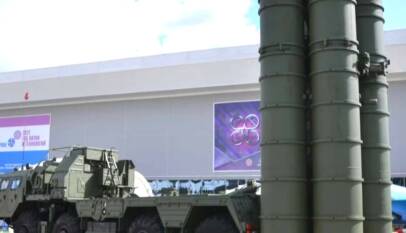
Turkey Plans To Sell Russian S 400 Air Defence System To Gulf Nations To Revive US F-35 Programme.
Ankara; July 2026: Turkey could be moving to remove one of the biggest obstacles …