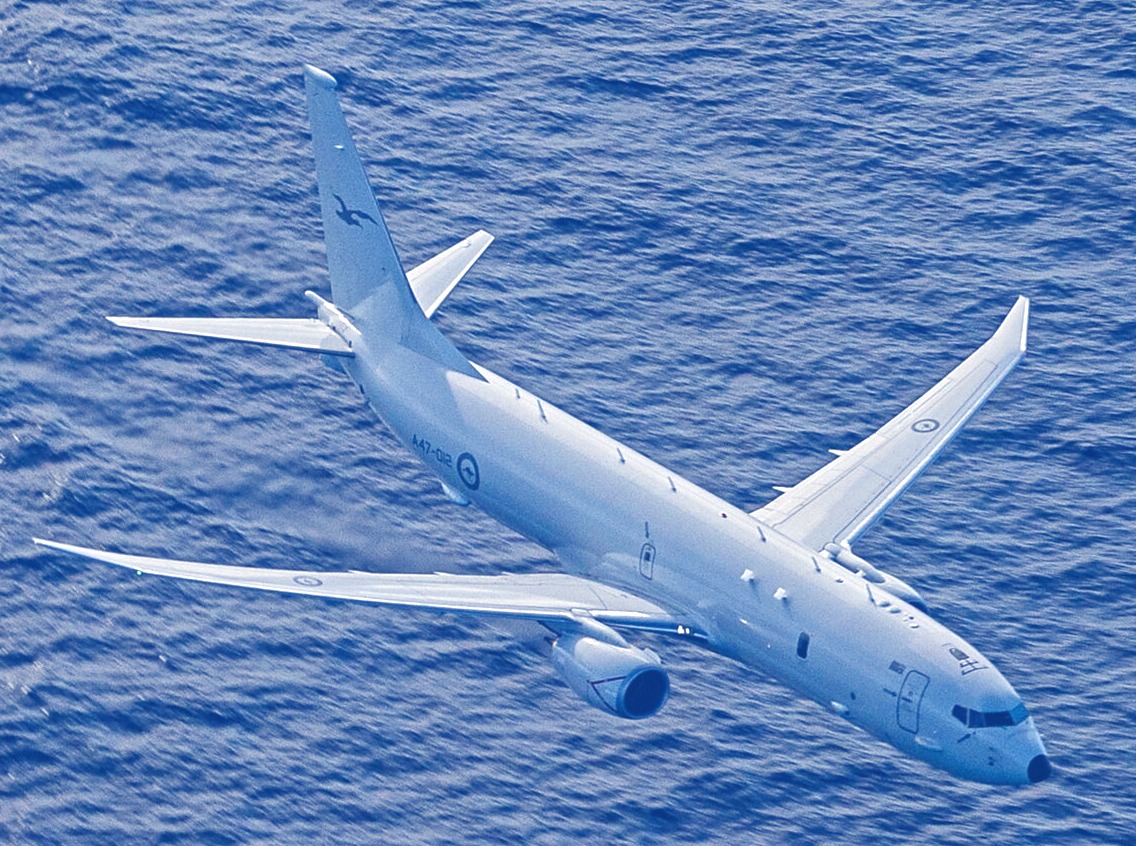
India And Australia Are Enhancing Bilateral Defence Cooperation.

December 2025: Australia and India are enhancing bilateral defence cooperation to an unprecedented level including Boeing P-8 maritime patrols, joint naval patrols in the Indian Ocean, and military support for humanitarian assistance and disaster relief (HADR) in the Pacific islands. Expanded defence cooperation would strengthen joint deterrence and help secure the Indo-Pacific, where strategic competition is intensifying. It could also help to consolidate the unity of the Quad amid instability in the relationship between the United States and India.
Since 2015, key joint maritime exercise Ausindex has enhanced interoperability between Australian and Indian forces and fostered a common understanding of best practices and operational procedures. The Royal Australian Air Force’s P-8A and the Indian Navy’s P-8I maritime patrol aircraft have participated in Ausindex drills. To progress cooperation, both Australia and India are considering regular, coordinated P-8 maritime patrol collaboration in the Indian Ocean, including by sharing real-time intelligence data and the RAAF refuelling the Indian aircraft in the air.
Canberra has been upgrading its airfield at the Cocos (Keeling) Islands to support RAAF P-8As, while New Delhi has plans to extend the runway at the Baaz naval station in the Nicobar Islands to accommodate its P-8Is. Implementing the Mutual Logistics Support Arrangement, which Canberra and New Delhi agreed upon in 2020, would provide shared access to these military facilities. Joint P-8 patrols could be the proof-of-concept for negotiating further reciprocal access for air and naval assets.
2024 National Defence Strategy –
The National Defence Strategy which was unveiled on 17th April, 2024 sets out a fundamentally new approach to the defence of Australia and their nations interests. The 2024 National Defence Strategy outlines the Government’s strategic framework to guide the significant and urgent changes required to address Australia’s challenging strategic circumstances. Together with the rebuilt Integrated Investment Program, the National Defence Strategy is a blueprint to deliver an ambitious transformation of the Australian Defence Force (ADF) to an integrated, focused force capable of safeguarding Australia’s security for decades to come.
National Defence: a concept that harnesses all arms of Australia’s national power to achieve an integrated approach to our security. The National Defence Strategy sees a Strategy of Denial become the cornerstone of Defence planning. This approach guides Defence’s contribution to National Defence and spans all domains: maritime, land, air, space and cyber.
The adoption of National Defence also means the ADF will shift to an integrated, focused force designed to address Australia’s most significant strategic risks. This will ensure the ADF has the capacity to:
- defend Australia and our immediate region;
- deter through denial any potential adversary’s attempt to project power against Australia through our northern approaches;
- protect Australia’s economic connection to the region and the world;
- contribute with our partners to the collective security of the Indo-Pacific;
- contribute with our partners to the maintenance of the global rules-based order.
Budget: Underpinning the National Defence Strategy is a generational investment in the ADF’s posture, capability and structure.
Since the release of the Defence Strategic Review in 2023, the Albanese Government is been investing an additional $ 5.7 billion over the next four years and $ 50.3 billion over the next decade in Defence funding, above the previous trajectory over that period.
These additional investments include:
- $11.1 billion over the next decade to deliver the Government’s response to the independent analysis of Navy’s surface combatant fleet;
- $1 billion over the next four years to accelerate ADF preparedness including for long-range strike, targeting and autonomous systems; and
- $38.2 billion over the next decade to fund the rebuilt IIP and accelerate and sustain priority capabilities.
This increase in annual funding will see the Defence budget grow to more than $100 billion by 2033-34 – an historic investment, critical to giving effect to the National Defence Strategy.
The Albanese Government’s investment in the Defence portfolio will see overall funding reach $765 billion over the decade, including $330 billion for the capability investments outlined today.
Comparatively, the 2020 Defence Strategic Update and 2020 Force Structure Plan outlined $270 billion for the 10-year period to 2029-30.
Not only is the Albanese Government growing the Defence budget, but we are ensuring this money will be spent more wisely to deliver the capabilities we need.
People: are Defence’s most important asset. As the ADF transitions to an integrated, focused force, Defence must recruit, retain and grow the highly specialised and skilled workforce it needs to meet the objectives of National Defence.
The Albanese Government has already introduced several key initiatives to improve recruitment and retention, including the ADF Continuation Bonus, better access to study opportunities and more health benefits.
While these are important steps, the need for a fundamental transformation of Defence’s recruitment and retention system has been recognised.
The National Defence Strategy calls for a widening of eligibility criteria to enable more people to join the ADF including developing options, where appropriate, to recruit non-Australian citizens; improving and streamlining the recruiting system; and encouraging personnel to serve longer through retention initiatives.
To address these challenges, Defence will develop a new, comprehensive workforce plan this year that will be aligned with the National Defence Strategy and Integrated Investment Program to help meet current and future workforce needs.
Partnerships: Under the National Defence Strategy, Defence will adopt a more focused approach to its international engagement. These efforts will protect Australia’s economic connection to the world and help shape a region that is peaceful, stable and prosperous.
Australia’s Alliance with the United States remains fundamental to their national security. The Albanese Government is committed in deepening and expanding defence cooperation with the United States, and working together with the United Kingdom under the auspices of AUKUS. The Government is steadfast committed on enhancing Australia’s defence relationships across Southeast Asia and the Pacific, as well as in the Indian Ocean and North Asia regions.
The Trajectory: The National Defence Strategy is a reflection of the Government’s foundational thinking on defence policy. It outlines a coherent, sensible and logical plan, one that is built on strong foundations and hard decisions, and backed up with the necessary funding.
It has been outlaid to be updated biennially alongside the Integrated Investment Program to ensure defence policy, strategy, capability and planning keeps pace with the rapidly evolving strategic environment. The next National Defence Strategy will be published in 2026.
Taking a further step, the information collected through Australian–Indian cooperative patrolling is expected to be shared with the US and Japan, the other two members of the Quad. This effort could be linked to the Indo-Pacific Partnership for Maritime Domain Awareness, which was launched at the 2022 Quad Leaders’ Summit in Tokyo. Sharing the concrete results of coordinated defence initiatives by Canberra and New Delhi could help reinforce the Quad’s regional deterrence capability.
On 27th August 2025, the United States have imposed high tariffs on Indian exports in response to India’s purchasing of discounted Russian oil. The effect on the US–India relationship has dampened to a proportional limit, and the broader Quad dynamics are yet to be deplored. Considering its foreign-policy commitment on strategic autonomy, India’s relationship with US has come under strain, impeding the effectiveness of the Quad. Amid this uncertainty, the Australia–India partnership could help support the Quad, as per political experts
Another high-potential area for defence cooperation is military support for HADR in the Pacific, including in capacity building and rapid response. Australia maintains important partnerships with Pacific island nations, and Pacific stability is closely linked to Australia’s security and prosperity. Canberra has bolstered security partnerships with Pacific countries through the Defence Cooperation Program. The Australia-led Pacific Response Group is also a key platform to provide military support for HADR.
Similarly, India defines the waters around the Pacific islands as a secondary area of interest. It has already made a commitment to the region by establishing the Forum for India-Pacific Islands Cooperation. India has strengthened defence engagements with Fiji in particular, providing military training and HADR support. The Indian Armed Forces have tremendous expertise and experience with conducting HADR missions inside and outside of India, but in general they are less familiar with the Pacific than Australia is.
Australia’s diplomatic relationships with Pacific island countries are therefore advantageous, enabling it to identify areas that Indian assistance would be most useful. Australia and India could coordinate their regional activities to fill each other’s strategic gaps and expand diplomatic influence. Overall, this cooperation would align with the Quad’s objectives and reduce the space for malign activities in the Pacific.
Both the countries have the potential to further expand defence cooperation between the Australian Defence Force and the Indian Armed Forces. Both nations face rising security challenges in the Indo-Pacific, including China’s growing military presence and the mounting uncertainty around sea lanes of communication. Strengthening defence cooperation in maritime domain would not only enhance the interests of both nations but also contribute to securing the peace, stability and prosperity in the Indo-Pacific.
The Defence Cooperation Program has made a significant contribution to Australia’s international defence engagement since the 1960s. The program promotes the capacity of our international partners, improves Australia’s capacity to work with partners in response to common security challenges, and builds strong people-to-people links with regional security partners at the tactical, operational and strategic levels.
The Defence Cooperation Program supports Australia’s strategic interests and its defence relationships with Papua New Guinea, Indonesia, Timor-Lesté, the South West Pacific, South-East Asia, Pakistan and the Middle East. The objective is to maximise Australia’s security through developing close and enduring links with partners that support their capacity to protect their sovereignty, work effectively with the Australian Defence Force and contribute to regional security.
Team Maverick.








Hockey Junior Men’s Nationals: Rajasthan, Telangana, Puducherry Shine in Coimbatore
Coimbatore, July 2026 : Hockey Rajasthan, Telangana Hockey and Le Puducherry Hockey regist…

Hockey Junior Men’s Nationals: Rajasthan, Telangana, Puducherry Shine in Coimbatore
Coimbatore, July 2026 : Hockey Rajasthan, Telangana Hockey and Le Puducherry Hockey registered impressive …