In Venezuela The New Boss Rodriguez Replaces The Old Boss Maduro.

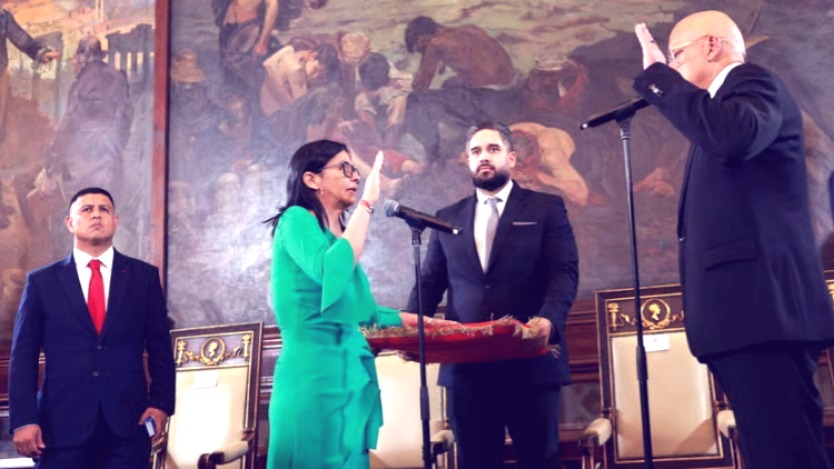
Caracas; January 2026: On January 05th Delcy Rodríguez, erstwhile Vice President to Maduro, was sworn in as the Interim President in front of the National Assembly by the head of that body, who is also her brother, Diosdado Cabello, the powerful interior minister, and Vladimir Padrino, the defence minister, seem to be backing her.
Despite rumours that Rodríguez may have helped the Americans in their raid, even Maduro’s son, who is a congressman, proclaimed: “Delcy, you have my support, the nation is in good hands”. A new attitude towards the United States is just as striking. “We extend an invitation to the US government to work together on a co-operation agenda, aimed at shared development”, said Rodríguez, in a screeching U-turn from her defiant tone just a day earlier.
The US President have bet on Rodríguez as the best option to avoid infighting and do his bidding is on track. This re-heated regime looks grim for long-suffering Venezuelans. Yet unity among factions and accord between enemies are much easier to feign in the short run than over time. A potentially violent power struggle could yet test Donald Trump’s resolve to keep the regime in line. The best hope for ordinary Venezuelans is the United States pushing for a transition to democracy. Alas, that hardly seems a priority for the Trump’s administration.
Instead, it is busy implementing, and selling its plan to back Delcy Rodríguez. President Trump has described Rodríguez’s relationship with Marco Rubio, the secretary of state, as “very strong”. Communication may soon be easier still. The US State Department confirmed it is making the necessary preparations to reopen its embassy in Caracas, which has been closed since 2019.
There is no sign that the United States’ demands include less repression. Instead, the regime is taking the opportunity to crack down. It published a decree directing the authorities to search for and arrest “any person involved in the promotion of or support for the armed attack by the US against the territory of the republic”. On January 05th it had sent armed paramilitaries, known as colectivos, onto the streets of Caracas. These are largely controlled by Diosdado Cabello.
Some were stopping drivers to check their phones. The likely aim is to deter any protests against the nominated President Rodríguez. Some 14 journalists and media workers were also detained for hours before being released, according to the National Union of Press Workers in Venezuela. Rodríguez may have some economic nous and a pragmatic streak, but she was in the innermost circle of a regime that has regularly tortured, killed and disappeared opponents and their family members.
Servility to the Trump administration may not last. Trump plans to keep the regime hemmed in by tightening an oil cordon and by threatening new military strikes. Yet as midterm elections loom in the United States, constraining Donald Trump’s room for manoeuvre, President Rodríguez or regime hardliners will surely look for ways to keep the dollars rolling in. It already appears that more than a dozen oil tankers have sought to break through the American blockade in recent days. And if Marco Rubio starts pushing harder for a democratic transition, Rodríguez is likely to gamble on delays and obfuscation.
Maintaining unity within Venezuela will be no mean feat, either. The country’s oil and other resources are a tempting prize for any would-be leader. Should Trump grow frustrated at the slow speed with which crude is flowing, both Cabello, and Padrino or in the special case an ambitious general may try to convince him to change horses. They may even simply gamble on a coup, believing that Trump likes a winner. This sense of fragility was underscored late on January 05th when shots rang out around Miraflores, the Presidential Palace in Caracas, sparking widespread speculation about a putsch. It may instead have been a jumpy security unit firing at one of its own drones.
Repression or violent power struggle, however, are not the only possibilities. Donald Trump has talked of a democratic transition but has implied that he first wants the oil industry rebuilt, something he says could take 18 months. Such a timetable could easily slip further, giving the regime countless chances to thwart the elected opposition or attempt to simply outlast Donald Trump.
The best hope for María Corina Machado, the leading opposition figure and a Nobel peace laureate, is to try to speed things up. After remaining largely silent for days, perhaps unsure of her next move, Machado had appeared on Media Screen on January 05th. She has thanked President Trump for his “courageous actions” and promised she could turn Venezuela into an energy hub, suggesting sweet talk is still her method. She also said she was planning to go back to Venezuela as soon as possible. While Maria Machado has proved remarkably resilient and canny, however her biggest challenges lie ahead.
Team Maverick.

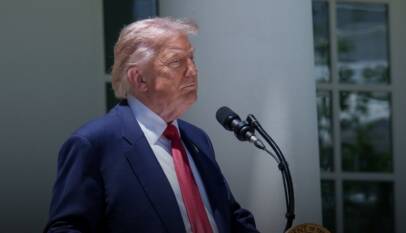
Trump Declares Strait of Hormuz Reopened Under US Protection, Imposes Full Blockade on Iranian Shipping
Washington, July 2026 : US President Donald Trump on Tuesday announced that the Strait of …
Trump Declares Strait of Hormuz Reopened Under US Protection, Imposes Full Blockade on Iranian Shipping
Washington, July 2026 : US President Donald Trump on Tuesday announced that the Strait …