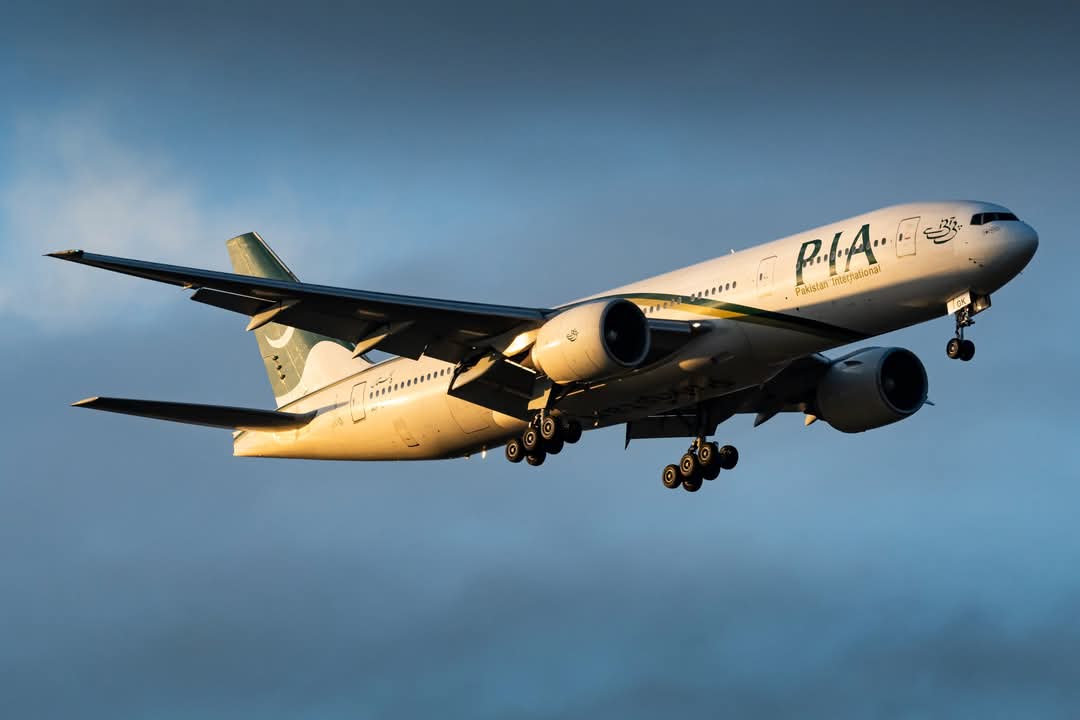
PIA Privatisation Yields Just Rs 10 Billion in Cash, Raises Questions Over Pakistan Government’s Claims

New Delhi, Jan 2026 : The much-publicised sale of Pakistan International Airlines (PIA) has delivered only Rs 10 billion in actual cash to the Pakistan government, far less than the Rs 135 billion figure repeatedly highlighted in official statements, according to a critical report published by Pakistan’s leading daily The News International. The report argues that while the transaction has been celebrated as a landmark reform, its real fiscal impact on the country’s strained finances is negligible.
In a sharply worded analysis, the newspaper noted that some of the most misleading economic decisions are not outright falsehoods, but rather technically accurate announcements framed in a way that obscures their true substance. “They are structurally complex and publicly celebrated, yet deliver almost nothing a treasury can use,” the article observed, underscoring the gap between perception and reality in the PIA transaction.
The report pointed out that had the government openly stated that it received only Rs 10 billion from the sale of the national carrier, public reaction would likely have been muted. Such an amount, it argued, hardly qualifies as transformative reform. Instead, authorities chose to highlight the headline figure of Rs 135 billion, creating the impression of a major fiscal achievement. The inconvenient reality, however, is that public finance is governed by actual cash inflows, not press conference narratives.
Under the privatisation structure adopted by the government, only 7.5 per cent of the winning bid is paid directly to the state in cash. The remaining 92.5 per cent is contractually mandated to be reinvested into PIA as equity to stabilise and revive the airline’s operations. When applied to the widely advertised Rs 135 billion bid, this formula translates into a real fiscal inflow of approximately Rs 10.1 billion. The rest of the money never reaches the government’s treasury, remaining instead within the airline.
As a result, the sale has done little to alter Pakistan’s broader fiscal position. The report highlighted that the country’s annual interest payments already run into several trillion rupees. Against this backdrop, the Rs 10 billion received from the PIA deal would barely cover a few days of debt servicing. It does not change Pakistan’s borrowing trajectory, improve its sovereign credit outlook, or significantly strengthen its hand in negotiations with creditors. In macroeconomic terms, the article described the inflow as a “rounding error disguised as reform.”
The problem, the report stressed, is not merely that the cash component was small, but that it was presented as large enough to matter. This, it argued, risks misleading the public about the true state of the country’s finances and the effectiveness of the government’s reform agenda.
To provide context, the article acknowledged that the structure of the deal did not emerge by accident. PIA, in its original form, was virtually unsellable. The airline was deeply insolvent, with publicly disclosed liabilities of around Rs 800 billion—far exceeding the value of its assets. To make the transaction possible, the government first absorbed or restructured a substantial portion of this debt, estimated between Rs 600 billion and Rs 670 billion.
Crucially, these liabilities did not disappear. They were transferred from PIA’s balance sheet to that of the public sector, effectively shifting the burden onto taxpayers. The report described this as a classic case of socialising losses before privatising control. While such an approach may sometimes represent the least damaging exit from a failing enterprise, it carries an important implication: once the state has already paid the bill, the sale price should not be mistaken for profit.
The article further highlighted a striking comparison from the bidding process. An all-cash bid of Rs 26.5 billion was rejected because it was lower than the winning bid of Rs 135 billion. Yet in real fiscal terms, the winning bid delivered only Rs 10 billion to the government—less than half of what the rejected all-cash offer would have provided.
“In fiscal terms, the smaller bid would have paid the government more. This is not a matter of interpretation. It is arithmetic,” the report stated, underscoring the contradiction at the heart of the deal.
At this stage, defenders of the transaction argue that maximising immediate cash inflow was never the primary objective. Instead, they claim the real goal was to recapitalise PIA, stabilise its operations, and ensure the airline continues flying under private management. The article conceded that this may be a valid policy objective. However, it argued that if this was indeed the case, the transaction should have been described honestly as a private recapitalisation accompanied by a change of control—not as a sale that materially strengthened the government’s finances.
By conflating these two narratives, the report warned, the government risks eroding public trust and overstating the success of its economic reforms at a time when transparency is critical.
(The content of this article is sourced from a news agency and has not been edited by the Mavericknews30 team.)

President Of India Reviews Passing Out Parade at Indian Military Academy, Dehradun.
Dehradun; June 2026: The Supreme Commander of the Armed Forces and President of India, Dro…

President Of India Reviews Passing Out Parade at Indian Military Academy, Dehradun.
Dehradun; June 2026: The Supreme Commander of the Armed Forces and President of India, …