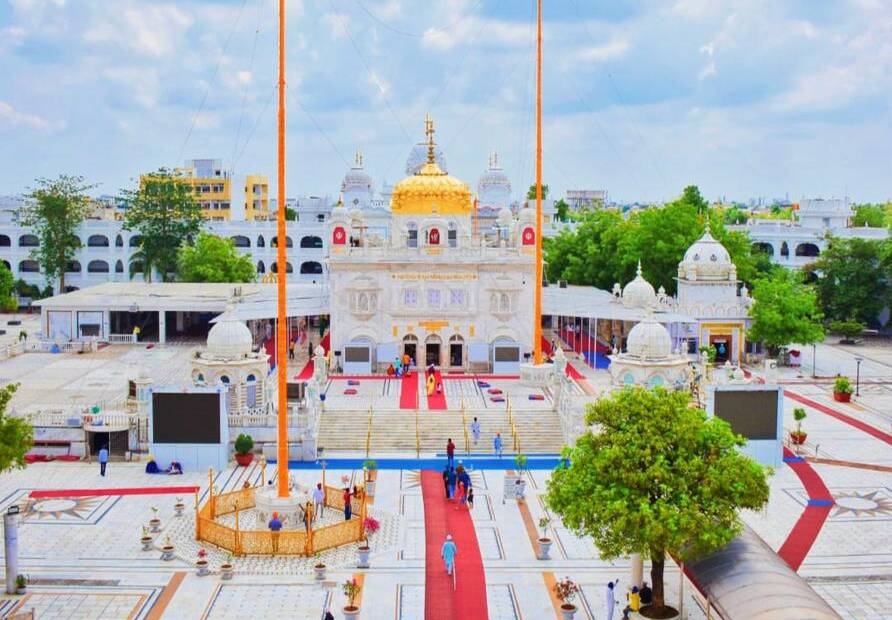
The Golden Pinnacle of Humanity and Equality: Shri Harmandir Sahib

Few places in the history of the Indian subcontinent have transcended their role as mere religious sites to become beacons of human values. The Shri Harmandir Sahib in Amritsar, popularly known as the Golden Temple, is one such place. The sacred Amrit Sarovar surrounding it, the gleaming golden sanctum, and the serene recitation of Gurbani echoing across the waters—these are not just sights and sounds, but a spiritual experience that has, for centuries, conveyed a message of peace and brotherhood to the world.

Foundation Laid by a Sufi Saint
The heritage of universal brotherhood at this sacred site is deeply rooted in social harmony. In 1577, the fourth Sikh Guru, Guru Ram Das Sahib, founded the city of Amritsar. However, it was the fifth Guru, Guru Arjun Dev Sahib, who completed the construction of the temple. What makes this temple truly unique is that its foundation stone was laid by a Muslim Sufi saint, Hazrat Miyan Mir Sahib. This event is regarded today as a profound example of India’s “Ganga-Jamuni” cultural synthesis. The architectural humility of the temple further emphasizes equality: unlike most religious sites built on elevated ground, the Golden Temple is constructed below ground level, symbolizing humility. Devotees must descend steps to enter, reminding them to leave ego behind when approaching the divine. The temple has four entrances, symbolizing openness to all, irrespective of caste, religion, gender, or social standing.
Maharaja Ranjit Singh and the Golden Sheen
Originally a modest structure, the temple received its iconic golden luster in the 19th century under Maharaja Ranjit Singh, a great Sikh ruler. He adorned the temple’s dome and walls with gold sheets, giving it the radiance that earned it the name “Golden Temple” across the world. “The Golden Temple is not just for Sikhs—it is a spiritual refuge for all humanity.”
The Tradition of Langar
No description of the Golden Temple is complete without mentioning the Langar—the world’s largest communal service tradition. Here, thousands of people sit together and share a meal without distinction. This practice was established not only to feed the hungry but also to break down social hierarchies. Built on the principles of service, sacrifice, and dedication, it continues to inspire awe globally.
Guru Arjun Dev Sahib installed the Adi Granth here in 1604, making the site a center of spiritual energy. Even in the 21st century, the temple remains deeply connected to its foundational values. The spirit of equality and tolerance inherent in Indian democracy finds its truest reflection in the Shri Harmandir Sahib.








Djokovic Outlasts Auger-Aliassime in Record Wimbledon Thriller, Storms into 15th Semi-final
Score: Novak Djokovic bt Felix Auger-Aliassime 7-6(10), 3-6, 6-3, 6-7(4), 7-6(10-4) London…

Djokovic Outlasts Auger-Aliassime in Record Wimbledon Thriller, Storms into 15th Semi-final
Score: Novak Djokovic bt Felix Auger-Aliassime 7-6(10), 3-6, 6-3, 6-7(4), 7-6(10-4) London, July 2026 …