Eurogroup, 19th January 2026.

Brussels; January 2026: The Eurogroup was updated on the state of play on the changeover to the euro in Bulgaria. Ministers exchanged views on the policy priorities based on the Commission’s draft euro area recommendation for 2026. They were also briefed on the most recent G7 meetings and endorsed Boris Vujčić for the post of European Central Bank Vice-President.
The Euro Group Meeting commenced at Brussels from 15:00 hours (local time). The honourary participants were:
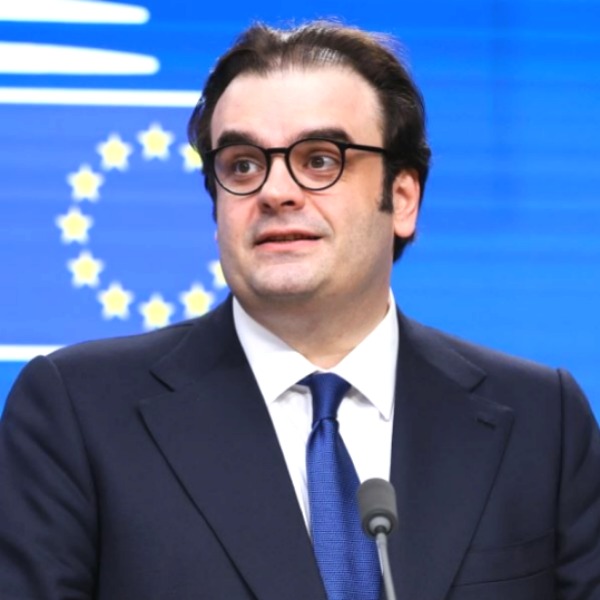
- PRESIDENT OF EUROGROUP: Mr Kyriakos PIERRAKAKIS President BELGIUM
- Mr Vincent VAN PETEGHEM, Deputy Prime Minister and Minister for the Budget, with responsibility for Administrative Simplification, BULGARIA
- Ms Temenuzhka, PETKOVA Minister for Finance, GERMANY
- Mr Lars KLINGBEIL, Federal Minister for Finance, IRELAND
- Mr Simon HARRIS, Tánaiste and Minister for Finance, GREECE
- Mr Athanasios PETRALIAS, Deputy Minister of Economy and Finance, SPAIN
- Mr Carlos CUERPO CABALLERO, Minister for the Economy, Trade and Business, FRANCE
- Mr Roland LESCURE, Minister of the Economy, Finance and Industrial and Energy Sovereignty, CROATIA
- Mr Marko PRIMORAC, Deputy Prime Minister and Minister for Finance, ITALY
- Mr Giancarlo GIORGETTI, Minister for Economic Affairs and Finance, CYPRUS
- Mr Makis KERAVNOS, Minister for Finance, LATVIA
- Mr Arvils AŠERADENS, Minister for Finance, LITHUANIA
- Mr Kristupas VAITIEKŪNAS, Minister for Finance, LUXEMBOURG
- Mr Gilles ROTH, Minister for Finance, MALTA
- Mr Clyde CARUANA, Minister for Finance, NETHERLANDS
- Mr Eelco HEINEN, Minister for Finance, AUSTRIA
- Mr Markus MARTERBAUER, Federal Minister for Finance, PORTUGAL
- Mr Joaquim MIRANDA SARMENTO, Minister of State, Minister for Finance, SLOVENIA
- Mr Klemen BOŠTJANČIČ, Deputy Prime Minister, Minister for Finance, SLOVAKIA
- Mr Ladislav KAMENICKÝ, Minister for Finance, FINLAND
- Ms Riikka PURRA, Minister for Finance, COMMISSION
- Mr Valdis DOMBROVSKIS, Member, OTHER PARTICIPANTS
- Mr Luis DE GUINDOS, Vice-President of the European Central Bank.
Remarks by Kyriakos Pierrakakis:
“First of all, let me start by saying that this was a historic occasion for Bulgaria, as it is from the 1 January 2026 the newest member of the euro area.
I was honoured to receive from Minister Petkova one of these coin kits that were made available in Bulgaria to help people get ready for the changeover.
I am reminded that the coins are the embodiment of our motto ‘united in diversity’: two sides – one European, one national. On several of these, you see a beautiful representation of the Madara Horseman, a UNESCO-listed rock relief sculpture from the 8th century.
Accordingly, we started off the discussions today with a debrief from Minister Petkova on her country’s changeover to the euro. Bulgarians have been using euro notes and coins since 1 January 2026 as legal tender. The Eurogroup congratulates the Bulgarian authorities on a smoothly executed process.
The euro is at the heart of our European project as a pillar of economic stability and prosperity, bringing together now a total of 21 countries that use the common currency.
We moved on to a regular item for discussion: euro area governance. Every year, the Eurogroup agrees on a set of recommendations outlining the agreed priorities for the euro area for the period ahead and today ministers discussed the Commission’s proposal for 2026. The focus is on competitiveness, resilience, and macroeconomic and financial stability of the euro area.
Our deputies and experts will now begin working with the aim of finalising the recommendations for agreement at our February meeting.
We then continued with the discussion on the latest developments at the level of the G7. We are in a highly volatile geopolitical context, where dialogue remains essential, and unity and coordination are key.
I debriefed my colleagues on the virtual meeting of G7 finance ministers and central bank governors on 19 December, which marked the handover from the Canadian to the French Presidency of the Group. Minister Lescure set out his objectives for the year, focusing on global imbalances, international partnerships and balanced growth.
These priorities received strong support from colleagues today, and several are very relevant for the Eurogroup’s ongoing work, particularly, I would say, those related to imbalances and growth. He also informed us about his intention to call a G7 finance ministers’ meeting later this week.
Commissioner Dombrovskis also debriefed us on a ministerial-level meeting convened by the US Treasury last week on the issue of critical raw materials.
The global economy is facing multiple challenges: rising tariffs, industrial overcapacity, geopolitical tensions, the Russian war of aggression on our doorstep, and critical dependencies in areas such as technology, security and minerals. Many of these issues are de facto interconnected.
While our euro area economy has demonstrated remarkable resilience, we must recognise that resilience alone is not enough in the long run. We need to return to a path of sustainable economic growth and dynamism.
The Eurogroup is committed to doing its part. A strong starting point will be to agree on a robust set of priorities when we revisit the euro area recommendations next month, and, importantly, ensuring that we deliver upon these priorities.
The Eurogroup also agreed today to endorse Boris Vujčić, Governor of the Croatian National Bank, for the forthcoming ECB Vice-President vacancy.
I am pleased to report that we had an agreement on both the process and the person. I would say that this is a very important success, a sign of institutional maturity on the background of an exceptional number of candidates and past experiences, such as the one in 2012 where it took six months before consensus was found.
I would like to congratulate Boris Vujčić. I would also like to highlight the skills and the expertise of all the candidates and to thank them for their interest and commitment.
Tomorrow, I will inform the ECOFIN Council during breakfast, and the Council’s established procedure to complete the formal recommendation will follow in due course. The final decision will be taken by the European Council after consultation with the ECB and the European Parliament. So, we are on track for Boris Vujčić to take up his position at the ECB as of 1 June 2026.
Before I close, I would just like to highlight that this was a special Eurogroup for me, the first time chairing the meeting since my election in December.
I am looking forward to working with my colleagues on delivering upon our common priorities and addressing the challenges ahead of us”.
EURO AREA RECOMMENDATION:
As part of the European Semester Autumn Package, the European Commission adopts euro area recommendation (EAR) with tailored advice on the economic policy of the euro area Member States. The 2026-2027 recommendation is underpinned by the new European Macroeconomic Report (EMR), delving into macroeconomic risks and vulnerabilities, as well as economic challenges and opportunities for the EU and the euro area.
The recommendation reviews fiscal, financial and structural issues, as well as institutional aspects of Europe’s Economic and Monetary Union.
The EAR provides an agenda setting for the euro area as a whole and a framework to steer policy debates on priorities for the Monetary Union and its members, in particular in the Eurogroup.
The document is a ‘recommendation for a Council recommendation’, where the Commission suggests the Council to take specific initiatives. The Council further discusses the draft proposal, with the discretion to amend and adopt it.
Recommendations for the period 2026-2027:
The 2026 EARs highlight several interconnected policy priorities
- This 2026 recommendations focus on ensuring fiscal sustainability while creating space for key investments, including on defence and competitiveness, alongside improving the efficiency of public finances and completing Recovery and Resilience Plans.
- The recommendations also highlight the need to prioritise public and private investment in research and innovation, industrial decarbonisation, clean energy and digital transition, economic security and the reduction of strategic dependencies across value chains emphasising the importance of removing barriers in the Single Market, including through regulatory simplification.
- The recommendations call for strengthening labour markets by boosting skills, improving education outcomes, increasing participation, supporting job quality and addressing poverty and housing affordability, while ensuring wage growth remains aligned with productivity.
- Finally, they promote the creation of a European Savings and Investment Union and underline the need to advance the digital euro project, reinforce the international role of the euro, and monitor macro-financial risks.
Team Maverick.


Japanese F-2 Fighter Reloaded With New Large Stealth Cruise Missile Under Its Wings.
Gifu Air Field, Kakamigahara City, Japan; August 2026: Yesterday (Friday – 31st July 2026)…

Japanese F-2 Fighter Reloaded With New Large Stealth Cruise Missile Under Its Wings.
Gifu Air Field, Kakamigahara City, Japan; August 2026: Yesterday (Friday – 31st July 2026) …