New Delhi, August 2026 : Armenia is moving closer to acquiring more than 50 Pralay tactical surface-to-surface missiles from India, with detailed negotiations on pricing and other aspects of the proposed deal reportedly underway. If finalised, the agreement would mark a significant milestone in India’s growing defence export programme and take its military partnership with Armenia into the strategic strike domain.
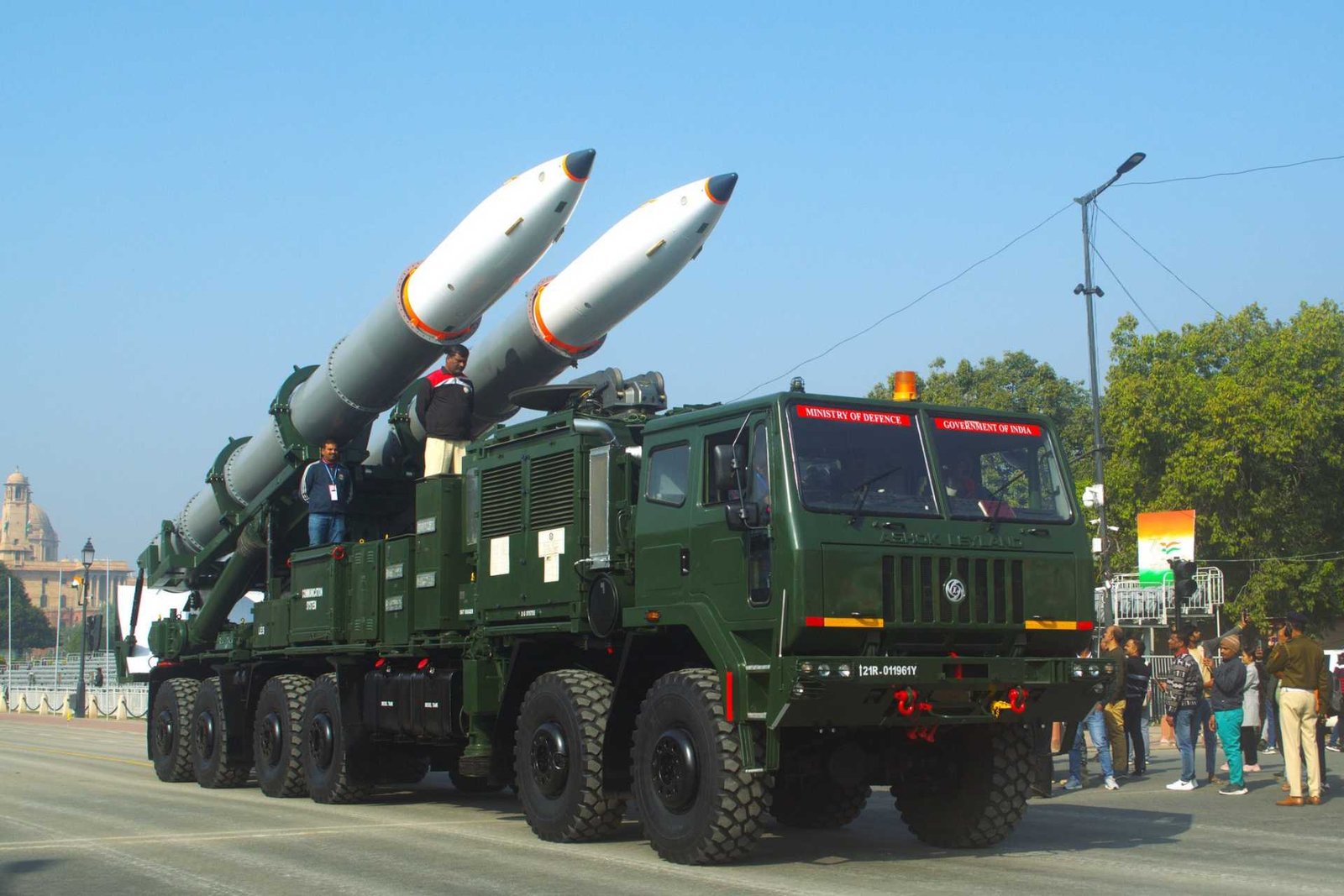
The Pralay missile has been developed by India’s Defence Research and Development Organisation (DRDO) as a solid-fuelled, canisterised and road-mobile tactical missile designed for rapid deployment. Its mobility and precision capabilities are intended to provide armed forces with a flexible strike option in high-intensity operational environments.
The Indian version of the missile is understood to have a range of 150 to 500 kilometres. For export customers, however, the range is expected to be restricted to around 290 kilometres in line with India’s international commitments under the Missile Technology Control Regime (MTCR).
Despite the reduced range, the export configuration is expected to retain several of the missile’s advanced characteristics, including high accuracy, high speed and manoeuvrability. These features are designed to improve survivability against modern air-defence systems and enable the missile to engage a variety of battlefield targets.
The missile can reportedly accommodate different warhead configurations, giving it the flexibility to perform multiple conventional strike missions. Its potential target set includes military infrastructure such as command facilities, radar installations and airfields, depending on the operational configuration and requirements of the user.
Armenia’s reported interest in the Pralay system comes against the backdrop of its longstanding security competition with neighbouring Azerbaijan. Baku has acquired advanced missile capabilities, including Israeli-origin systems, giving it additional long-range precision-strike options. For Yerevan, the acquisition of a modern tactical missile system could strengthen its deterrence capabilities and provide an additional component to its defence architecture.
Reports suggest Armenia is considering an initial procurement of more than 50 Pralay missiles. Such an acquisition would represent a substantial addition to the country’s existing military capabilities and expand its options beyond conventional artillery and air-defence systems.
The missile’s manoeuvrability and quasi-ballistic flight profile are among the features that could enhance its survivability in contested airspace. Armenia is also expected to send military and technical personnel to India for familiarisation, training and demonstrations as discussions progress.
India is reportedly considering export-specific configurations, including a range-capped version and a twin-launcher arrangement that could allow two missiles to be carried on a single transporter-erector-launcher. Such a configuration could provide greater flexibility in deployment and improve the system’s operational utility for foreign customers.
The proposed agreement would build on an already expanding India-Armenia defence relationship. Armenia has previously acquired several Indian defence systems, including Pinaka multi-barrel rocket launchers, Akash surface-to-air missile systems, Swathi weapon-locating radars and anti-drone equipment. The value of these defence contracts has been reported to exceed $1.5 billion.
The potential addition of Pralay would therefore represent a major escalation in the depth and sophistication of bilateral defence cooperation. It would also provide India with an opportunity to showcase its indigenous missile-development capabilities in an increasingly competitive international defence market.
If concluded, the deal would strengthen Armenia’s conventional deterrence while reinforcing India’s credentials as an emerging exporter of advanced defence technology. It would also underline New Delhi’s expanding defence diplomacy in Eurasia and its growing ability to offer sophisticated, domestically developed military systems to international partners while adhering to applicable export-control commitments.
(Disclaimer :The content of this article is sourced from a news agency and has not been edited by the Mavericknews30 team.)