‘One Nation, One Election’ Could Save Rs 7 Lakh Crore, Boost GDP: JPC Chairperson

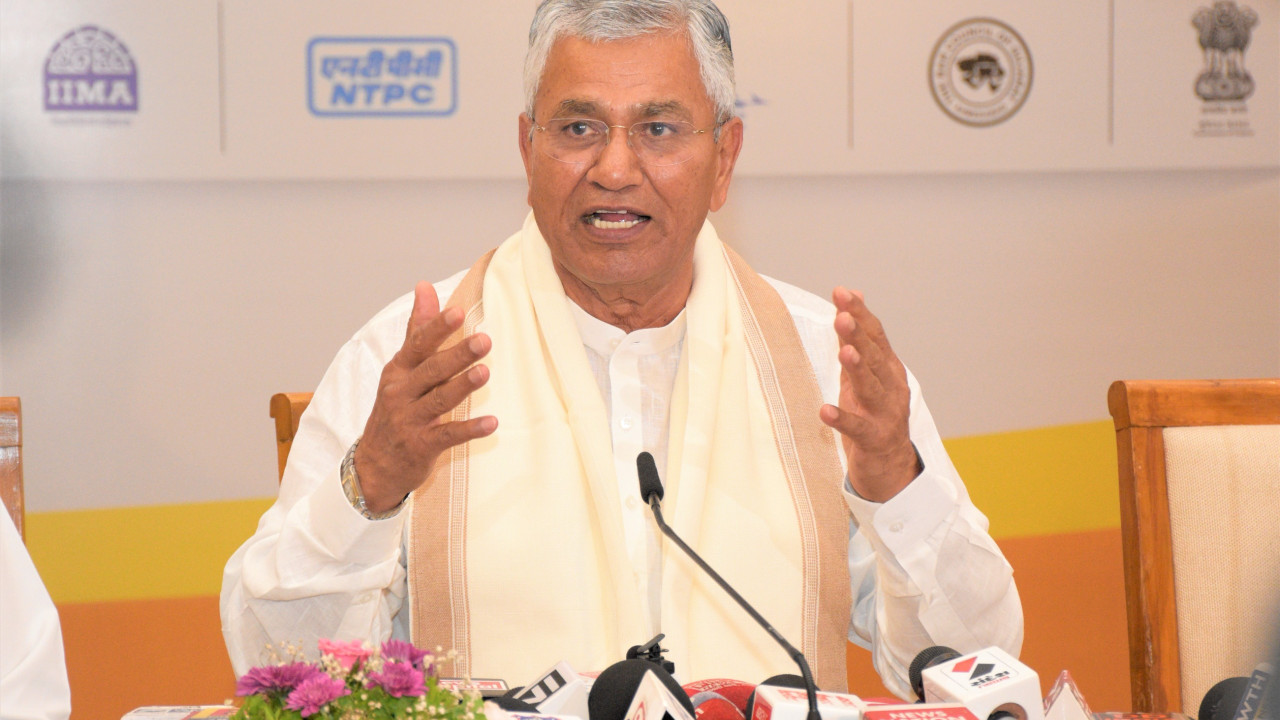
Gandhinagar, May 2026 : The Joint Parliamentary Committee (JPC) examining the ‘One Nation, One Election’ proposal on Tuesday said synchronising Lok Sabha, Assembly, and local body elections could significantly reduce public expenditure, improve governance efficiency, and contribute to higher economic growth in India.
Addressing a press conference in Gandhinagar, JPC chairperson and Lok Sabha MP P. P. Chaudhary said economists and experts consulted by the panel estimated that simultaneous elections could save nearly Rs seven lakh crore and raise India’s GDP growth by approximately 1.5 to 1.6 per cent.
Chaudhary explained that India originally followed a synchronised election system after Independence, with Lok Sabha and state Assembly elections being conducted together until 1967. However, the cycle was disrupted due to the premature dissolution of several state Assemblies in 1968 and subsequent political developments, including the Emergency period.
“Till 1967, Lok Sabha and Assembly elections were held simultaneously. After the dissolution of Assemblies and later political changes, the election cycle gradually went out of synchronisation,” he said.
He noted that the idea of simultaneous elections has been discussed for decades and has received support from several constitutional and institutional bodies. According to him, the Election Commission of India first proposed simultaneous elections in 1983, while the Law Commission also recommended the concept in multiple reports over the years.
Chaudhary added that in 2015, the Parliamentary Standing Committee on Law and Justice, chaired by a Congress Rajya Sabha member and comprising representatives from multiple political parties, had also backed the idea of holding Lok Sabha and Assembly elections together.
The proposal gained momentum after Prime Minister Narendra Modi constituted an eight-member committee headed by former President Ram Nath Kovind to study the issue in detail. Chaudhary said the Kovind Committee spent nearly 186 days preparing its report before the matter was referred to the JPC for broader consultations.
Explaining the proposed framework, Chaudhary said the committee recommends synchronising Lok Sabha and state Assembly elections initially, followed by Panchayat and Municipality polls within 100 days.
“The objective is to ensure that the majority of the government’s time is devoted to governance, development, and welfare rather than continuous election activity. Every year, five to six states go to polls, keeping the country in election mode throughout the year,” he said.
The JPC chairperson revealed that the committee is currently preparing a comprehensive report exceeding 18,000 pages. The report is based on extensive consultations with constitutional experts, economists, former judges, political parties, academic institutions, industry representatives, and members of civil society from across the country.
According to Chaudhary, economists informed the committee that repeated elections have a significant impact on economic activity. He pointed out that nearly five crore migrant labourers travel back to their native places during elections to cast their votes, affecting industrial productivity and state economies.
“When large sections of workers leave for voting for several weeks, industries suffer losses, production slows, and GST collections are affected,” he said.
He also highlighted the administrative burden caused by frequent elections. Government officials from multiple departments are regularly assigned election duties, which affects the implementation of welfare schemes and public projects.
“If officers responsible for welfare programmes are repeatedly deployed for elections, policy implementation slows down and governance continuity suffers,” Chaudhary stated.
The committee also discussed the impact of repeated elections on the education sector. Chaudhary said government school teachers are frequently assigned duties related to elections, census operations, and voter list preparation, which affects classroom teaching.
“If teachers remain occupied with election work throughout the year, then who will teach children? Poor families also deserve quality education, and teachers should remain focused on academics,” he remarked.
Referring to tourism-dependent states, Chaudhary said multiple elections can disrupt local economies during peak tourism seasons. He cited Uttarakhand as an example, stating that nearly 42 per cent of the state’s economy depends on tourism.
“If Lok Sabha elections are held during one tourism season and Assembly elections during another, the tourism economy gets disrupted twice,” he explained.
The JPC chairperson also addressed constitutional concerns surrounding the proposal. He said the committee had held consultations with former Chief Justices of India, retired Supreme Court judges, and senior constitutional experts to examine whether simultaneous elections would violate the Constitution or weaken India’s federal structure.
“We specifically discussed whether synchronised elections violate constitutional provisions or reduce the powers of states. The legal opinion we received is that aligning election schedules does not violate the Constitution or federal principles,” he said.
Chaudhary said the committee had also interacted with senior legal and constitutional experts, including Harish Salve and Abhishek Manu Singhvi, as part of the consultation process.
He clarified that ‘One Nation, One Election’ does not imply elections would be conducted only once in several years. Instead, the proposal aims to synchronise elections through a structured and predictable calendar.
“It simply means elections are organised together in a coordinated manner. The purpose is to minimise repeated disruptions and ensure stability in governance,” he said.
The committee will continue consultations with the Election Commission, Union Home Ministry, political parties, and state governments on issues related to by-elections, local body polls, and implementation mechanisms.
Chaudhary said the JPC has already visited Maharashtra, Uttarakhand, Himachal Pradesh, Punjab, Chandigarh, Karnataka, and Gujarat as part of its nationwide outreach programme.
“Our effort is to rise above party politics and work in the national interest. Governance, development, and public welfare should not repeatedly suffer because of continuous elections,” he added.

ISRO Successfully Tests Indigenous Ship-Borne Tracking System for Gaganyaan Mission
New Delhi, July 2026 : The Indian Space Research Organisation (ISRO) has successfully vali…

ISRO Successfully Tests Indigenous Ship-Borne Tracking System for Gaganyaan Mission
New Delhi, July 2026 : The Indian Space Research Organisation (ISRO) has successfully validated …