In A Bid To Promote Korean Investment In United States Visa Rules Have Been Restructured.

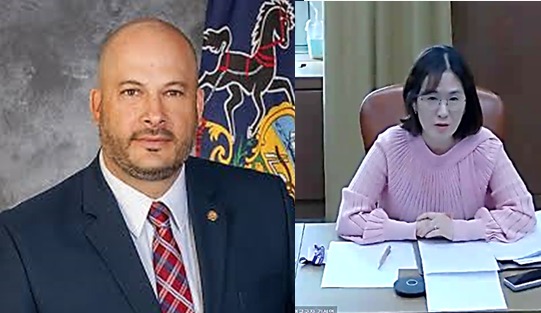
Seoul; January 2026: Business Travel and Visa Working Group have convened the bilateral US-ROK Meet in Seoul on January 28th. Co-chaired by Principal Deputy Assistant Secretary for East Asian and Pacific Affairs Jonathan Fritz, and the Bilateral Economic Affairs Director General for the Ministry of Foreign Affairs Kim Sun Young, the meeting underscored the importance that both countries place on supporting ROK investments into the United States, including facilitating the lawful travel of Korean workers supporting these investments and providing technical training that strengthens the skills and capabilities of American workers.
The participants have highlighted the success of the newly established Korean Investment and Travel Desk, an initiative designed to foster stronger economic ties between the United States and the ROK. The working group also continued to promote clear communication regarding travel and United States immigration requirements to support further investment in America, in compliance with the US law.
The United States also underscored the importance of long-term workforce development in support of President Trump’s America First priorities and to that end highlighted the publication of the fact sheet on U.S. Business Visas and Allowable Uses.
Fact Sheet: U.S. Business Visas (B1) and Allowable Uses –
The following information provides a summary of the categories of business travel allowable on B-1 visas and is not to be construed as legal advice.
Applicants who desire to enter the United States for business and who are otherwise eligible for visa issuance may be classifiable as nonimmigrant B-1 visitors if they meet the criteria described in 9 FAM 402.2-5(B) through (F). Admission with Electronic System for Travel Authorisation (ESTA) approval allows for the same activities as contemplated for a B-1 visa holder admitted in that status.
9 FAM 402.2-5(B) (U): Applicants Traveling to the United States to Engage in Commercial Transactions, Negotiations, Consultations, Conferences, Etc. (CT: VISA-1963; dated 04-01-2024)
(U) Applicants should be classified B-1 visitors for business, if otherwise eligible, if they are traveling to the United States to:
(1) (U) Engage in commercial transactions which do not involve gainful employment in the United States (such as a merchant who takes orders for goods manufactured abroad);
(2) (U) Negotiate contracts;
(3) (U) Consult with business associates;
(4) (U) Litigate;
(5) (U) Participate in scientific, educational, professional, or business conventions, conferences, or seminars; or
(6) (U) Undertake independent research.
Engaging in business using a B-1 visa entails business activities other than the performance of skilled or unskilled labour. Thus, the issuance of a B-1 visa is not appropriate for applicants who intend to obtain and engage in employment while in the United States.
If a business traveler seeks to engage in activity not clearly covered in this guidance, the traveler should apply for a more appropriate visa, such as a petition-based work visa, at their U.S. Embassy or Consulate.
Allowable uses of B-1 visas include:
- Applicants Traveling to the United States to Engage in Commercial Transactions, Negotiations, Consultations, Conferences, Etc. — 9 FAM 402.2-5(B): Applicants may be classified as B-1 visitors if they are otherwise eligible and are traveling to the United States to: 1) Engage in commercial transactions which do not involve gainful employment in the United States (such as a merchant who takes orders for goods manufactured abroad); 2) Negotiate contracts; 3) Consult with business associates; 4) Litigate; 5) Participate in scientific, educational, professional, or business conventions, conferences, or seminars; or 6) Undertake independent research.
- Applicants Coming to the United States to Pursue Employment as a Necessary Incident To their Professional Business Activities — 9 FAM 402.2-5(C): Applicants may be eligible for a B-1 visa if they meet the criteria of one of these categories: 1) Members of religious groups; 2) Participants in voluntary service programs; 3) Members of board of directors of a U.S. corporations; 4) Professional athletes and personnel necessary to the performance of an individual athlete or sports team; 5) Yacht crewmen; 6) Coasting officers; 7) Investor seeking investment in the United States; 8) Equestrian sports; 9) Visa for transit or travel to the Outer Continental Shelf (OCS); and 10) Participants in international sporting events.
Certain other business activities classifiable as B-1 include:
- Commercial or Industrial Workers – 9 FAM 402.2-5(E)(1): An applicant coming to the United States to install, service, or repair commercial or industrial equipment or machinery purchased from a company outside the United States or to train U.S. workers to perform such services. However, in such cases, the contract of sale must specifically require the seller to provide such services or training and the visa applicant must possess unique knowledge that is essential to the seller’s contractual obligation to perform the services or training and must receive no remuneration from a U.S. source. These provisions do not apply to an applicant seeking to perform building or construction work, whether on-site or in-plant. A applicant who is otherwise qualified as a B-1 nonimmigrant and is applying for a B-1 visa to supervise or train other workers engaged in building or construction work, but not actually to perform any such building or construction work, may qualify as a B-1 visitor.
- Specialised Trainers – 9 FAM 402.2-5(E)(2): An applicant may qualify as a specialized trainer eligible for a B-1 if they are traveling to the United States for a temporary period in order to provide training or transfer knowledge to U.S. workers, including on specialized or proprietary techniques, skills, or know-how necessary for industrial equipment, machinery, or processes that have been acquired or are sourced from a company outside the United States, in support of a qualifying project. In such cases the applicant must possess unique knowledge that is not widely available in the United States and must receive no remuneration from a U.S. source. B-1 visas issued in accordance with this guidance must be annotated as such. The annotation should read: “B-1 SPECIALIZED TRAINER”.
- NOTE: Other business activities classifiable as B-1 include but not limited to: Foreign Airline Employees; Clerkship; Participants in Foreign Assistance Act Program; Peace Corps Volunteer Trainers; and Applicants Involved in International Fairs or Expositions.
NOTE: Incidental expenses or remuneration – 9 FAM 402.2-5(F)(1): A nonimmigrant in B-1 status may not receive a salary from a U.S. source for services rendered in connection with their activities in the United States. A U.S. source, however, may provide the applicant with an expense allowance or reimbursement for expenses incidental to the temporary stay. Incidental expenses may not exceed the actual reasonable expenses the applicant will incur in traveling to and from the event, together with living expenses the applicant reasonably can be expected to incur for meals, lodging, laundry, and other basic services.
This cooperation underscores the United States’ commitment to welcoming and encouraging Korean investment that advances American reindustrialization, reinforces the U.S.-ROK Alliance as well as our shared defense and industrial capabilities, and builds a stronger workforce foundation to enhance our shared prosperity.
Team Maverick.





Australia Calls India a Top-Tier Security Partner, Unveils Landmark Defence and Energy Agreements
Canberra, July 2026 : Australia on Thursday described India as one of its most important s…
Australia Calls India a Top-Tier Security Partner, Unveils Landmark Defence and Energy Agreements
Canberra, July 2026 : Australia on Thursday described India as one of its most …