Iranian Regime Resort To Concerted Campaigns In A Bid To Deter US Military Actions.

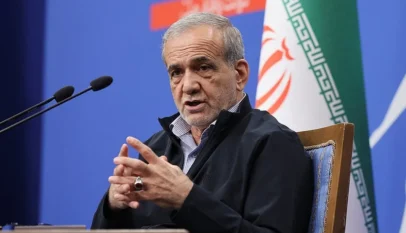
Tehran; February 2026: Iranian Foreign Affairs Minister Abbas Araghchi, President Masoud Pezeshkian, and Supreme National Security Council (SNSC) Secretary Ali Larijani have conducted a flurry of diplomatic activities with regional countries in recent days.
On 30th January 2026, Araghchi have met Turkish President Recep Tayyip Erdogan and Foreign Minister Hakan Fidan in Istanbul. which has been further exemplified by an unspecified US official, that Araghchi and US Special Envoy to the Middle East Steve Witkoff are expected to meet in Turkey on 06th February to discuss a possible nuclear deal. Meanwhile, Iranian officials have signaled a pretentious openness in resuming nuclear negotiations with the United States in recent days, in a bid to delay or prevent a US attack on Iran. Iran previously delved in negotiations with the United States in the spring of 2025 to prevent military action against it.
Iran is unlikely to accede to US President Donald Trump’s preconditions for negotiations. The United States has demanded that Iran should permanently halt uranium enrichment, limit its ballistic missile program, and end “all support” for the Axis of Resistance as preconditions for negotiations. Iranian officials have repeatedly insisted that Iran will not negotiate on its ballistic missile program or support for the Axis of Resistance, which constitute the main pillars of Iran’s deterrence and defense strategies. It is possible that the regime could agree to reduce its uranium enrichment, but the regime is unlikely to accept Trump’s demand for zero enrichment.
Yesterday on 02nd February two Iranian officials told media outlets that the regime views Trump’s demand regarding Iran’s ballistic missile program as a “bigger obstacle” than Trump’s demand regarding uranium enrichment. This statement suggests that the regime could potentially show some flexibility on the uranium enrichment issue, particularly if it views a potential US attack against Iran as an existential threat. Iranian officials previously stated during negotiations with the United States in the spring of 2025 that Iran would be willing to reduce its uranium enrichment to 3.67 percent, which was the enrichment limit in the 2015 Joint Comprehensive Plan of Action (JCPOA).
Iran may be trying to reduce the United States’ leverage and ability to pressure the regime to accede to US demands. The Iranian officials have further asserted that Iran “wants” the United States to remove its military assets from the Middle East before Iran engages in talks with the United States. This comes as a development when the progress toward renewing negotiations between Iran and the United States “appears to have been stumbled”, in part due to the United States’ unwillingness to reduce its military presence in the Middle East. This report suggests that Iran may have formally made the removal of US military assets from the region a precondition for negotiations, which would be consistent with Iran’s efforts to delay or prevent a US attack on Iran.
Some Iranian officials have asserted certain media outlets that Iran would be willing to offer nuclear concessions to the United States, alongwith the fact that Iran is willing to “accept zero enrichment under a consortium agreement” and hand over 400 kilograms of highly enriched uranium (HEU).
Iran possessed around 440 kilograms of uranium enriched up to 60% before the Israel-Iran War. Furthermore, the Iranian regime previously rejected a US proposal in June 2025 to establish a regional nuclear consortium because the proposal would have ultimately required Iran to halt domestic uranium enrichment. Supreme Leader Ali Khamenei stated at the time that enrichment is an Iranian “red line” and that Iran’s nuclear program without enrichment is “practically worthless”.
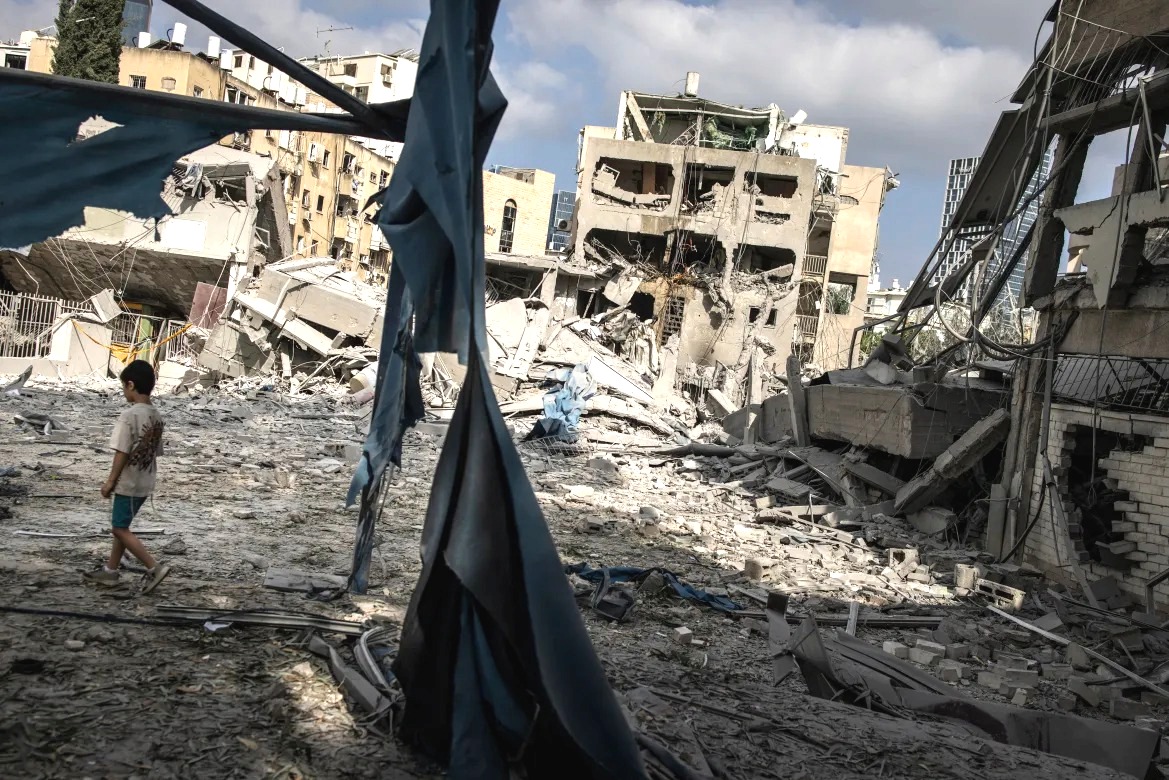
The Iranian regime has continued to warn that a US attack on Iran would trigger a regional conflict. This warning is part of the regime’s ongoing informational effort to exploit the United States concerns about a protracted regional war, to try to deter a US attack.
Islamic Revolutionary Guards Corps (IRGC) affiliated Tasnim News Agency warned on February 02nd that a US attack on Iran could trigger a regional war because Iran could retaliate by attacking Israel, international shipping, or US bases in regional countries. Tasnim added that Iran would be “the center of a potential network of conflicts” if the United States attacks Iran. Iranian Armed Forces General Staff-run media similarly warned on February 02nd that a US attack on Iran would expand beyond a “limited bilateral conflict” between Iran and the United States into a “multi-level crisis with far-reaching consequences for American interests”. These Iranian media reports echo’s Khamenei’s warning on 01st February that a US attack on Iran would stoke a regional war.
The Iranian regime has also warned that a US attack on Iran could destabilise Middle Eastern countries those which are hosting US bases, in a most likely plan to pressurise these countries to urge the United States to refrain from attacking Iran.
Earlier, official sources in Iran have briefed the media outlets on 15th January 2026 that Qatar, Saudi Arabia, Oman, and Egypt had urged the United States not to attack Iran because they were concerned that Iran could retaliate by striking their territory. The Washington Post had separately reported on 01st February that Gulf states warned the United States that Iran retains short-range ballistic missiles and launchers that it could use to strike US interests in the Persian Gulf. Iran has previously struck US interests in regional countries in response to US actions, including in January 2020 when Iran attacked Ain al Asad Airbase in Iraq and in June 2025 when Iran attacked al Udeid Airbase in Qatar.
The IRGC Navy planned to conduct a live-fire exercise in the Strait of Hormuz on February 01st and 02nd. Meanwhile, IRGC Navy has cancelled the exercise, however, reportedly following a US warning. Senior Iranian military commanders, including Armed Forces General Staff Chief Major General Abdol Rahim Mousavi and Khatam ol Anbia Central Headquarters Deputy Commander Brigadier General Kiomars Heydari, have also continued to vow that Iranian forces will respond harshly to a US attack.
Iranian officials and media have repeatedly threatened in recent days and weeks that Iran could attack Israel, international shipping in the Strait of Hormuz, or US bases in the region, in response to a potential attack. Iran has several military capabilities that it could use to respond to a US attack, but some of its offensive capabilities are degraded. Iran could use its naval capabilities to harass and attack US vessels or international shipping in the Persian Gulf and Strait of Hormuz.
Moreover, Iran also retains short-range ballistic missiles and launchers that it could use to target US bases. Israel destroyed at least 35% to 45% of Iran’s ballistic missile stockpile during the Israel-Iran War, but Iran has reportedly reconstituted its medium-range ballistic missile stockpile to pre-war levels. Iran could use these medium-range missiles to attack Israel. Despite these military capabilities, Iran’s Axis of Resistance is significantly weakened and degraded. Iran has long relied on the Axis of Resistance to deter and respond to US and Israeli actions against Iran. The Axis of Resistance failed to meaningfully support Iran during the Israel-Iran War, however, and it is unclear whether the groups that comprise the Axis of Resistance would intervene in a renewed conflict between Iran and the United States.
The Iranian regime seeks to deter a US attack, in part because US military action would presumably disrupt Iran’s efforts to reconstitute its nuclear and ballistic missile programs. Iran has taken steps following the Israel-Iran War to rebuild its nuclear program and harden nuclear facilities against future airstrikes. Iran is encasing a newly built facility at Taleghan 2 at the Parchin Military Complex with a concrete “sarcophagus” to harden the facility against potential airstrikes, according to the Institute for Science and International Security.
Israel had struck Taleghan 2 in October 2024. Iran has also covered the anti-drone cage at the Pilot Fuel Enrichment Plant (PFEP) at the Natanz Nuclear Complex with panels. Israel struck the PFEP, which contained over 1,700 centrifuges, in June 2025.
Recent US intelligence has also found that Iran is trying to rebuild its nuclear facilities “deeper underground”. It is unclear which facilities Iran is trying to rebuild deeper underground, although Iran has been conducting construction at the Mount Kolang Gaz La facility near Natanz, which, according to unspecified analysts, could contain underground halls between 260 and 330 feet deep.[39]
Iran has sought to reconstruct buildings that previously housed planetary mixers at the Parchin and Shahroud military complexes. Planetary mixers are necessary for producing solid fuel for ballistic missiles. The United States reportedly intercepted a shipment of planetary mixers from the People’s Republic of China in the Indian Ocean in November 2025.
A US attack on Iran would presumably disrupt Iran’s efforts to reconstitute its ballistic missile program because Iran would likely expend its ballistic missile stockpile to retaliate against the United States. Israeli media has also reported that Israel asked the United States to strike Iran’s ballistic missile facilities if it decides to attack Iran in order to limit Iran’s ability to retaliate.
The Iranian regime is also reportedly concerned that a US strike could trigger renewed internal unrest. High-level officials told Supreme Leader Ali Khamenei that public anger over the regime’s brutal crackdown on the recent protests has reached a point that “fear is no longer a deterrent”. The officials told Khamenei that a US strike on Iran could “embolden” Iranians to resume protesting and “inflict irreparable damage to the political establishment”.
One of the officials stated that a US attack combined with protests could cause the regime to collapse, adding that this is the “main concern” among senior Iranian officials. CTP-ISW previously assessed that the regime has suppressed the protest movement for now, but that the regime’s unsustainable securitization measures and refusal to address the underlying grievances that triggered the recent protest movement could cause protests to resume.
Team Maverick.



Pope Leo XIV Calls for Peace, Says Suffering of Innocents “Hurts All Humanity”
Vatican, March 2026 : Pope Leo XIV on Sunday expressed deep anguish over ongoing conflicts…
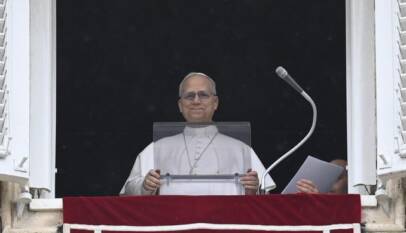
Pope Leo XIV Calls for Peace, Says Suffering of Innocents “Hurts All Humanity”
Vatican, March 2026 : Pope Leo XIV on Sunday expressed deep anguish over ongoing …