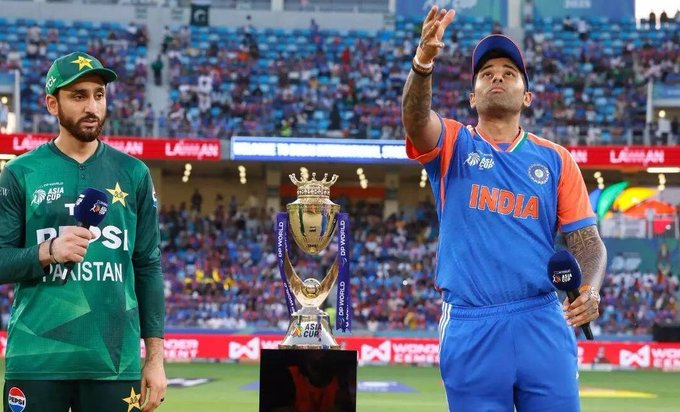
India vs Pakistan T20 World Cup Clash in Colombo: High Stakes on the Field, Big Buzz Beyond the Stadium

Colombo, Feb 2026 : One of the most eagerly awaited fixtures in world cricket will unfold on Sunday when India take on Pakistan in the men’s T20 World Cup at the iconic R. Premadasa International Cricket Stadium. Already renowned for its fierce on-field rivalry and unmatched emotional intensity, the contest has gained even more intrigue due to dramatic developments off the field in the lead-up to the match.
The tournament was recently rocked when Bangladesh withdrew, citing concerns over player security and deciding against travelling to India for their group-stage matches. To ensure the smooth continuation of the World Cup, Scotland stepped in as a replacement. In the aftermath of Bangladesh’s withdrawal, reports emerged suggesting that Pakistan were reviewing their scheduled fixture against India. However, after discussions with the Pakistan Cricket Board and the International Cricket Council, Pakistan confirmed that they would play the match as scheduled, clearing the air and allowing fans worldwide to focus solely on cricket.
On paper, India enter the contest as favourites, backed by a formidable record against Pakistan in T20 World Cups. In eight encounters between the arch-rivals at this stage, India have emerged victorious seven times, including a commanding win at last year’s Asia Cup. That history, combined with current form, places India slightly ahead, though matches of this magnitude rarely follow predictable scripts.
India’s batting strength lies in its explosive starts and a deep middle order capable of sustaining momentum. Ishan Kishan has been in sensational form, boasting a strike rate of over 220 in 2026 and recently smashing 61 runs off just 24 balls. If he gets going early, India could seize control of the powerplay and pile immediate pressure on Pakistan’s bowlers. The responsibility of stabilising the innings in the middle overs will rest on Suryakumar Yadav and Tilak Varma, while finishers like Hardik Pandya, Shivam Dube, and Axar Patel provide late-innings firepower.
India’s bowling attack appears equally well balanced. Jasprit Bumrah leads the pace unit, supported by a spin trio of Varun Chakravarthy, Axar Patel, and Kuldeep Yadav. The combination is well suited to Colombo’s traditionally slow, turning surface, where variation and control often trump raw pace.
Pakistan, however, arrive with momentum of their own after stringing together successive group-stage victories. Their key strength lies in spin, led by Shadab Khan and the unconventional Usman Tariq, both adept at exploiting sluggish pitches and testing even the deepest batting line-ups. In the batting department, Sahibzada Farhan, fresh from a fluent 73 in the previous match, is expected to anchor the innings alongside Babar Azam and Usman Khan. With off-field uncertainties now resolved, Pakistan can focus entirely on performance, giving them a genuine opportunity to challenge India’s dominance.
The toss could play a decisive role. Intermittent rain is forecast, and cloud cover may assist seamers early on, while a slowing pitch later in the game is likely to bring spinners into play. In T20 cricket—especially in a contest of this magnitude—a single partnership, a sudden collapse, or one perfectly executed delivery can swing the outcome. While India may start as favourites, this is far from a one-sided affair.
Beyond the boundary ropes, the match has electrified Colombo. For many locals, the India–Pakistan clash represents not just sporting drama but an economic opportunity. Rehan Fernando, a 41-year-old father of two, was visibly upbeat during his 20-minute drive to the stadium area. “I’ve heard tickets are sold out,” he said with a smile. “Who knows, I might earn enough to finally get some pending repair work done.” His sentiment reflects a broader mood across Sri Lanka, where the match—despite having no direct national stake—has become a source of income for many.
A stroll through Park Street Muse, Colombo’s vibrant nightlife hub, underscores the city’s buzz. From De Soysa Circle down Kinsey Road to the bustling food street, gleaming buildings, wide clean roads, luxury car showrooms, bespoke tailoring outlets, and fine-dining restaurants project the image of a cosmopolitan port city. By Saturday night, Indian and Pakistani visitors outnumbered locals at many pubs and bistros.
Michael Amarasiri, store manager at a popular watering hole, admitted he was overwhelmed. “We’re struggling to find seats for our customers,” he said. “Weekends are usually busy, but we didn’t anticipate this kind of rush.” The stop-start uncertainty around the match had earlier caused headaches for the tourism sector. Some hotel bookings were cancelled when doubts emerged over Pakistan’s participation. But once the fixture was confirmed, cancellations turned into fresh reservations. Fans from Mumbai, Chennai, Bengaluru, and other Indian cities began calling again, seeking one- or two-night stays.
As Colombo braces itself for Sunday’s blockbuster, anticipation is at fever pitch. With elite skills, intense emotions, tactical battles, and a charged atmosphere both inside and outside the stadium, the India–Pakistan clash promises drama, high-stakes competition, and moments that will linger long after the final ball is bowled.
Team Maverick






AAHL’s Navi Mumbai, Guwahati Airports in Prix Versailles 2026 List
Editor’s Synopsis • Navi Mumbai International Airport and Lokpriya Gopinath Bordoloi Inter…

AAHL’s Navi Mumbai, Guwahati Airports in Prix Versailles 2026 List
Editor’s Synopsis • Navi Mumbai International Airport and Lokpriya Gopinath Bordoloi International Airport, both …