Following Years Of Legal Battles, Chief Rabbinate Opens Rabbinical Tests To Women.

Jerusalem; February 2026: Following years of legal battles, the Chief Rabbinate has opened registration for its upcoming rabbinical tests to women, officials said Wednesday. A statement announcing the start of the registration period for the tests in the Hebrew month of Iyar, between April and May, was issued by a Rabbinate spokesperson, after months of uncertainty following a landmark decision by the High Court of Justice in July.
While the Rabbinate statement did not explicitly mention that women can sign up for the tests, the spokesperson has confirmed to several media outlets covering the press meet – that this was the case, “as the High Court ruled”.
“I’m really excited”, said Rabbanit Sarah Segal-Katz, who was among the group of women and rights organisations that petitioned the Court in 2019, asking for women to be allowed to take the tests. “We have been waiting for the opportunity to register since July”.
The Chief Rabbinate administers tests in the major areas of Halacha (Jewish law) including:
- Kashrut, Niddah (family purity laws),
- Shabbat, mourning, and marriage laws.
Candidates who wish to be eligible to be recognised as “Rabbis” need to pass a certain number of those tests:
- 06 are enough to achieve the level of “Neighbourhood Rabbi”,
- 11 are necessary to achieve the title of “City Rabbi”.
However, the Rabbinate also grants other types of certificates to those who pass the tests, with important economic and social implications. For example:
“Yoreh Yoreh” (he may teach) certificate, which is obtained after passing 06 tests, under certain conditions, considered equivalent to an academic degree in terms of salary benefits and is a prerequisite to access some public jobs.
Segal-Katz decided to petition the court after she sought to apply for the position of ritual bath supervisor in Jerusalem. Halacha (Jewish law) requires married women to immerse after menstruation.
Segal-Katz held all the relevant Halachic knowledge: she had studied at Beit Morasha, an organisation that early on offered high-level learning for women Torah scholars in Israel; she had graduated from the Rabbanut Yisraelit program for Jewish leaders at the Hartman Institute; and she subsequently received Semicha (rabbinical ordination) from Yeshivat Maharat in New York, one of the first Orthodox institutions to ordain women.
Yet the position of ritual bath supervisor, which is administrative rather than religious, is open only to candidates who have passed at least three of the Rabbinate tests, thereby excluding women.
“The first test I will take is going to be Niddah because I think it is very important at the symbolic level”, Segal-Katz asserted. “We are talking about Halachot (laws) that deal with the woman’s body, and we have not been allowed to take the exam”.
The Rabbanit, who is Israeli but has been living in New York for the past two years, said that she felt she already had the appreciation of Israeli society, but it was also important that the state officially recognise her knowledge, for her and for the younger generations of female Torah scholars.
At the same time, she said she was not seeking the Rabbinate to officially certify her as a “Rabbi”, which in mainstream Orthodoxy is not considered acceptable (neither the petitioners nor the court required the Rabbinate to officially certify women as rabbis, but only to allow them to access the tests so that they can receive the relevant social and financial benefits equal to men, in the event of comparable marks).
The religious rights group ITIM said in a statement that the Rabbinate’s move was “a historic event”.
“We welcome the Chief Rabbinate’s decision to honour the ruling of the High Court of Justice and to open the Halachic examinations to women”, said ITIM chairman Rabbi Dr. Seth (Shaul) Farber. “This is an important and meaningful step that strengthens public trust in religious institutions and reflects a commitment to equality within the framework of halacha and the law”.
“We hope that the registration and examination process will proceed smoothly, professionally, and respectfully, so that every candidate may fulfill her aspirations in Torah study and certification”, he added. “This is a development that is good for Torah, good for Israeli society, and good for the future of Jewish life in Israel”.
Since the July ruling, the Rabbinate had been dragging its feet in implementing the decision.
The tests usually take place three times a year, in the summer, spring, and fall, but registration for the fall tests never opened, while the Rabbinate asked the Court to rule again on the case, while expressing its willingness to allow women to be tested only in some subjects (the request was rejected, as it happens in the vast majority of cases when an additional hearing is asked after a ruling).
In the Wednesday statement, the Rabbinate not only did not explicitly mention that women are allowed to take the test, but appeared to be pushing against the possibility for them to be certified.
“The examinations administered by the Chief Rabbinate constitute a tremendous spiritual enterprise”, chief rabbis Kalman Ber and David Yosef said. “With God’s help, we will stand firmly on guard to ensure that only those who, according to halacha, are worthy to bear a certificate signed by the Chief Rabbinate will merit to receive one, and that those who are not worthy will not”, they added.
The statement also announced that the Chief Rabbinate Council has established a professional committee “to review the criteria for the exams and to lead a comprehensive reform of the examination system, which is expected to be published later this year”.
Team Maverick.






Iran Rejects US Peace Plan, Demands Permanent End to Conflict
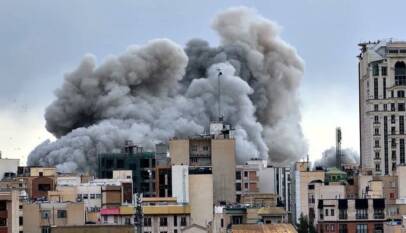
Tehran, April 2026: Iran has rejected a US-proposed 15-point peace plan, instead putting f…
Iran Rejects US Peace Plan, Demands Permanent End to Conflict
Tehran, April 2026: Iran has rejected a US-proposed 15-point peace plan, instead putting forward …