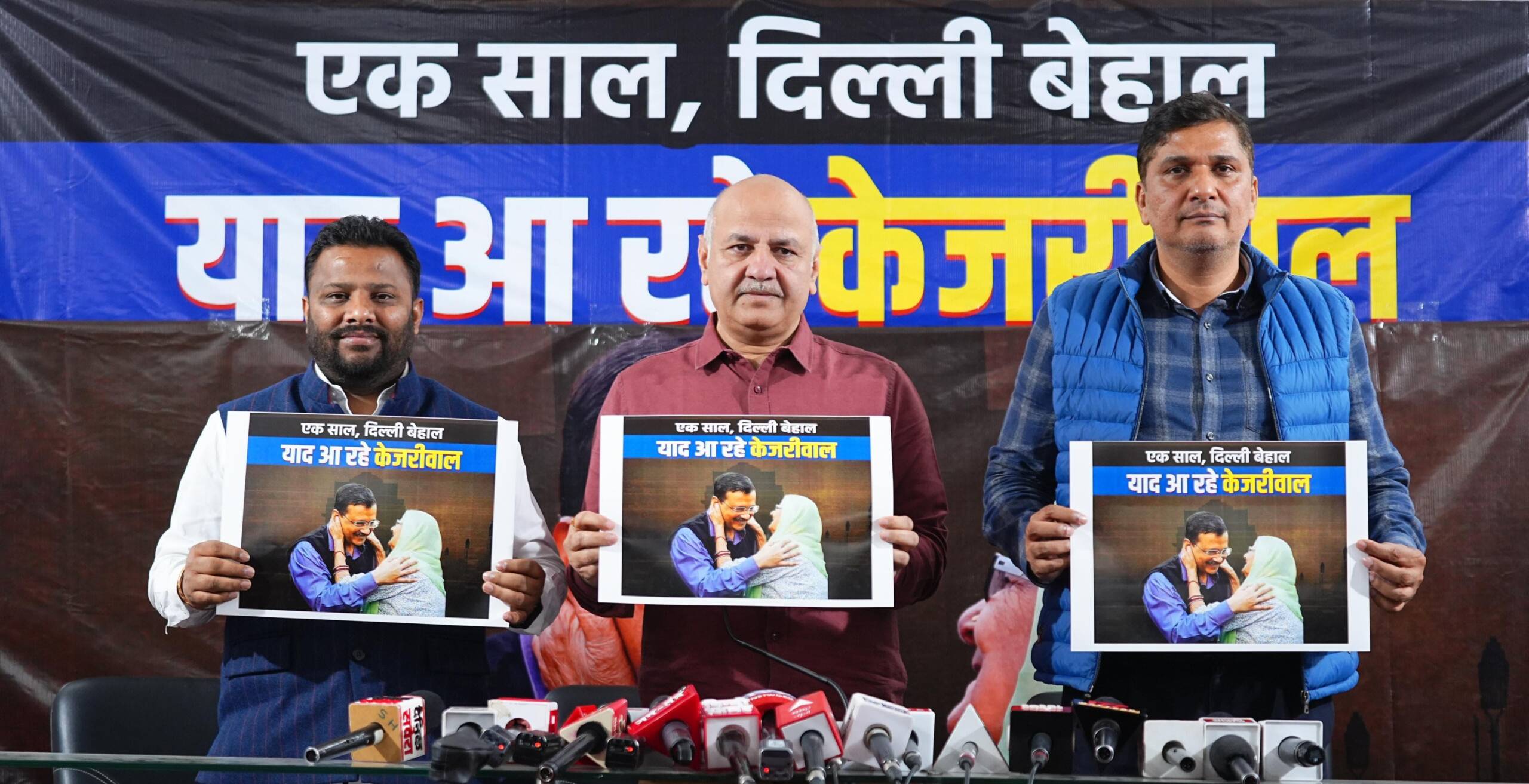
Why #SufferingDelhiMissesKejriwal Is Trending on Social Media

Feb 2026 : India’s capital, Delhi, is currently at the centre of an intense political debate. The hashtag #SufferingDelhiMissesKejriwal has been trending on social media, and it represents more than just online chatter. It reflects a growing sentiment being heard across several neighbourhoods of the city, where people are openly comparing the past with the present.
Before February 2025, when the Aam Aadmi Party government led by Arvind Kejriwal was in power, many residents believed that the direction of governance in Delhi had changed. Mohalla Clinics were widely seen as a major relief for ordinary citizens, offering accessible healthcare without financial burden. Government schools were revamped, classroom infrastructure improved, and academic results became a subject of discussion. Subsidies on electricity and water were projected as direct support for middle-class and low-income families. During that period, the “Delhi Model” was discussed at both national and international levels, and the government portrayed itself as the voice of the common citizen.
However, after February 2025, when the Bharatiya Janata Party formed the government and Rekha Gupta assumed office as Chief Minister, the political narrative shifted. The Aam Aadmi Party claims that within a year, governance priorities have changed noticeably. Complaints are emerging from several areas that the pace of services at Mohalla Clinics has slowed. Traffic congestion has once again become a major talking point. There are concerns about the lack of strict and effective action on pollution. In some localities, dissatisfaction over water supply has grown, and questions are being raised about the cleanliness system.
While the government highlights development initiatives and new schemes, the Aam Aadmi Party describes these claims as disconnected from ground realities. On social media, in neighbourhood conversations, and during local discussions, comparisons are repeatedly being drawn about whether conditions were better earlier. People say they once felt relief from electricity bills, had growing confidence in government schools, and could access nearby healthcare facilities with ease. Now, they are questioning whether the present government will address these everyday issues with the same level of priority.
Delhi’s politics has always had a strong influence on national politics. One year is generally considered an initial assessment period for any government, but expectations in the capital are particularly high. The opposition describes this trend as the true voice of the people, while the government dismisses it as a politically driven narrative. Ultimately, the final judgment will rest with the public, but it is clear that political debate in the capital has intensified.
Delhi today stands at a crossroads of comparison. On one side is a phase supporters describe as a time of reform and relief; on the other is the present, marked by rising voices of dissatisfaction. The key question remains whether the current government will be able to address these concerns, or whether Delhi’s politics is once again heading toward a major shift.
Rahul Gandhi Calls Dharmendra Pradhan’s Resignation a Victory for Students, Demands Further Action
New Delhi, July 2026 : Leader of the Opposition in the Lok Sabha Rahul Gandhi on Saturday …
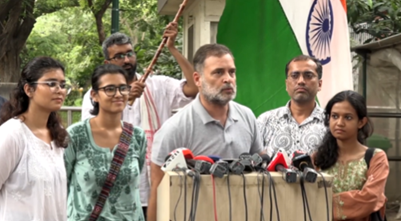
Rahul Gandhi Calls Dharmendra Pradhan’s Resignation a Victory for Students, Demands Further Action
New Delhi, July 2026 : Leader of the Opposition in the Lok Sabha Rahul …