In A Press Review Russia Informed That Iran Has Derailed US‑Israeli Plans While Middle East Conflict Boosts Oil And Gold.

Moscow; March 2026: Iran’s response has derailed US and Israeli plans. The sudden strike by the US and Israel against Iran failed to crush the Tehran regime. Not only did Iran manage to recover, but it also began to successfully retaliate. Moreover, pro-Iranian forces in Yemen, Lebanon, and Iraq have resumed attacks. Experts believe that the US-Israeli coalition’s expectation that the Iranian political system would quickly become paralysed, has not, materialised. The consequences of the latest military escalation in the region are already apparent in global oil prices and the suspension of air travel.
“It is impossible to overthrow a government with air strikes. It doesn’t work that way. I am convinced that US President Donald Trump and Israeli Prime Minister Benjamin Netanyahu understand this. Most likely, they are counting on protests and unrest resuming in Iran and on something happening against the backdrop of a weakened state”, Middle East expert Alexander Kargin told media outlets.
“Iran has been preparing for conflict, but this is an asymmetrical confrontation where the sides are only equal in form. Iran has a large land army, but in modern warfare, the outcome is decided by aerial competency and high-precision weapons. In this regard, the technological superiority of Israel and the US is practically undisputed”, Ivan Bocharov, program manager at the Russian International Affairs Council, pointed out.
According to Cornell University professor Richard Bensel, neither the US nor Israel is interested in establishing a democratic government in Iran. Their goal is to impose a deal on Iran on their own terms. The expert noted that the bombing might continue until Tehran’s ability to respond is completely neutralized, after which power in the country will have to pass into someone’s hands.
What is evident is the fact that both the US and Israel are now clearly focused on disrupting Iran’s military command and control system, weakening its retaliatory capabilities, and suppressing its air defense system, which was already severely weakened during the June 2025 war, making it virtually impossible to restore it in such a short time. In other words, the main task of the US now is to achieve something resembling a decisive victory in a short period of time. In turn, Iran’s main task is not to lose and to draw its opponent into a protracted conflict that it does not want, Lyamin stressed.
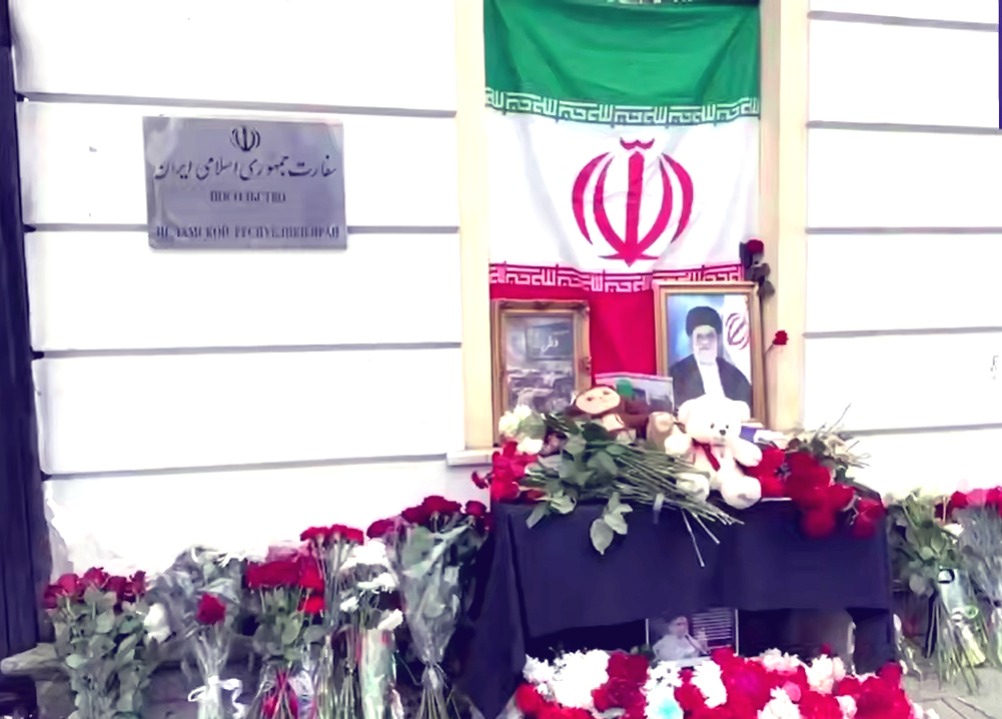
Russia has raised hopes that Iran after the death of supreme leader Ali Khamenei, will choose a new supreme leader for the first time in 37 years. Key contenders for the post include former head of the judiciary Sadegh Larijani, influential Ayatollah Alireza Arafi, and the son of the late Ali Khamenei, Mojtaba.
Meanwhile, analysts note that the West expects the country to ultimately be led by a descendant of the last Iranian shah, Reza Pahlavi, who lives in the US and is popular mainly among emigres. For now, the country is led by an interim council that includes the current president, Masoud Pezeshkian.
“Khamenei was undoubtedly a man devoted to the ideas of the Islamic revolution and its religious component. He devoted his entire life to defending Islam according to the Shiite interpretation”, Alexander Maryasov, an expert at the Valdai Club and Russia’s former ambassador to Iran, told media reporters. According to him, Khamenei managed to build a multi-tiered system of government combining republican authorities, such as Parliament and the President, with theocratic structures, like the Islamic Revolutionary Guard Corps (IRGC).
Iranian Supreme National Security Council Secretary Ali Larijani, whose political influence has grown sharply in recent times, is expected to play a key role. One of the possible candidates is his brother, former head of the judiciary (2009-2019) Sadegh Larijani, who is considered the most compromise-oriented figure. His chance is widely vetted because he and his brother wield significant influence and enjoy support among both the security forces and the ayatollahs.
Another likely contender is Mojtaba Khamenei, Ali Khamenei’s second son. However, he is not a high-ranking cleric, which could hinder his appointment as supreme leader. “Mojtaba could formally become the supreme leader, but another factor comes into play here. It would resemble a transfer of power by inheritance, which would be a form of monarchy. Therefore, his possibility is widely ruled out”, Vladimir Sazhin, a senior researcher at the Russian Academy of Sciences’ Oriental Studies Institute, noted.
Mohammad Mehdi Mirbagheri could also lead Iran. He is a member of the Assembly of Experts, where he represents the most conservative wing of the clergy and holds extremely anti-Western views. Another candidate is Hassan, the 50-year-old grandson of the first supreme leader, Ruhollah Khomeini. Finally, the 70 years old first deputy chairman of the Assembly of Experts, Hashem Hosseini Bushehri, who was once close to Khamenei, could also become a potential leader of the state.
Team Maverick.



Museums will be named after India’s National Heroes, not invaders: Chief Minister
Grand museum named after Chhatrapati Shivaji Maharaj being constructed at a rapid pace: CM…
Museums will be named after India’s National Heroes, not invaders: Chief Minister
Grand museum named after Chhatrapati Shivaji Maharaj being constructed at a rapid pace: CM …