Russia And Iran War Have Embraced France And Germany On Nuclear Deterrence.

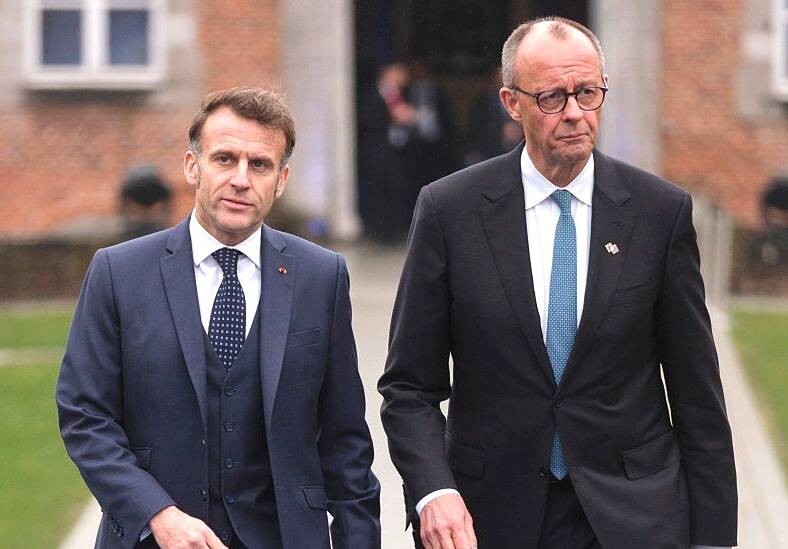
Paris/Berlin; March 2026: France and Germany have announced plans on 02nd March to deepen cooperation on nuclear deterrence, marking a significant shift in European defence policy as the continent faces rising threats from Russia and instability linked to the Iran conflict.
The countries will set up a high-level steering group to align strategy, according to a joint statement. Germany will join French nuclear exercises and inspections of strategic sites, while both aim to strengthen conventional and missile defence capabilities with other European partners. “In response to the evolving threat landscape”, the statement read, France and Germany have agreed to pursue “closer cooperation in the field of deterrence”.
The initiative reflects Europe’s push to reduce reliance on the U.S. nuclear umbrella, long central to regional security, after Russia’s invasion of Ukraine exposed gaps in Europe’s defences. Tensions have climbed further as drone and missile attacks tied to the conflict in Iran have reached Europe’s periphery, including a strike by an Iranian‑made Shahed drone on a British air base in Cyprus, causing limited damage but heightening concern.
The Iran conflict has also underscored Europe’s secondary role in U.S. and Israeli decision-making. German Chancellor Friedrich Merz is travelling to Washington to meet U.S. President Donald Trump, seeking reassurances and emphasising Europe’s commitment to NATO.
The Paris‑Berlin partnership poses challenges for Germany, which is barred from developing nuclear weapons under the Two Plus Four Treaty and the Nuclear Non‑Proliferation Treaty. Public opinion remains divided on nuclear issues, complicating policy choices.
While Germany has traditionally relied on U.S. support, Merz has recently said Europe must prepare for strategic independence if necessary.
French President Emmanuel Macron, while speaking on 02nd March at a submarine base in Brittany, announced plans to expand France’s nuclear arsenal and involve European allies in exercises, with key decisions on French nuclear strikes will remain solely with the French presidency.
Poland meanwhile said it is exploring advanced nuclear deterrence cooperation with France and other European partners. “We are arming up together with our friends so that our enemies will never dare to attack us”, Prime Minister Donald Tusk said on X.
In an unprecedented move, yesterday (03rd March) the French President Emmanuel Macron has ordered France’s nuclear-powered aircraft carrier to move from the Baltic Sea to the Mediterranean to help protect allied assets during the war in the Middle East. Macron said the Charles de Gaulle carrier will be escorted by frigates and its air wing. In a prerecorded speech on French TV, Macron added that Rafale fighter jets, air-defence systems and airborne radar systems have been deployed over the past few hours in the Middle East. “And we will continue this effort as much as necessary”, Macron said.
France, the U.K. and Germany have previously said that they weren’t involved in the strikes on Iran by the United States and Israel that began late last week, but were prepared to take defensive action to destroy Iran’s capability to fire missiles and drones. Macron, however, said that French forces had shot down drones “in legitimate self-defence in the very first hours of the conflict, to defend the airspace of our allies, who know they can rely on us”. He did not elaborate.
In explaining the need to move France’s aircraft carrier, Macron cited Monday’s strike on a British air force base on Cyprus, adding that Cyprus was a member of the European Union with which France has recently signed a strategic partnership. “This requires our support”, Macron said.
Macron also said that France has defence agreements binding the EU nation to Qatar, Kuwait, and the United Arab Emirates, as well as strong commitments to Jordan and Iraq. Noting that the war had spread to Lebanon, Macron said the Iran-backed militant Hezbollah group made “the grave mistake of striking Israel”, and putting the Lebanese people in danger but warned against Israel launching a ground operation. “This, too, would be a dangerous escalation and a strategic error. Hezbollah must imperatively cease all strikes, and I call on Israel to respect Lebanese territory and its integrity”, Macron pledged.
Reflecting France’s traditional support for rules‑based international order, Macron noted that France “cannot approve” of the strikes by Israel and the U.S. on Iran because they were carried outside of the framework of “international law”. He said it would it be “desirable” to end the strikes as quickly as possible, and that lasting peace in the region can only be achieved through the resumption of diplomatic negotiations.
Team Maverick.



Kedarnath Temple Opens Amid Devotion and Grandeur, Marking Start of Peak Pilgrimage Season
Kedarnath, April 2026 : The sacred portals of Kedarnath Temple were ceremoniously opened o…
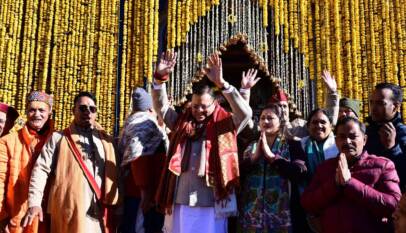
Kedarnath Temple Opens Amid Devotion and Grandeur, Marking Start of Peak Pilgrimage Season
Kedarnath, April 2026 : The sacred portals of Kedarnath Temple were ceremoniously opened on …