South Korea Pushes For Friendlier Ties With North Korea Despite Kim’s Hostility.

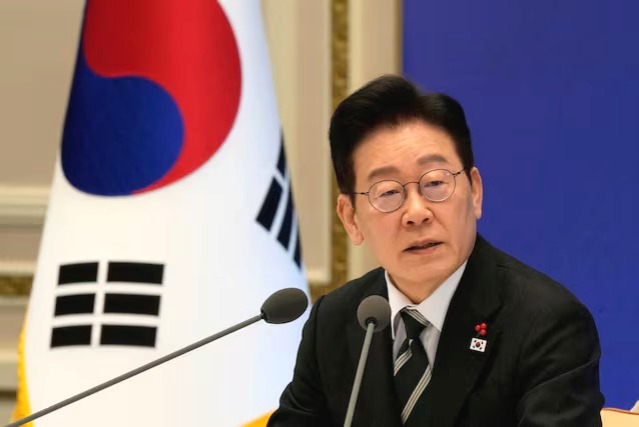
Seoul; March 2026: The recent North Korea manoeuvred civilian drone incursions into the South Korean airspace is a clear signal that North Korea can neither trust nor coexist with Seoul, directly rejecting South Korean President Lee Jae Myung’s “peaceful coexistence policy”.
North Korea have resoundingly declared that it would abandon inter-Korean engagement policies and severe all physical, legal, and communication links with Seoul. North Korea has also warned that any South Korean military action would prompt retaliatory measures that could lead to the collapse of South Korea.
Meanwhile, South Korean President Lee has announced that the administration will continue to take steps toward dialogue, despite Kim’s messages. Lee has reaffirmed vide his 01st March speech that his administration would respect the North Korean system and not pursue hostile acts or unification through absorption.
South Korea could risk weakening deterrence unless it secures reciprocal concessions. North Korea’s denouncement comes despite the Lee administration’s confidence-building measures, including scaling down United States-South Korea combined exercises and proposing restoration of the no-fly zone near the MDL.
Kim Jong Un has outlined a multi-year plan to fortify the frontline, enhance firepower systems, rebuild guard posts, and expand troop presence, however. North Korea has effectively rejected near-term dialogue with the Lee administration while entertaining the possibility of engagement with Washington. North Korea could also view South Korea’s proposed inter-Korean exchanges or financial incentives as unattractive compared to the sanction’s relief the US could offer.
In these context, it is note worthy that in the recently concluded 01st Plenary Session of the new 09th Central Committee (CC) on February 23rd, North Korea promoted Foreign Minister Choe Son Hui to full membership of the Politburo. Choe Son Hui played a central role in managing relations with Russia and the PRC. North Korea also elevated Kim Song Nam, known for his PRC portfolio, to the Politburo, Secretariat, and a department directorship.
These promotions suggest a heightened focus on consolidating ties with both Moscow and Beijing. North Korea also appointed Kim Jong Un’s sister, Kim Yo Jong, as an alternate Politburo member. Kim Yo Jong played a key role during the 2018-2020 summits with the United States and South Korea. Kim Yo Jong’s elevation to alternate Politburo membership comes as Kim Jong Un signaled a conditional openness to dialogue with the United States in a February 2th6 speech. Kim Yo Jong may again serve as a supporting role for Kim Jong Un in any future negotiations.
The new Politburo lineup excludes Kim Yong Chol, who previously oversaw inter-Korean affairs, further underscoring the de-prioritisation of personnel responsible for diplomacy with South Korea.
Meanwhile, the 20th February aerial standoff between the US Forces Korea (USFK) and PLA Air Force (PLAAF) over the Yellow Sea has sparked disagreement between the United States and South Korea. Disagreements over the USFK’s roles and responsibilities could damage the alliance and complicate policy coordination. Dozens of USFK F-16 fighter jets took off from Osan Air Base in South Korea and flew above international waters between South Korea’s and the PRC’s respective Air Defence Identification Zones (ADIZ) on February 18. The PLAAF scrambled fighter jets in response, resulting in a “brief aerial standoff”.
South Korean media outlet Yonhap News had reported that USFK officials notified the South Korean military before the exercise but did not provide details on the exercise. South Korean Defence Minister Ahn Gyu-back and South Korean Chairman of the Joint Chiefs of Staff General Jin Young-Seung lodged a complaint with USFK Commander General Xavier Brunson after the exercise.
The USFK reported on February 24 that Brunson expressed regret that he did not notify Ahn and Jin “in a timely manner” of the exercises but stated that the USFK would not apologise for conducting drills and maintaining its readiness. The USFK reportedly halted the exercises early at South Korea’s request.
South Korea’s response to the incident reflects broader disagreements over the USKF’s responsibilities and strategic priorities as part of its push for “strategic flexibility”. The US National Defence Strategy signaled a possible shift in USFK’s force posture, giving South Korea the “primary” role in deterring North Korean aggression, leaving USFK forces available to assist with other regional contingencies.
Brunson voiced his support for USFK’s strategic flexibility when he announced his “East-up Map”, a visual representation of South Korea’s ideal strategic location for defending against threats from the PRC and Russia. South Korea has perceived the USFK’s independent exercises and rhetoric on strategic flexibility as a sign of reduced US support, especially amid calls within the Trump administration for a reduction in USFK troops on the Korean peninsula and increased burden sharing by US allies. North Korea would view a reduced US troop presence in South Korea and divisions within the US-South Korean alliance positively, as that would very likely result in a less significant US involvement in a Korean peninsula contingency.
Team Maverick.


Kedarnath Temple Opens Amid Devotion and Grandeur, Marking Start of Peak Pilgrimage Season
Kedarnath, April 2026 : The sacred portals of Kedarnath Temple were ceremoniously opened o…
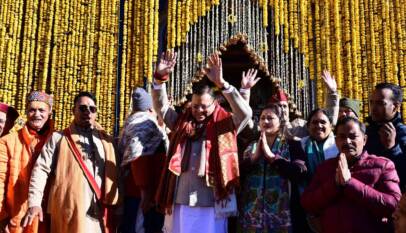
Kedarnath Temple Opens Amid Devotion and Grandeur, Marking Start of Peak Pilgrimage Season
Kedarnath, April 2026 : The sacred portals of Kedarnath Temple were ceremoniously opened on …