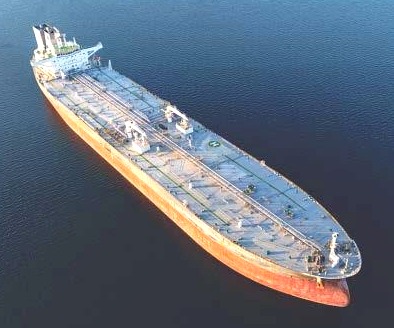
India Seeks US Marine Cover For Middle East Energy Cargoes.

New Delhi; March 2026: India is in talks with the United States to secure marine cover for vessels shipping oil from the Middle East, as New Delhi seeks to shield buyers from potential supply disruptions caused by the crisis in the Gulf, a government official said on 05th March 2026. “So far we are comfortable. The oil ministry is in discussions with major producers and traders to secure oil, liquefied petroleum gas (LPG), and liquefied natural gas (LNG)”.
U.S. President Donald Trump has ordered the U.S. International Development Finance Corporation to provide political risk insurance and financial guarantees for maritime trade in the Gulf. He has also said that U.S. Navy could begin escorting vessels through the Strait of Hormuz, the narrow shipping lane between Iran and Oman through which around a fifth of global oil and gas supplies normally pass.
India, the world’s third biggest oil importer, relies on the Middle East for about 40% of its oil imports and about 85-90% of LPG imports.
Meanwhile, the Indian official said India is looking at buying oil from all sources, including Russia, to replenish crude stocks. Indian refiners had reduced Russian oil intake to help New Delhi clinch a trade deal with Washington.
India has already increased imports of oil and cooking fuel LPG from the United States. The United States is willing to work with India to make sure India’s energy needs are met “in the short term as well as the long term”, said Christopher Landau, U.S. Deputy Secretary of State, at the Raisina Dialogue summit in New Delhi. “We are an energy-rich country, you know, we want to cooperate with you, that is one of the areas where we can cooperate obviously”, he said.
Due to lower energy supplies from the Middle East region, India’s Mangalore Refinery and Petrochemicals Ltd has suspended refined fuel exports and shut some units at its refinery. Several Indian companies have cut gas supplies to industries after production was halted by Qatar, India’s largest LNG supplier. The official said the government could “reprioritise” gas allocation to ensure no sector is closed down if the supply situation worsens.
India meets half of its 195 million standard cubic metres per day (mmscmd) of gas consumption through imports. The official said about 60 mmscmd gas is not available due to the closure of the Strait of Hormuz and force majeure by Qatar.
India is in talks with companies including Algeria’s Sonatrach Petroleum, Abu Dhabi National Oil Co, and traders including Total, Vitol, and Trafigura for oil and gas supplies, he said. Oil minister Hardeep Singh Puri has discussed the current oil market situation with the International Energy Agency (IEA) and the Organization of Petroleum Exporting Countries (OPEC).
POLITICAL RISK INSURANCE –
Multinational enterprises and banks face a number of risks when conducting business overseas. Some of these risks can be removed or mitigated by conducting due diligence on the parties involved and on the economic viability of the proposed business. Other risks are harder for investors or lenders to predict. These include some commercial risks and, non-commercial—or political—risks. Political risk insurance (PRI) is a tool for businesses to mitigate and manage risks arising from the adverse actions, or inactions of governments. As a risk-mitigation tool, PRI helps provide a more stable environment for investments into developing countries, and to unlock better access to finance.
Using PRI: Whether planning to establish a direct investment abroad or as exporters, multinational enterprises use PRI to enhance their confidence in markets perceived to be riskier than home markets. PRI allows investors to concentrate on the commercial aspects of investments, with the comfort that someone else like PRI providers will help them avoid potential losses, or reimburse them in case of a covered loss related to political causes.
Even when investors are comfortable investing in emerging markets or frontier economies, they frequently face constraints from lenders. Lenders often must provision for country risk, and PRI may, in certain cases, reduce the provisioning requirement, and generally gives comfort to lenders. This can improve access to financing, including the amounts, interest, and tenor of loans.
Who provides PRI: The political risk insurance industry helps multinational enterprises and lenders mitigate risk through insurance against adverse government actions or war, civil strife, and terrorism. Private PRI providers, which are profit-oriented, offer coverage for developing and developed countries and for varying tenors. Most public providers are national export credit agencies (ECAs), which may cover both export credit/trade transactions, as well as longer-term investments. ECAs usually support investors and lenders from their home country going into developing countries, and may also have mandates to support development and be self-sustaining. Finally, several multilateral agencies, such as MIGA, also provide PRI, these providers often have special programs for small and medium investors, companies, and banks from developing countries.
Coverages, pricing, tenor, and eligibility vary widely by PRI provider, host country (destination of the investment), and sector or type of investment. Investors and lenders are strongly encouraged to contact various providers to find the coverage most suited to them.
The Berne Union: The Berne Union, or officially, the International Union of Credit & Investment Insurers, is the leading international organization and community for the export credit and investment insurance industry. The Berne Union has more than 50 member companies spanning the globe. They share a Secretariat based in London.
The Berne Union actively facilitates cross-border trade by supporting international acceptance of sound principles in export credits and foreign investments and by providing a forum for professional exchanges among its members.
Vide a press release dated 03rd March 2026, The U.S. International Development Finance Corporation (DFC) has announced that DFC is ready to mobilise its Political Risk Insurance and Guaranty products to stabilise international commerce and support American and allied businesses operating in the Middle East during this period of conflict with the Iranian regime.
Acting under the strategic guidance of President Trump and Secretary Bessent, DFC is closely monitoring how certain sectors, maritime trade and energy in particular, are being impacted by the current conflict in the Middle East and the Iranian regime’s actions. DFC will offer support to commercial shipping charterers, shipowners, and key maritime insurance providers to minimise market disruptions and help ensure the free flow of goods and capital.
“DFC is here to provide support and stability in order to ensure there are minimal disruptions to operations and markets”, said DFC CEO Ben Black. “President Trump’s decisive show of strength and fortitude in the Middle East is building the foundation for a new era of lasting peace and prosperity in the region. DFC’s Political Risk Insurance and Guaranty products will help ensure commerce, capital, and energy can operate at capacity during the ongoing conflict”.
DFC’s involvement reflects the broader strategy of aligning American commercial tools with the president’s foreign policy, ensuring that economic engagement reinforces peace, stability, and American strategic interests across the region.
Team Maverick.





Shivakumar Meets Sonia, Rahul and Priyanka Gandhi Amid Karnataka Cabinet Discontent
New Delhi, June 2026 : Karnataka Chief Minister D.K. Shivakumar on Wednesday met senior Co…
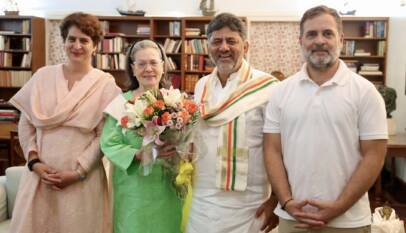
Shivakumar Meets Sonia, Rahul and Priyanka Gandhi Amid Karnataka Cabinet Discontent
New Delhi, June 2026 : Karnataka Chief Minister D.K. Shivakumar on Wednesday met senior …