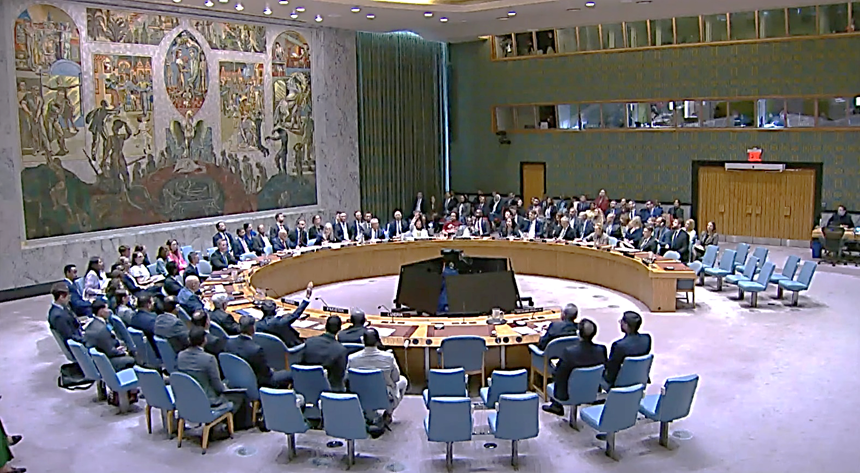
United Nation’s Security Council Votes On A Draft Resolution On The Strait Of Hormuz.

New York; April 2026: The Security Council has voted – In favour (11): Bahrain, DR Congo, Denmark, France, Greece, Latvia, Liberia, Panama, Somalia, United Kingdom, United States; Against (2): China, Russia (Vetoed); Abstentions (2): Colombia, Pakistan; on a draft resolution which strongly encourages States interested in the use of commercial maritime routes in the Strait of Hormuz to coordinate efforts of a defensive nature to contribute to ensuring the safety and security of navigation across the Strait of Hormuz, including through the escort of merchant and commercial vessels.
The text, led by Bahrain and Gulf Cooperation Council members, including Kuwait, Qatar, Saudi Arabia and the United Arab Emirates, alongside Jordan, sought to address threats to maritime security and freedom of navigation in the strategic waterway. It demands that Iran immediately cease all attacks against merchant and commercial vessels and any attempt to impede transit passage or freedom of navigation in the Strait and further calls for the cessation of attacks against civilian infrastructure, including water infrastructure and desalination plants, as well as oil and gas installations.
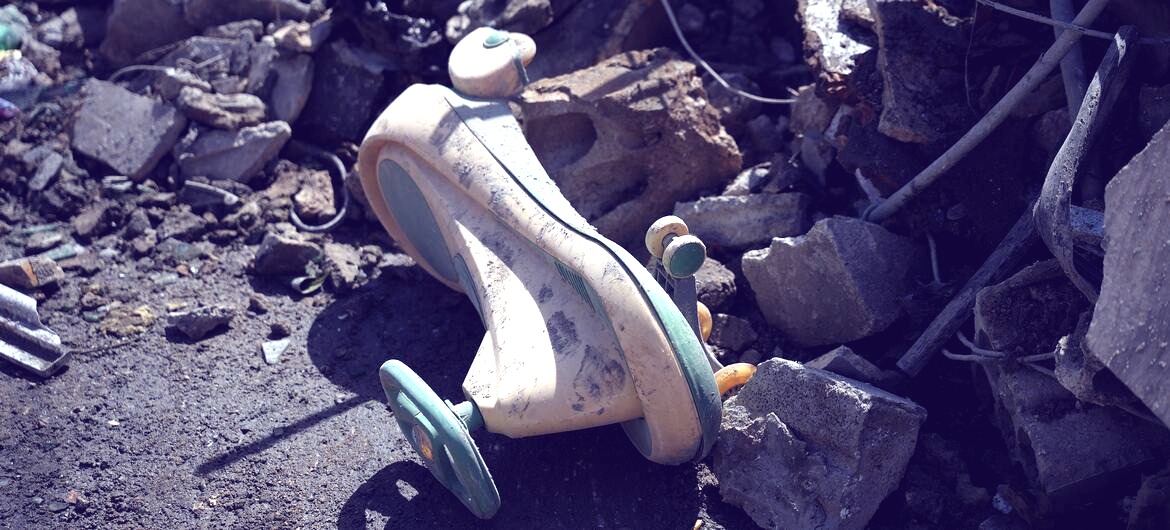
Today’s vote followed multiple rounds of negotiations, and occurs against a backdrop of regional escalation in the wake of military action commenced by Israel and the United States against Iran on 28 February. The Council has since been briefed on spillover effects in Gaza, Lebanon and Syria.
Iran, Jordan, Kuwait, Qatar, Saudi Arabia, and the United Arab Emirates have participated in the meeting alongside the 15 Council members.
Speaking after the vote, Abdullatif bin Rashid Al Zayani, Minister for Foreign Affairs of Bahrain, expressed regret that the Council failed to adopt the draft resolution. “Failing to adopt this resolution sends the wrong signal to the world, the people of the world, a signal that threats to international waterways can pass without any decisive action by the international community”, he said, speaking in national capacity. He added that the Council should shoulder its responsibility, emphasising that the draft had been intended as a step towards ensuring freedom of navigation in the Strait, while also calling on Iran to fully comply with its obligations and cease attacking its neighbours.
United States stands firmly with Middle East partners at ‘moment of reckoning; “The strait of Hormuz is too vital to the world to be used as hostage, to be chocked, to be weaponised by any one State”, said US Ambassador Michael Waltz. While the US stands with the people of the Gulf, by contrast, China and Russia “sided with a regime that seeks to intimidate the Gulf into submission”. Recalling that “the Iranian regime’s first act was to take dozens of Americans hostage” 47 years ago, he said that it now takes the Strait of Hormuz hostage and, with it, the world’s economy. “Well, colleagues, that may be its last act. We’ll see”, he added.
The request from Bahrain was not unreasonable, he continued. It was a simple resolution; Iran must stop attacking the Gulf”, he said, adding that “when critical shipments are delayed – the world will know who exactly chose destruction over responsibility”.
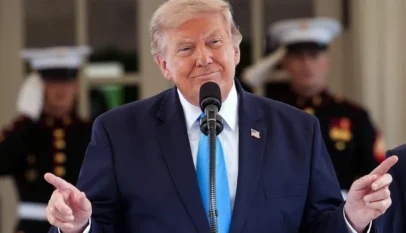
The UN High Commissioner for Human Rights has urged the international community to take urgent steps to de-escalate the conflict in the Middle East and help protect civilian lives. “I deplore the tirade of incendiary rhetoric being used in the Middle East war over the last couple of weeks by all parties, including the latest threats to annihilate a whole civilisation and to target civilian infrastructure”, Volker Türk said. “This is sickening. Carrying through on such threats amounts to the most serious international crimes”. His statement follows US President Donald Trump saying that “a whole civilization will die tonight, never to be brought back again” if Iran does not agree to open the Strait of Hormuz maritime corridor.
Pakistan asserted that, “at this critical juncture, restraint, diplomacy and dialogue must prevail. Our objective is clear, a permanent end to hostilities, containing the expansion of this conflict and preventing any further loss of civilian life or destruction of critical infrastructure”, said Asim Iftikhar Ahmad, the Ambassador of Pakistan.
Pakistan has been actively engaged in diplomatic efforts towards that end in concert with its partners in the region and beyond, he said, adding that last week, China and Pakistan announced a five-point initiative. It includes: a sequenced road map encapsulating an immediate halt to hostilities; launch of inclusive peace talks; protection of civilians and critical infrastructure; restoration of maritime security in the Strait of Hormuz; and a firm reaffirmation of the UN Charter and international law as the indispensable framework for a lasting political settlement.
Latvia calls Iran’s use of international waterway as bargaining chip ‘categorically unacceptable’; “Iran is setting a dangerous precedent which we cannot allow or normalize, and we commend Bahrain for addressing precisely this crucial reality in its resolution,” said Chargé d’affaires Oļegs Iļģis of Latvia.
“We must ensure maritime security and freedom of navigation in the Strait of Hormuz”, he said, noting supply chains are being disrupted, global energy prices have spiked and acute food insecurity is growing at an alarming rate.
He has condemned the Iranian regime’s “despicable attacks” against civilians and civilian infrastructure and unprovoked strikes against countries in the region. “We repeat our calls for immediate de-escalation and for the protection of civilians”, he said.
Russian Federation says resolution ‘abounded with unbalances, inaccurate and confrontational elements’; Ambassador Vassily Nebenzia of the Russian Federation said that his delegation voted against today’s text, which constituted a “fundamentally erroneous and dangerous approach to the situation in the region. The resolution presented Iranian actions as the sole source of regional tensions. Illegal attacks by the United States and Israel were not mentioned at all”, he said.
While further stressing that the resolution’s implications are “clear to us”, he reminded Council members what the “loose and expansive interpretation” of resolution 1973 (2011) caused in Libya. The Russian Federation and China, he said, will soon propose an alternative resolution with China. “Our draft will be concise, equitable and balanced”, he said.
Suvro Sanyal – Team Maverick.

Pakistan Appoint Mike Smith as Test Batting Coach Amid Batting Crisis
Mumbai, Aug 2026 : Pakistan have appointed former South African first-class cricketer and …

Pakistan Appoint Mike Smith as Test Batting Coach Amid Batting Crisis
Mumbai, Aug 2026 : Pakistan have appointed former South African first-class cricketer and Level …