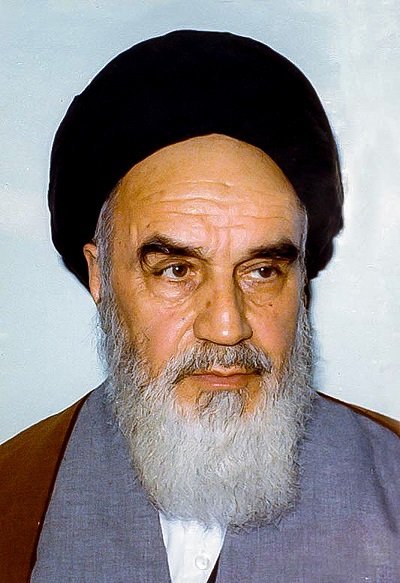
Ayatollah Khomeini’s Indian Roots In Kintoor Village Of Uttar Pradesh.

Tehran/Lucknow; April 2026: The quiet tinsel village of Kintoor in Uttar Pradesh’s Barabanki district holds a surprising historical distinction – bolstering a civilisational ties with Iran, alongside a spiritual and cultural connection among the Shia community. It is the ancestral home of Ayatollah Ruhollah Khomeini, the leader of the 1979 Iranian Revolution. While the geopolitical ties between India and Iran are often discussed in terms of energy and trade, the spiritual and lineage-based connection remains a profound, living history for the residents of Barabanki.
Ayatollah Khomenei’s grandfather, Syed Ahmad Musavi Hindi, was born in the village of Kintoor in Uttar Pradesh’s Barabanki in 1790. He later migrated to the village of Khomein in Iran, where his family lineage subsequently flourished. But, even after settling in the Iranian village of Khomein, he kept the suffix “Hindi” in his name to honour his Indian heritage. It is said that in the year 1830 at the age of about 40, Syed Ahmad Musavi Hindi travelled to Iran via Iraq, accompanied by the Nawab of Awadh. There, weary of British rule, he established his permanent residence in the village of Khomein, Iran. After settling in Iran his family rose to become highly influential in both religious and social spheres.
Syed Ahmad Musavi Hindi’s son, Ayatollah Mustafa Hindi, became a renowned scholar of Islamic theology. His son Ruhollah, who was born in 1902, later rose to fame under the names ‘Ayatollah Khomenei’ or ‘Imam Khomenei’. Ruhollah Khomeini eventually overthrew the Pahlavi monarchy, forever changing the Middle East while carrying a lineage that had long commenced in the fertile plains of Uttar Pradesh.
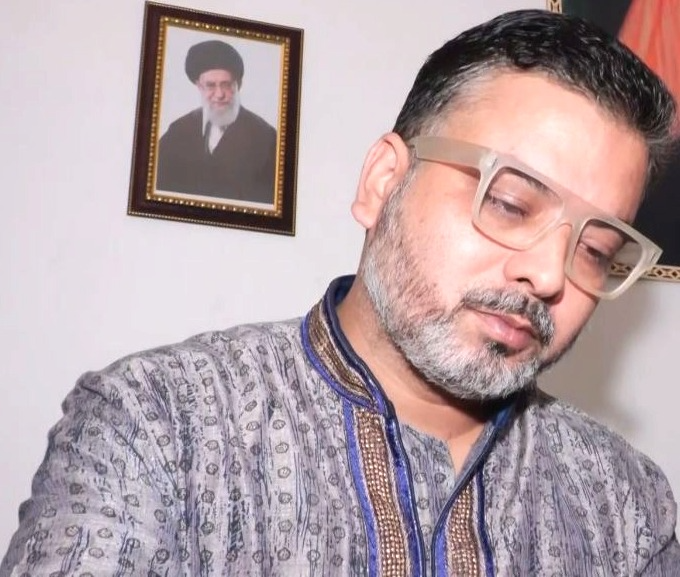
Meanwhile, an eminent physician Syed Nihar Ahmad Kazmi from Barabanki having closed ties with the predecessors of the Iranian family has posted on his “X” handle:
“Ayatollah Khomeini has links to the whole of India and the world. He was ‘Rehbar-e-Moazzam’ (Supreme Leader), and we love and revere him. He was our religious leader…Ayatollah Khomeini had sounded the bugle of Iran’s first revolution and liberated it in 1979. He had connections to Kintoor. His grandfather, Syed Ahmad Musavi migrated from here to Iran in 1830…In fact, he had to stay there for several reasons. He was preparing the ground for the 1857 revolution (in India) and was very active. So, the British didn’t want him to come back. So, he stayed back in Iran and settled in Khomeyn…Of all his followers, Imam-e-Khomeini trusted Ayatollah Khamenei the most. He was made the Supreme Leader after the death of Imam-e-Khomeini…We also have a Trust, a Foundation here with the name of Ayatollah Khomeini. Free-of-cost eye camps which offer cataract surgeries and free glasses. We have also spoken with Medanta about health camps…I also run a coaching institute here, which is free of cost….”
Dr. Kazmi has further asserted, “Ayatollah Khamenei does not have a direct connection to Kintoor, but Ruhollah Khomeini, who led the Islamic revolution, his grandfather hailed from here. He migrated to Iran and resided in Khomein. The British regime did not want him to return to India. Ruhollah Khomeini’s father passed away when he was 05 years old, and he was raised by his grandfather”.
Team Maverick.



Deepti’s Five-Wicket Magic Powers India to Dominant Win Over Pakistan
Birmingham, June 2026 : India launched their ICC Women’s T20 World Cup 2026 campaign in co…

Deepti’s Five-Wicket Magic Powers India to Dominant Win Over Pakistan
Birmingham, June 2026 : India launched their ICC Women’s T20 World Cup 2026 campaign …