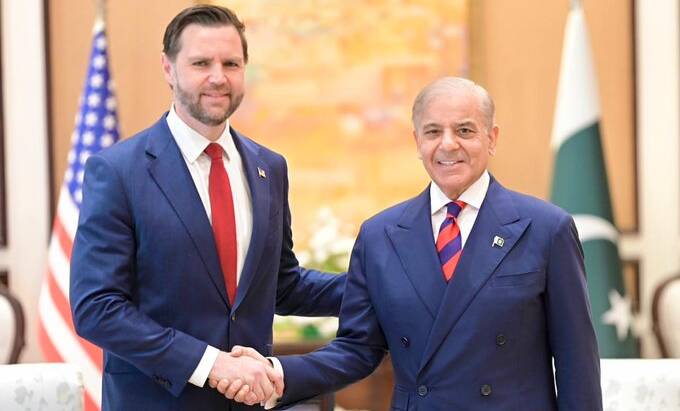
US Vice President’s Exit From The Negotiation Has Caused A Stalemate Questioning His Ability.

Islamabad; April 2026: Today early morning (IST), the United States Vice President JD Vance – who was entrusted by President Trump to ensure the Peace Deal has left Pakistan without signing any agreement has raised serious doubts about his abilities in handling such a pressure mounted atmosphere, and has further characterised the diplomatic failure. Meanwhile, Donald Trump’s son-in-law Jared Kushner, and Steve Wilcott is expected to continue the Peace Talks today (12th April 2026).
Michael Kugelman, Director of the South Asia Institute at the Wilson Centre, suggested that the “Islamabad Dialogue” is merely a pause in a much longer game. In a post on X, Kugelman argued that the sheer seniority of the American delegation, and the domestic pressures weighing on the White House indicates that the United States is far from walking away from the negotiating table. “The US, for domestic political reasons, wants a deal that enables it to exit the war. That such a senior group flew all the way to Pakistan shows the US commitment. Despite Vance’s comments, this likely isn’t over. More talks could come, but unclear if they’ll be in Pak or elsewhere”, Kugelman said.
With the American electorate increasingly weary of foreign entanglements and the 2026 economic crisis straining resources, the administration is under immense pressure to secure an “exit strategy” from the regional conflict. By hosting the most significant US-Iran engagement since 1979, Islamabad has proved its utility to Washington at a time when the administration is seeking reliable mediators. Kugelman’s assessment suggests three likely paths forward:
Continued low-level technical discussions away from the public eye to resolve the “Lebanon condition” and leverage gaps; future high-level summits possibly shifting to a neutral European city or a Middle Eastern hub like Muscat or Doha and a period of “maximum pressure” rhetoric from the US to force Iranian concessions before the next formal round begins. While the Islamabad marathon didn’t cross the finish line, Kugelman’s analysis indicates that the US is too deep into this diplomatic “misadventure” to quit now.
JD Vance left Pakistan after Iran and the US hit a stalemate in the talks, with the Strait of Hormuz and Iran’s nuclear capacities being key bones of contention. “We’ve had a number of substance agreements with the Iranians; that is the good news. The bad news is that we have not reached an agreement. That is bad news for Iran, much more than it is bad news for the United States of America”, Vance told reporters in Islamabad.
Meanwhile, Iran’s Head of Center for Public Diplomacy and Spokesperson Esmaeil Baqaei, today (12th April) have said that Iran’s negotiators are employing all their capabilities, adding that the success of the efforts depends on the acceptance of Iran’s legitimate rights and interests. Baqaei said that Iran’s heavy losses have made its resolve stronger than ever and that it uses all its tools to secure its national interests.
“Nothing can or should deter us from pursuing our great historical mission toward our beloved homeland and noble Iranian civilisation. The Islamic Republic of Iran is determined to utilize all tools, including diplomacy, to secure national interests and protect the country’s well-being”, he said.
“In the past 24 hours, discussions were held on various dimensions of the main negotiation topics, including the Strait of Hormuz, the nuclear issue, war reparations, lifting of sanctions, and the complete end to the war against Iran and in the region. The success of this diplomatic process depends
on the seriousness and good faith of the opposing side, refraining from excessive demands and unlawful requests, and the acceptance of Iran’s legitimate rights and interests”, he added.
At the same time, in a scathing attack on the Donald Trump regime, Christine Fair, a prominent professor at Georgetown University, offered a blistering critique of the US team, labelling them the “junior varsity” compared to the seasoned diplomatic corps brought by Tehran. While JD Vance have characterised the lack of an agreement as “bad news for Iran”, Christine Fair raised alarms over the composition of the American delegation and the shifting leverage in the Middle East.
Christine Fair noted that the absence of heavyweights like Secretary of State Marco Rubio and Paul Kapur, Assistant Secretary of State for South and Central Asian Affairs, have sent a negative signal to the Iranians. “I think the absences are really telling. The American team is quite weak compared to the Iranian team. Americans often think that because Iran is estranged from the United States, they are estranged from the rest of the world. Iran brought a very seasoned, knowledgeable set of negotiators to the party, while the Americans brought in the ‘junior varsity’. What do Kushner or Witkoff really bring to the party?” she said.
While the US maintains overwhelming military superiority, Fair argued that the US fundamentally underestimated Iran’s economic hand. Fair acknowledged US ordnance capabilities but noted that “economically, the Iranians have a lot more leverage. I think militarily, the United States has a lot more leverage. It has a lot more ordnance than it can bring to the party. However, economically, the Iranians have a lot more leverage than the Americans even remotely considered when they launched on this misadventure. Both countries have leverage, but on the net the Iranians have a lot more than the Iranians have a lot more than the Americans anticipated they would”, she said.
Adding a layer of complexity to the talks, Pakistan recently deployed a fleet of aircraft to Saudi Arabia as part of their mutual defence pact. Fair noted that this move, occurring simultaneously with the peace talks, likely weighed heavily on Iranian perspectives, as Islamabad balances its role as a mediator with its military obligations to Tehran’s regional rival. “Even as the talks were going on, Pakistan sent a fleet of aircraft to Saudi Arabia as a part of their mutual defence pact. You would have to ask an Iranian official how this mutual defence pact with Saudi Arabia, and the fact that Pakistan is acting in defence of that agreement, is affecting Iranian perspectives”, she said.
Despite the stalemate, Fair agreed that Pakistan has emerged as a major winner. Fair described Pakistan’s recent foreign policy as the “politics of bootlicking”, noting how Islamabad has successfully “inveigled” itself back into Washington’s good graces through a series of calculated moves: Handing over the alleged mastermind of the Abbey Gate attack and investing in the Trump family’s cryptocurrency ventures.
“I actually think Pakistan over the last year has done an incredible job of inveigling itself into the US’s good graces, and I think this is the apotheosis of that. It began when Pakistan handed over the person that Washington and Pakistan claimed was the mastermind of the Abbey Gate attack. My sources tell me he was nothing of the sort. This was followed up with Pakistan buying into Trump’s son’s crypto scam. We know what happened during Operation Sindoor when Pakistan really snatched a diplomatic victory from the jaws of defeat. I call this the politics of ‘bootlicking’, which Pakistan masterminds”, she said.
“Whether an agreement happens or not, this is still a win for Pakistan. Obviously, if some kind of durable peace comes out of this, it is a huge victory for Islamabad. But even if it doesn’t, the fact that Pakistan is facilitating negotiations between the United States and Iran at a level which hasn’t happened since 1979 is still a massive victory for them”, she said further.
Israel was identified as the primary impediment to a breakthrough. With Iran demanding a ceasefire in Lebanon as a precondition, Israel’s vow to continue its military strikes has created an intractable barrier. “That is my fear. I think Israel is the biggest source of insecurity in the Middle East and by far the biggest impediment to peace, not Iran. Israel has made it very clear that it is going to continue prosecuting its war in Lebanon, which is one of the issues the Iranians have flagged as a precondition for peace. I see Israel as a big spoiler here. It is in Israel’s interest if the United States continues to fight a war that principally benefits Israel. Iran was not an imminent threat to the United States, and it is debatable whether it was one to Israel, but Israel is the big winner here, not the United States”, she said.
But most importantly – the departure of VP JD Vance marks a cooling period in what was hoped to be a historic breakthrough. As the US team returns home, the threat of renewed regional escalation looms.
Suvro Sanyal – Team Maverick.





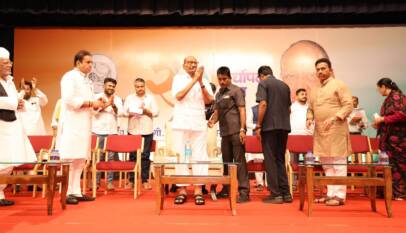
Shivakumar Meets Sonia, Rahul and Priyanka Gandhi Amid Karnataka Cabinet Discontent
New Delhi, June 2026 : Karnataka Chief Minister D.K. Shivakumar on Wednesday met senior Co…
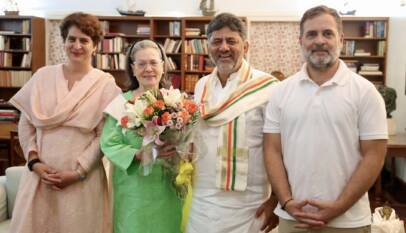
Shivakumar Meets Sonia, Rahul and Priyanka Gandhi Amid Karnataka Cabinet Discontent
New Delhi, June 2026 : Karnataka Chief Minister D.K. Shivakumar on Wednesday met senior …