Moving From Energy Crisis To Energy Security With Renewables.

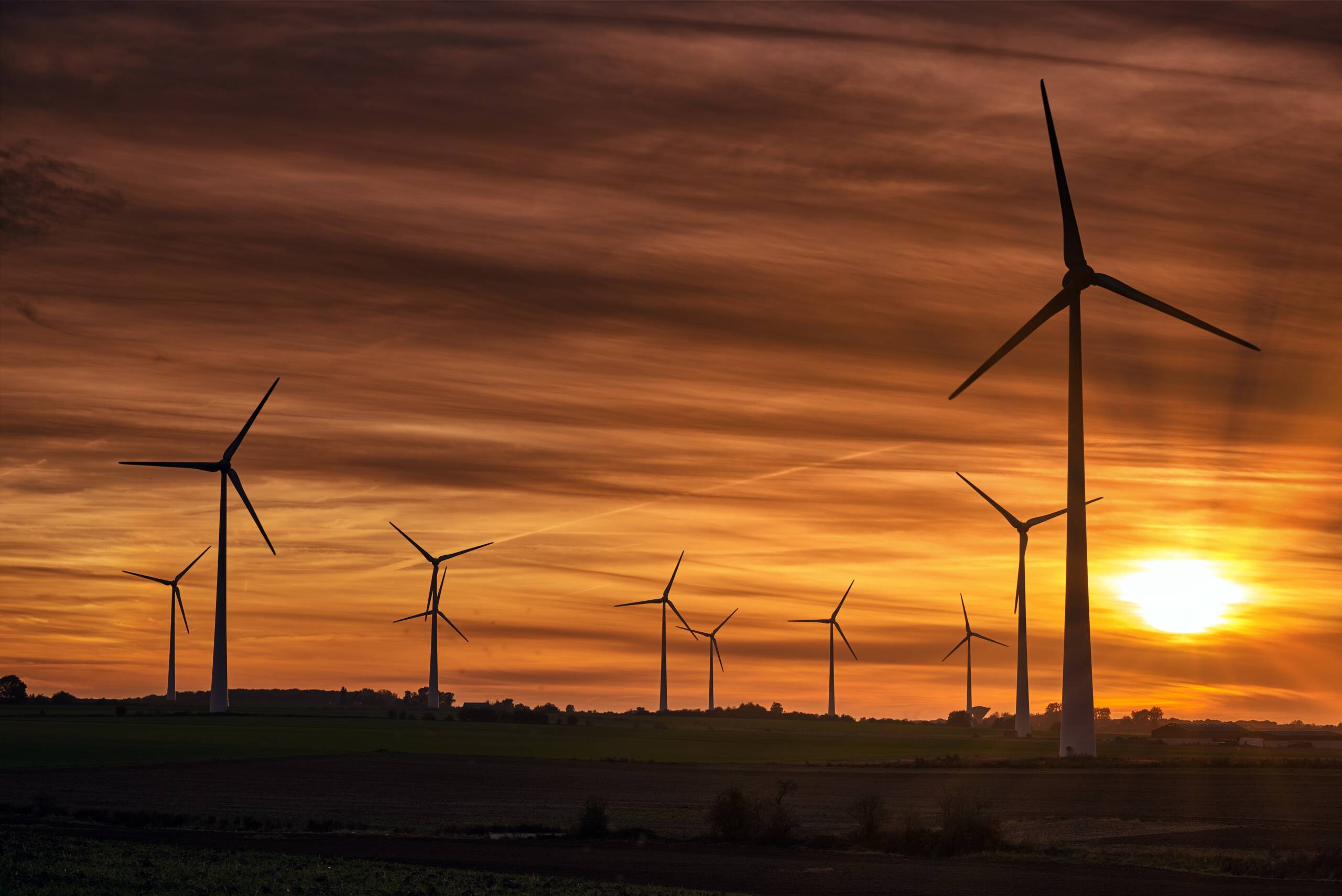
Abu Dhabi; April 2026: The strategic deployment of renewables has provided enhanced resilience in the face of the current energy crisis by a number of countries. The ongoing conflict in the Middle East has severely disrupted global oil and gas supplies. The selective closure of the Strait of Hormuz, as well as sustained attacks on infrastructure across the region, have fundamentally affected key international energy flows, leading to rapid, erratic increases in oil and gas prices.
The effects of these events will be felt across whole economies, extending beyond energy markets into food systems, transportation and wider supply chains, influencing inflation and economic activity simultaneously. However, these effects will likely be more pronounced for the most vulnerable communities around the world.
There are a variety of actions available to policy makers in their response to the most pressing energy challenges posed by the current conflict that can also ensure their resilience to future fossil fuel shocks:
Short-term actions (0–6 months) –
» Deploy distributed renewable energy solutions to support public services and community responses (healthcare, agriculture, food production, sanitation and other critical infrastructure), leveraging cross sector partnerships to mobilise rapid responses. Provide financial and logistical support as needed to fast-track deployment.
» Accelerate deployment of solar photovoltaic (PV) battery hybrid mini-grids in off-grid and weak-grid remote areas to reduce the immediate exposure of low-development communities to diesel price volatility and supply disruptions.
» Initiate public information campaigns and measures such as mandates to reduce energy demand, especially at peak times, and to encourage efficient energy use.
» Fast-track time-of-use tariff adoption to enable consumers to shift their electricity consumption to times where renewable supply to grids is high, and prices are low. This approach can reduce reliance on gas fired ‘peaking’ power plants.
» Implement fiscal measures such as grants, subsidies or tax rebates and other incentives to support electrification across all sectors.
» Accelerate two/three-wheeler electrification in emerging economies; incentivise electrification of public transport (buses) by providing financial and fiscal support; and encourage car-pooling alongside a transition from personal to public transport in cities.
» Review and reduce/remove tariff and non-tariff barriers for imported renewable energy equipment, such as solar PV panels, inverters, batteries, charging infrastructure, etc.
Medium-term actions (6-12 months) –
» Fast-track current renewable energy and grid infrastructure projects, and ensure pipeline projects remain funded, including by establishing specific national task forces for this purpose.
» Consider whether existing frameworks and instruments are fit for purpose in the event of high inflation or increasing supply chain costs, and adapt these as needed. Incentivise battery energy storage deployment, electricity demand management and demand side participation to enhance system flexibility, and support the integration of higher shares of solar and wind power.
» Leverage grid enhancement technologies to relieve near-term grid constraints, supporting smoother integration of new renewable supply and electrified demand.
» Incentivise the deployment of renewables-based heating solutions, including waste and residue-based biogas and biomethane; residential heat pumps; and solar water heaters; prioritise district heating system upgrades and expansion.
» Scale up battery storage deployment within off-grid electrification programmes to enhance system resilience and reduce long-term system costs.
» Streamline permitting for electric vehicle (EV) charger/charging station installation, and complement financial incentives with non-financial incentives for EVs (low emission zones, speed limits).
» Fast-track permitting and subsidy support for sustainable aviation fuel (SAF) production projects, which can already demonstrate cost-competitiveness.
Longer-term actions (1-3 years) –
» Establish comprehensive, clear, supportive policy frameworks to attract energy transition-related investment. Ensure these are coherent with plans and strategies for the energy transition.
» Integrate electrification planning for energy access within national energy planning frameworks, ensuring fossil fuel price sensitivity and oil dependency risks in remote communities are systematically assessed to guide resilient, least-cost pathways towards universal access.
» Promote domestic and regional supply chain development for technologies across the full renewable energy, energy storage and energy infrastructure value chains, to reduce import dependency and strengthen supply security.
» Facilitate hybridisation of projects to allow storage systems to be installed, taking advantage of existing renewable energy supplies or industrial connection points, minimising grid connection queues by streamlining permitting.
» Incentivise and support electrification in low-to-medium temperature process heating, where heat pumps or electric boilers can be adopted, as well as in steelmaking, where electric arc furnaces are gaining market share, and in the chemicals sector, where process electrification has been demonstrated successfully.
» Develop targeted financing mechanisms for renewable-based mini-grids with battery storage, particularly in fuel-import-dependent and landlocked regions where exposure to fuel price shocks is highest.
» Make financial and subsidy support for the fossil fuel industry conditional on meeting renewable energy targets.
Renewable Energy: A Strategic Necessity For Energy Security And National Resilience –
The rise of renewables has already reduced the need for imports of fossil fuels for many countries, and renewable capacity additions continue to break new records each year. In 2025, 692 gigawatts (GW) of renewable power generation capacity was added worldwide, bringing their share in total installed capacity to 49.4%.
Long-term cost reductions in renewable energy technologies and battery storage are reshaping the economics of electricity generation. Almost all newly commissioned utility-scale renewable capacity (91% as of 2024) delivers power at a lower levelised cost of electricity (LCOE) than the cheapest, newly installed fossil fuel-based alternative. Solar PV costs have declined by 87% since 2010, onshore wind by 55% and battery storage by 93%.
Global volume-weighted average turnkey battery storage system prices have declined to approximately USD 140/kilowatt hour (kWh), the lowest level recorded till date. Global deployment of storage is accelerating, with approximately 247 GWh of battery storage capacity added worldwide in 2025, nearly doubling the additions recorded in 2024.
These cost reductions create a compelling opportunity; the combination of renewable generation and energy storage is increasingly enabling ‘firm’ renewable electricity supply at competitive costs of USD 54–82 per megawatt-hour (MWh) for solar-plus-storage systems, and USD 59–94/MWh for wind-plus storage configurations. By way of comparison, the cost of new coal-fired generation in China is typically in the range of USD 70-85 per MWh; in the United States, new combined-cycle gas turbines have reached USD 102/MWh.
There is also a growing case for off-grid renewable systems in low-development, remote communities experiencing sustained high fossil fuel prices; solar PV–battery hybrid mini-grids can reduce diesel consumption by up to 80%, while limiting electricity cost (LCOE) increases to around 10–15%, even under high fuel price scenarios. As diesel prices rise, the value of battery storage increases substantially through avoided fuel costs, with estimated savings of USD 2–5 for every dollar invested, reinforcing the role of such systems in strengthening energy security by reducing fossil fuel dependency and transport costs.
Those countries that have invested substantially in renewables have been demonstrably less exposed to the effects of the present crisis. For example, Spain and Portugal have significantly expanded solar, wind and battery installations while decreasing natural gas imports, providing a meaningful buffer against the current price volatility. In Spain, renewables have reduced the role of natural gas in setting power prices to just 15% of the time; conversely, in Italy, with a low proportion of solar and wind power, gas accounts for pricing 89% of the time.
More broadly, the 406 GW of solar and 246 GW wind added across the European Union have enabled the bloc to avoid EUR 58 billion in additional fossil fuel costs in the current crisis (Hedley, 2026); yet Europe has not yet reached the threshold where its grids can fully decouple from gas price volatility.
In China, oil and gas account for only 4% of the power mix (comprising ~60% coal, 30% renewables and the remainder from nuclear). This is far lower than the 40–50% share in many other Asian economies. Renewables met some 80% of China’s new electric power demand in 2024, and more than half of new car sales are now electric. Hence, China’s power sector is notably more insulated from this shock than previous oil crises, although overall use of fossil fuel consumption has increased over the years.
For households, particularly in energy-import-dependent Asian economies with thin fiscal buffers, small-scale systems represent the best means to establish resilience in the face of energy shocks. These include rooftop solar with net metering or feed-in tariffs; battery storage for backup; electric cooking (replacing liquefied petroleum gas). Consequently, households in those developing countries that invested early in distributed renewables are measurably less exposed today:
» Pakistan has rapidly increased deployment of decentralised solar and battery capacity in recent years. As much as 41 GW of low-cost solar panels have been imported, and the deployment of these panels on household roofs has cushioned both consumers and the broader energy system from the current shock. The increased deployment of EVs has also enabled this rooftop solar boom to power vehicles, whose passengers would otherwise be reliant on generation from imported fuels (Simon, 2026).
» India’s share of renewables in electricity generation increased to 20.2% in 2025 from 14.2% in 2016. Electric cooking has become a contingency measure for households facing liquefied petroleum gas supply disruptions and restrictions. Solar-powered canteens have kept operating during liquefied natural gas shortages; whereas in those workplaces with canteens powered by gas, workers have been forced to bring their own food.
» Cuba’s experience with distributed renewable energy demonstrates that community solar and battery systems can provide resilient, decentralised power to consumers in off-grid locations, or where supply is limited – especially to support agricultural activities. This approach has enhanced community resilience to weather effects in the past (IFAD, 2025) and is contributing to reduced reliance on imported fuels.
Similarly, those countries that have achieved greater electrification of their road transport sectors – mostly in Asia, have proved much more resilient in the face of the present crisis. EV sales in China, Nepal, Singapore and Viet Nam rose from 30% to over 70% in 2025, far exceeding the global average of 20–25%. In these countries, the impacts on personal mobility and costs of living will be less susceptible to fossil fuel shocks.
This resilience, both in terms of national power sectors and households, reiterates the vital role that renewable energy technologies can play in strengthening energy system resilience and security, reducing exposure to fossil fuel price volatility and supporting long-term economic stability.
Team Maverick.






Rajasthan Government Cracks Down on Illegal Mining in National Chambal Sanctuary
Jaipur, July 2026 : In compliance with the directions of the Supreme Court and recommendat…
Rajasthan Government Cracks Down on Illegal Mining in National Chambal Sanctuary
Jaipur, July 2026 : In compliance with the directions of the Supreme Court and …