Sonia Gandhi Flags ‘Dangerous’ Delimitation Move, Questions Timing of Special Parliament Session

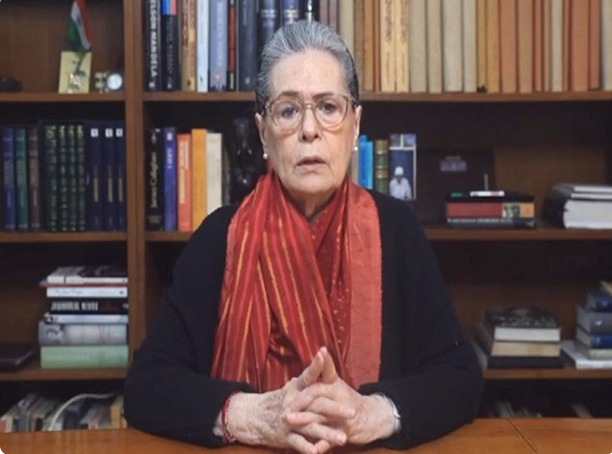
New Delhi, April 2026 : Congress Parliamentary Party Chairperson Sonia Gandhi on Monday launched a sharp critique of the Centre’s decision to convene a special session of Parliament on April 16, warning that the real issue at stake is not women’s reservation but the proposed delimitation exercise, which she described as “extremely dangerous” and an “assault on the Constitution.”
In a detailed opinion article, Gandhi raised concerns over what she termed the government’s “extraordinary hurry” to introduce key legislative measures at a time when election campaigns in states like Tamil Nadu and West Bengal are at their peak. She alleged that Prime Minister Narendra Modi is attempting to “delay and derail” the caste census while simultaneously pushing forward politically sensitive reforms without adequate consultation.
According to Gandhi, the timing of the session raises serious questions about intent. “There can be only one reason for such urgency — to derive political advantage and place the Opposition on the defensive,” she wrote, accusing the government of bypassing democratic norms and processes.
She also criticised the Centre for refusing repeated requests from Opposition parties to convene an all-party meeting after the completion of Assembly elections on April 29. Gandhi described this refusal as indicative of a “my way or the highway” approach, arguing that such major constitutional changes require broader consensus and careful deliberation.
Addressing the issue of women’s reservation, Gandhi referred to the Nari Shakti Vandan Adhiniyam, passed unanimously in September 2023. The law introduced Article 334-A, mandating one-third reservation for women in the Lok Sabha and State Assemblies, but linked its implementation to the completion of the Census and a subsequent delimitation exercise.
Gandhi pointed out that the Opposition had never demanded such a condition. Instead, leaders like Mallikarjun Kharge had argued for immediate implementation from the 2024 Lok Sabha elections. She questioned why the government is now reportedly considering advancing implementation to 2029 after initially insisting on linking it to Census and delimitation processes.
“Why did it take 30 months for this shift in position?” she asked, adding that the government could easily wait a few weeks to hold consultations before proceeding.
Drawing from historical precedent, Gandhi cited the passage of the 73rd and 74th Constitutional Amendments in 1993, which introduced reservations for women in local bodies after nearly five years of discussion. She credited former Prime Minister Rajiv Gandhi for initiating that process, noting that it led to the emergence of over 15 lakh elected women representatives across India today.
Turning to the Census, Gandhi criticised the delay in conducting the decadal exercise, originally due in 2021. She argued that the postponement has had tangible consequences, including depriving millions of their entitlements under welfare schemes linked to population data.
She also questioned the urgency surrounding the proposed 2027 Census, which the government has described as a “digital Census.” According to her, if data can be processed faster due to digitisation, the justification for rushing into delimitation appears weak.
On the caste census issue, Gandhi accused the government of inconsistency. She recalled that the Centre had earlier opposed caste enumeration in affidavits and parliamentary responses, only to later announce that the 2027 Census would include such data. She suggested that the current approach indicates an attempt to further delay the process rather than implement it meaningfully.
Highlighting examples from states like Bihar and Telangana, Gandhi noted that caste-based surveys had been completed within months, countering the argument that such exercises are time-consuming.
A key concern raised by Gandhi relates to the implications of delimitation. She stressed that any redrawing of constituencies must be preceded by a credible Census and should ensure political fairness, not just numerical adjustments. States that have successfully implemented family planning measures, she warned, could face a relative loss of representation if population-based redistribution is carried out without safeguards.
She also reiterated the need for inclusive reservation policies, pointing out that while the current law provides for quotas within Scheduled Castes and Scheduled Tribes, demands for similar provisions for Other Backward Classes (OBCs) remain unaddressed.
Gandhi concluded by emphasising that there is ample time to discuss these issues during the upcoming monsoon session of Parliament in July. She argued that the government should first engage in dialogue with Opposition parties and allow for a wider public debate before introducing constitutional amendments.
“The heavens will not fall if the government waits,” she said, urging a pause on what she described as a rushed and flawed process.
In her final remarks, Gandhi made it clear that women’s reservation is not the point of contention. “That issue has already been settled,” she said. “The real issue is delimitation — and based on the information available, it poses a serious threat to the constitutional balance and democratic framework of the country.”

Gautam Adani Becomes Asia’s Richest, Surpasses Mukesh Ambani in Global Rankings
New Delhi, April 2026 : Billionaire industrialist Gautam Adani, Chairman of the Adani Grou…
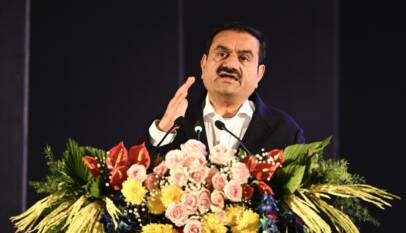
Gautam Adani Becomes Asia’s Richest, Surpasses Mukesh Ambani in Global Rankings
New Delhi, April 2026 : Billionaire industrialist Gautam Adani, Chairman of the Adani Group, …