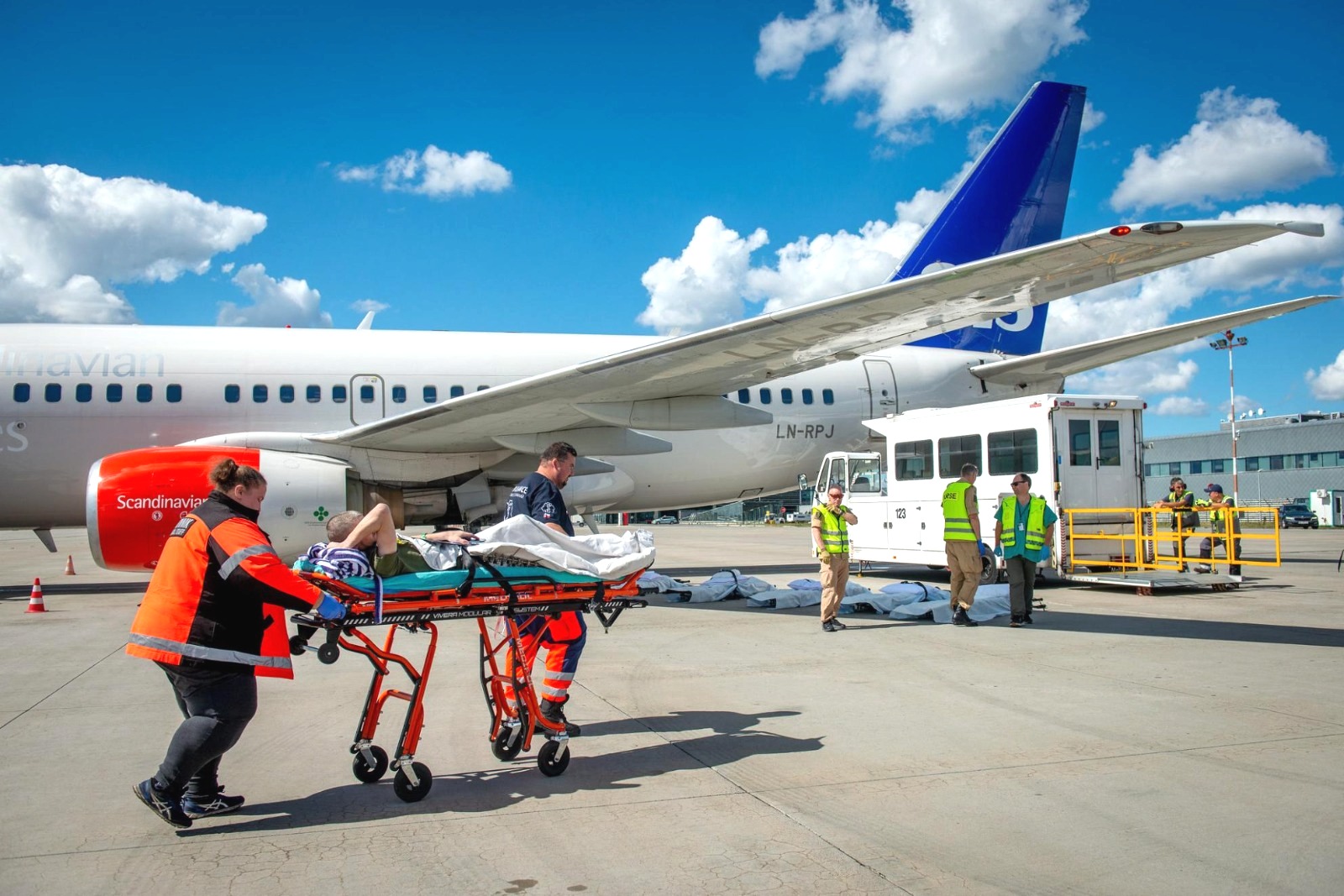
European External Action Service Have Reportedly Evacuated 5000 Patients From Ukraine For Urgent Treatment.

Brussels/Kyiv; April 2026: The European External Action Service (a European Commission affiliated) has ensured the safe transport of over 5,000 patients from Ukraine to hospitals in 22 European countries for specialised medical care under the EU Civil Protection Mechanism. This figure was reached last week, with the latest flights taking place yesterday, taking patients to Finland, Germany, the Netherlands and Norway.
Commissioner for Equality, Preparedness and Crisis Management, Aja Labib, said: “Reaching the 5,000 medical evacuations mark under the EU Civil Protection Mechanism shows Europe at its best, saving lives through solidarity and swift cooperation. This achievement was made possible by the unwavering commitment of all countries involved: from Finland, Germany, the Netherlands and Norway, who took in patients yesterday, to 18 other European countries that have taken in patients for treatment and care. We will continue to strengthen our joint response to protect those who need it most”.
Since the beginning of Russia’s war of aggression, the EU has been working around the clock with Member States and partners to ensure that Ukrainian patients in urgent need of treatment have access to medical care outside the country.
Evacuations, coordinated through the Commission’s Emergency Response Coordination Centre in close cooperation with the World Health Organization (WHO) Regional Office for Europe, enabled patients with severe injuries, chronic diseases and complex conditions to receive timely and often life-saving treatment. Hospitals in EU Member States provided highly specialised care, while medical transport and logistics were rapidly mobilised to ensure safe transport in difficult conditions.
This is the largest medical evacuation operation ever coordinated under the EU Civil Protection Mechanism. The European Union remains committed to supporting Ukraine’s healthcare system and ensuring that the most vulnerable receive the necessary assistance.
As the Russia’s war on Ukraine continues to escalate in 2026 and shows no signs of abating: with 2,514 civilians killed, 2025 has been the deadliest year of the conflict since 2022. While adding worries to the distress, millions of people have limited or no access to basic services. Heavy fighting and attacks continue to endanger the lives of civilians and cause severe damage to housing, water. electricity supply, heating, and public infrastructure such as schools and health facilities. The EU has mobilised all available resources to enable the delivery of emergency assistance to Ukraine.
As per estimates:
- 10.8 million people need humanitarian assistance in 2026; 3.3 million people are believed to be internally displaced.
- EU assistance for 2022-2025 (since 24 February 2022) have crossed €1.4 billion; European Commission’s humanitarian aid funding crosses €4.3 billion.
- The EU and its Member States’ humanitarian aid funding: EU assistance for 2014-2021 were €1.7 billion; EU emergency and early recovery assistance were €350 million; EU Member States humanitarian aid were €194 million.
Sustained hostilities along the frontline and relentless aerial attacks on urban areas continue to cause harm and suffering to civilians, triggering displacement towards safer areas. Extensive damage to housing leaves thousands of individuals with inadequate accommodation, particularly those in collective centres and closer to the frontline.
Repeated Russian attacks on infrastructures are leaving millions of Ukrainians without essential services, such as water, electricity, and heating, causing severe hardship in this harshest ever winter season.
The war continuously increases protection concerns, as civilians are exposed to shelling, armed violence, mines, family separation, or eviction. The safety risks for women and girls are extremely worrying, as is the situation of the most vulnerable groups (children, elderly people, persons with disabilities, and LGBTIQ+ people). At least 2.5 million people, primarily women and girls, require prevention and response services to gender-based violence.
Continuous attacks also give rise to mental health care needs. Nearly 10 million people are at risk of or are living with mental health conditions, including stress, anxiety, depression, and post-traumatic stress disorder. The situation for children is especially worrying due to their exposure to conflict and violence, restricted access to safe education and limited opportunities for social interaction.
To provide emergency assistance to Ukrainians, the European Commission is coordinating its largest ever operation under the EU Civil Protection Mechanism. So far, all 27 EU countries together with 6 participating states (Norway, Türkiye, North Macedonia, Iceland, Serbia and Moldova), have offered in-kind assistance ranging from medical supplies to shelter items, vehicles and energy equipment.
The EU has established logistical hubs in Poland, Romania, and Slovakia to channel items to Ukraine more efficiently. As of February 2026, more than 157,000 tons of aid have been delivered.
Given the immense need for emergency equipment in Ukraine, the EU has deployed assistance from its rescEU (a strategic reserve of European disaster response capabilities and stockpiles, fully funded by the EU) stockpiles, including:
- power generators,
- medical supplies,
- temporary shelter units,
- water treatment stations in response to the Kakhovka dam breach,
- specialised equipment for public health risks such as chemical, biological, radiological, and nuclear threats.
By the end of 2025, the EU Civil Protection Mechanism successfully relocated a full thermal power plant from Lithuania to Ukraine, completing its largest-ever coordinated logistical operation to date. The equipment has been crucial to completing emergency repairs in several parts of the country where energy infrastructure was severely damaged. It can supply power to 1 million Ukrainians.
The EU has also delivered 7,200 transformers and around 10,000 generators since the start of the full-scale invasion. These supplies are helping to restore essential services such as hospitals, schools and water utilities, and are protecting civilians in the freezing conditions of the harsh winters.
To date, the EU support for Ukraine’s energy sector has helped meet the needs of an estimated 9 million people. The EU is also coordinating medical evacuations of Ukrainian patients in urgent need of treatment, transferring them to hospitals across Europe to receive specialized care. In September 2022, the EU opened a hub in Rzeszów, Poland, to facilitate these medical evacuations.
The EU Medevac Hub offers treatment to patients arriving from Ukraine before they are flown out to a hospital in another European country. So far, more than 5,000 patients have been transferred to 22 countries for treatment.
Since Russia’s full-scale invasion in February 2022, the European Commission has allocated over €1.4 billion for humanitarian aid programmes in Ukraine. This includes:
- €485 million in 2022.
- €300 million in 2023.
- €165 million in 2024.
- €220 million in 2025.
- €220 million in 2026.
Team Maverick.





Telangana’s Abhi Chandra Clinches Two Medals at Special Olympics Nationals
Dehradun, July 2026 : Determination, discipline and an unyielding passion for sport define…

Telangana’s Abhi Chandra Clinches Two Medals at Special Olympics Nationals
Dehradun, July 2026 : Determination, discipline and an unyielding passion for sport defined the …