Oil Prices Rebound 07% As The Strait Of Hormuz Is Closed Again.

Singapore/New York; April 2026: Oil prices rebounded more than 07% today (20th April 2026) after tumbling more than 9% on Friday (17th April) as the Strait of Hormuz were closed after the US and Iran said that the other party has violated the ceasefire deal by attacking ships.
Brent crude futures jumped $6.56, or 7.26%, to $96.94 a barrel by 22:04 GMT (03:30 IST) and US West Texas Intermediate was at $89.92 a barrel, up $6.07, or 7.24%.
Iranian Foreign Minister Abbas Araghchi has told his Pakistani counterpart that threats to Iranian ports and ships, alongside irrational demands from Washington, are a sign of its lack of seriousness. “Iran will use all of its capacities to protect the interests and national security of Iran”, Araghchi said.
Meanwhile, Hassan Ahmadian, an associate professor at the University of Tehran, has said media reporters that Iranian officials were clear from the day the US announced the blockade that they would “not observe the limits of any siege on Iranian shipments and would move according to their previous code”. He added that while there were warnings previously, “tonight, things changed”.
Ahmadian warned that the situation “can escalate quite fast”, noting that if the US decides to carry on “attacking Iranian shipments or seizing Iranian ships, the Iranians will have no choice but to retaliate in kind”.
Ahmadian has characterised the blockade as “an act of war” under international law and viewed the seizure of a vessel as a further “escalation within that act of war”. He noted that while Iran made proposals to avoid being “dragged into this war”, the current US administration has been “trying to enforce a surrender; capitulation”.
Ahmadian’s concerns was further vetted by Zahra Kharazmi, an assistant professor in the Faculty of World Studies at the University of Tehran, who informed the media reporters that Iran’s understanding is that the US blockade is, in itself, an act of war based on international law, and that news of the US seizure of an Iranian cargo ship in the Strait of Hormuz “indicates that we are just going up the escalation ladder. For Iranians, they take it that they have safe passage in the Strait of Hormuz. Having control of the safe passage is their right, because they don’t like to see crossing Hormuz to be actually the platform of active aggression against them. I think that it’s a very bad escalation and can be a sign that can be added to the military build-up of the United States”, Kharazmi continued. “Iran is determined, I think, to have retaliation, but the retaliation can have different ways”, she warned, suggesting that the “Bab al-Mandeb Strait can be closed”.
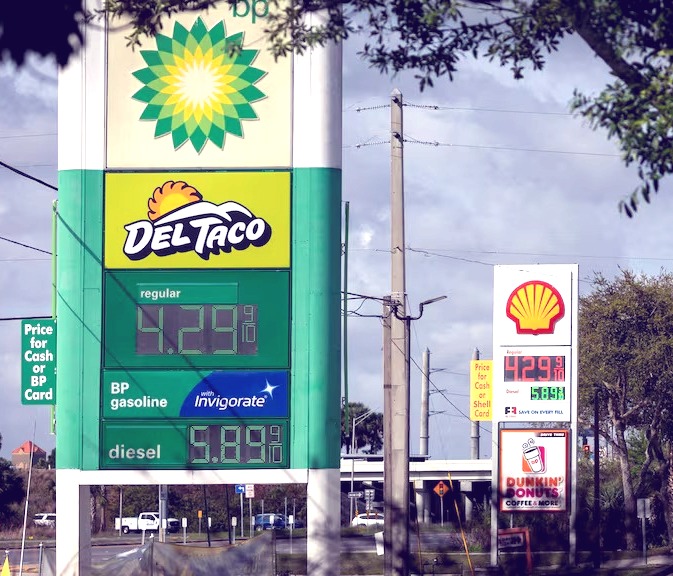
Meanwhile, as reported, US Energy Secretary Chris Wright said today that he believes gas prices have peaked but predicted that they may stay above $3 per gallon until next year. Gas prices have risen during the US and Israeli war on Iran and Iranian attacks on nearby countries, creating political headwinds for President Donald Trump ahead of the November midterm elections, where his Republican Party will defend slim majorities in the Senate and House of Representatives.
Gas below $3 a gallon “could happen later this year, that might not happen until next year. But prices have likely peaked, and they’ll start going down”, Chris Wright said while briefing media outlets. “Certainly, with the resolution of this conflict, you’ll see prices go down”.
Trump administration officials have offered differing views on how gas prices may shift. Treasury Secretary Scott Bessent last week predicted gas prices would fall to the $3 per gallon range this summer, while Wright today laid out a lengthier likely timeline to reach that price. President Trump himself has said that gas prices may remain elevated until November.
All of them have predicted gas prices will eventually get cheaper once the Iran war ends. “Under $3 a gallon is pretty tremendous in inflation-adjusted terms”, Wright has further said. “We’ll get back there for sure”.
The average price for a gallon of regular gas on Sunday was $4.05, according to an estimate by AAA, compared to $3.16 a year ago. The war’s impact on oil delivery also has airlines warning of a potential jet fuel shortage. US Transportation Secretary Sean Duffy on Sunday said jet fuel will become more plentiful as the Iran conflict recedes. “So yes, a small disruption, hopefully for a short period of time, but in the long run it becomes cheaper for Americans to travel because of decreased jet fuel prices”, Duffy said.
Team Maverick.





Iran Seizes More Tankers In Strait Of Hormuz; Threatens To Block The Red Sea.
Tehran; April 2026: Iranian armed forces yesterday (19th April 2026) have stopped two tank…
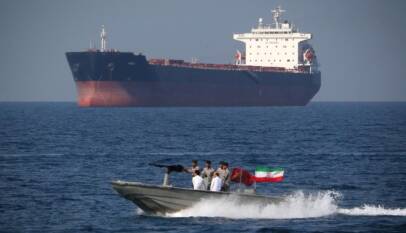
Iran Seizes More Tankers In Strait Of Hormuz; Threatens To Block The Red Sea.
Tehran; April 2026: Iranian armed forces yesterday (19th April 2026) have stopped two tankers …