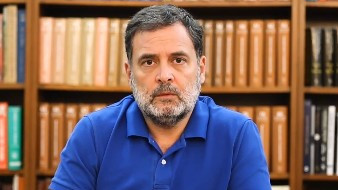
Rahul Gandhi Records Dissent Over CBI Director Selection Process

New Delhi, May 2026 : Rahul Gandhi on Tuesday formally expressed his dissent over the functioning of the committee responsible for recommending the next Director of the Central Bureau of Investigation (CBI), alleging that the selection process had been reduced to a formality aimed at appointing a pre-decided candidate.
In a letter addressed to Prime Minister Narendra Modi, Gandhi criticised the government’s handling of key institutional appointments and raised concerns over what he termed the “institutional capture” of the CBI.
The Congress leader alleged that the investigating agency had repeatedly been misused to target political opponents, journalists and critics of the government. He argued that the inclusion of the Leader of the Opposition in the selection committee was meant to ensure transparency and prevent such concentration of power, but claimed that the government had denied him any meaningful role in the process.
A major point of Gandhi’s objection was the alleged withholding of critical information needed to evaluate candidates fairly. According to the letter, despite several written requests, he was not provided with the self-appraisal reports or “360-degree reports” of the officers being considered for the top post.
Gandhi said the committee was expected to assess the records of 69 candidates, but he was being asked to examine their appraisal documents for the first time during the meeting itself, making any informed evaluation impossible.
He further argued that denying access to 360-degree assessments undermined the legal framework governing the appointment process and prevented committee members from properly reviewing the professional history and performance of the shortlisted officers.
The Leader of the Opposition also referred to previous occasions when he had raised similar concerns. He noted that he had recorded dissent during an earlier committee meeting held on May 5, 2025, and later sent a follow-up letter on October 21, 2025, recommending measures to ensure a more transparent and credible appointment mechanism.
According to Gandhi, no response was received to those suggestions.
The Congress MP said the repeated denial of key documents effectively reduced the role of the Leader of the Opposition to that of a “rubber stamp” in the appointment process.
Stating that he could not ignore his constitutional responsibility, Gandhi recorded his dissent “in the strongest possible terms” and accused the government of conducting what he described as a biased and predetermined exercise.
The letter is expected to intensify the political debate over the autonomy of investigative agencies and the transparency of appointments to key constitutional and institutional posts.
Team Maverick.





India A Dominate Sri Lanka A as Auqib Nabi’s Four-Wicket Haul Secures 170-Run Overall Lead
Galle, June 2026 : India A tightened their grip on the opening unofficial four-day match a…
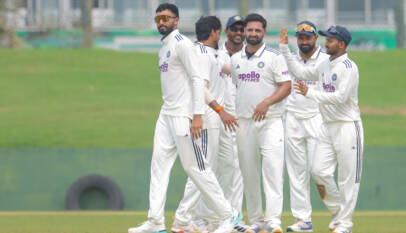
India A Dominate Sri Lanka A as Auqib Nabi’s Four-Wicket Haul Secures 170-Run Overall Lead
Galle, June 2026 : India A tightened their grip on the opening unofficial four-day …