Massive Crowds Gather in Tehran as Iran Begins Week-Long Funeral for Supreme Leader Ali Khamenei

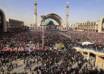
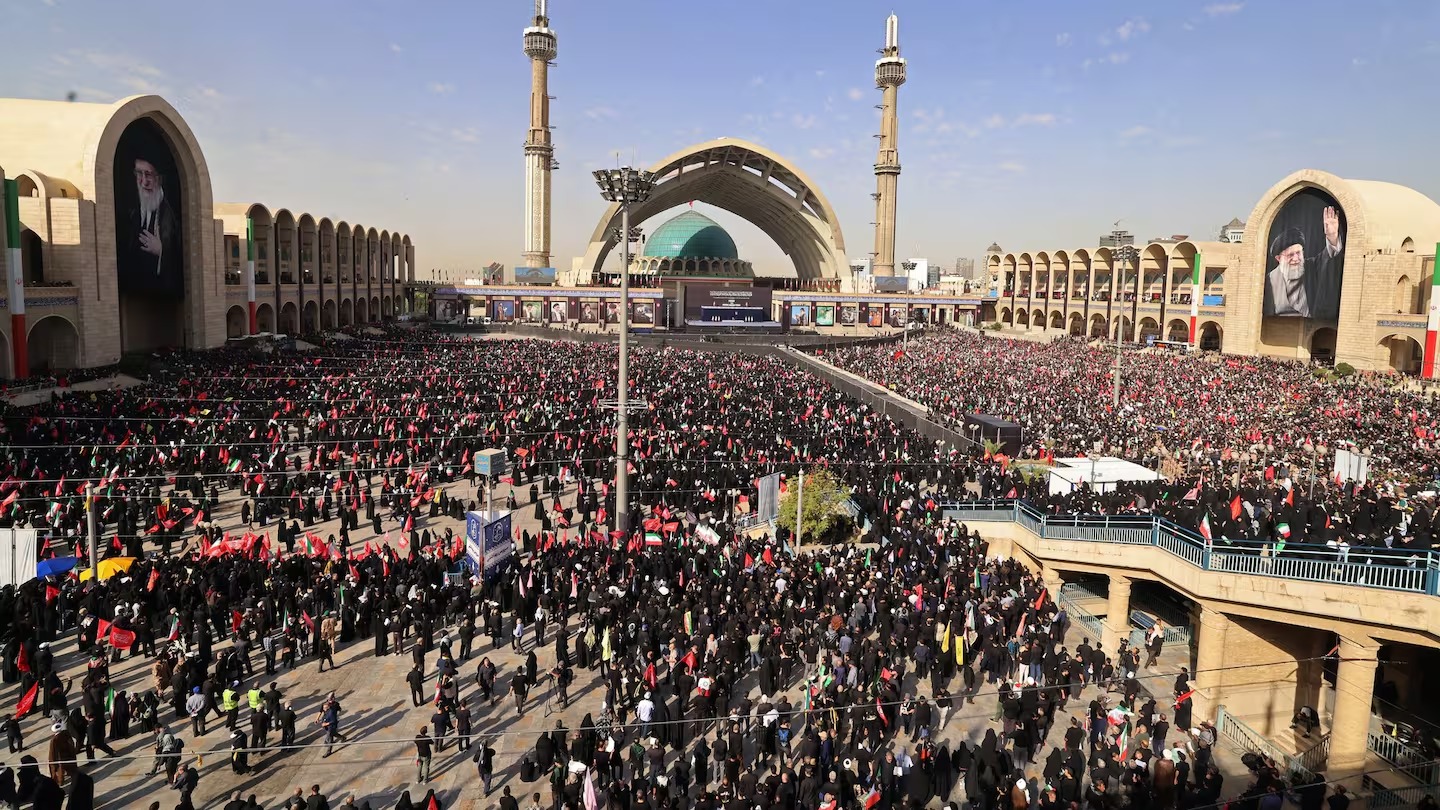
Tehran, July 2026 : Hundreds of thousands of mourners filled the streets of Tehran as Iran launched a week-long series of funeral ceremonies for Supreme Leader Ali Khamenei, whose death in an Israeli strike has marked one of the most consequential moments in the country’s modern history. Authorities expect the ceremonies to draw more than 10 million people to the capital, making it one of the largest public gatherings in the Islamic Republic since the funeral of Ayatollah Ruhollah Khomeini in 1989.
The funeral comes after weeks of devastating conflict involving Iran, Israel and the United States, with the country seeking to project unity and resilience despite the loss of its most influential political and religious leader. Officials have framed the ceremonies as a demonstration of national solidarity and defiance against foreign adversaries following the war and the fragile ceasefire that currently remains in place.
Thousands of mourners, many dressed in black, assembled at Tehran’s Grand Mosalla religious complex carrying portraits of Khamenei and waving blood-red flags, a powerful symbol in Shia Islam associated with justice and calls for vengeance. The atmosphere was marked by emotional displays of mourning, with crowds beating their chests in traditional expressions of grief while chanting slogans including “Death to America” and “Revenge, Revenge.”
The coffin of Khamenei, draped with Iran’s national flag and topped with his signature black turban signifying his lineage from the Prophet Muhammad, was placed prominently at the front of the vast prayer hall. Alongside it were the coffins of four members of his family who were also killed in the February 28 airstrike that targeted senior Iranian leadership.
Among those laid to rest with him is his 14-month-old granddaughter, Zahra Mohammadi Golpaygani, whose small coffin became one of the most poignant symbols of the tragedy. Other family members killed in the strike include his daughter, son-in-law and Zahra Haddad Adel, the wife of his son and designated successor, Mojtaba Khamenei.
Senior Iranian political and military leaders gathered to pay their respects before the complex was opened to the public. Parliament Speaker Mohammad Bagher Ghalibaf, who has played a leading role in diplomatic engagements following the conflict, appeared visibly emotional during the ceremony. Ahmad Vahidi, recently appointed commander of the Islamic Revolutionary Guard Corps after his predecessor was killed in the same strikes, also made his first public appearance in his new role.
Addressing mourners, Ghalibaf urged Iranians to honour Khamenei’s legacy by demonstrating national unity.
“The nation’s call for vengeance must be heard around the world,” he declared, calling on citizens to participate in the ceremonies in large numbers.
The funeral has also drawn considerable international attention as world leaders and foreign dignitaries travelled to Tehran to offer condolences before public mourning began. Iranian authorities hope the scale of the ceremonies will send a clear political message that the country’s leadership and institutions remain intact despite the unprecedented military losses suffered during the conflict.
Khamenei, who led Iran for more than 36 years after succeeding Ayatollah Ruhollah Khomeini in 1989, shaped the country’s domestic and foreign policies through decades of confrontation with Western nations while maintaining tight political control at home. His death has ushered in a new and uncertain chapter for the Islamic Republic, raising questions about future leadership, regional strategy and Iran’s relations with the international community.
One of the most closely watched developments has been the continued absence of Mojtaba Khamenei, who has been named as his father’s successor. Since the announcement, Mojtaba has not appeared publicly, communicating only through written statements. Reports suggest he sustained injuries during the same Israeli strike, although officials have not disclosed the extent of those injuries or provided details regarding his condition.
The uncertainty surrounding the country’s new leadership comes at a delicate time. Although active fighting has ceased following a ceasefire and preliminary understandings reached between Iran and the United States, both sides have warned that military operations could resume if negotiations collapse or new hostilities emerge.
The funeral ceremonies are therefore being viewed not only as a religious occasion but also as a significant political event. Observers believe the turnout will serve as an important indicator of public support for the Iranian establishment following months of unrest and conflict. Earlier this year, widespread protests across Iran challenged the government, with human rights organisations alleging that security forces responded with a severe crackdown resulting in thousands of casualties and arrests.
Authorities have implemented extensive security measures throughout Tehran to ensure the ceremonies proceed without incident. Major roads leading to the Grand Mosalla complex have been closed, forcing many mourners to walk several kilometres to reach the venue. Security personnel have been deployed across key locations, while emergency medical teams and crowd-control units remain on standby.
State television has also broadcast public safety advisories, instructing attendees on how to avoid overcrowding and safely navigate the enormous gatherings. Officials are particularly conscious of preventing stampedes and crowd crushes that have marred large-scale public events in the past.
The funeral procession will continue over the coming days according to a carefully planned itinerary. Khamenei’s coffin will remain in Tehran for three days before being taken to the holy city of Qom on Tuesday. It will then travel to neighbouring Iraq on Wednesday for religious observances before returning to Iran for burial on Thursday in Mashhad, Khamenei’s hometown in the country’s northeast.
The final burial ceremony is expected to draw millions more mourners as Iran bids farewell to one of the most influential and controversial leaders in its modern history. While the funeral marks the end of Khamenei’s era, it also signals the beginning of a critical period for the Islamic Republic as it navigates leadership transition, regional tensions and an uncertain geopolitical future.
(The content of this article is sourced from a news agency and has not been edited by the Mavericknews30 team.)


Trump Says Netanyahu May Visit White House Soon as US Pushes to Reset Middle East Strategy
Washington, July 2026 : US President Donald Trump has indicated that Israeli Prime Ministe…
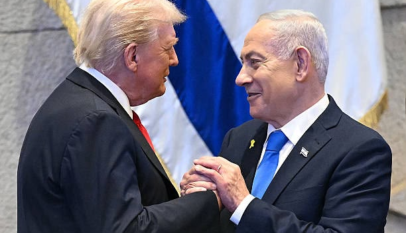
Trump Says Netanyahu May Visit White House Soon as US Pushes to Reset Middle East Strategy
Washington, July 2026 : US President Donald Trump has indicated that Israeli Prime Minister …