A Gigantic Fort Janjira that remains unseized

By Mira Pawar.
Besides their engineering marvels that showcase India’s architectural heritage, forts were a primary defense system for the monarchy and were used to protect people from foreign invaders. They were used to watch over large areas and launch counterattack against enemies. Renowned for its impressive defense, located on an island off the coast of Maharashtra, the mighty Janjira Fort has never been captured. This is the only fort so far, that has not encountered an invasion. The fort is believed to be one of its kind in India.

As the fort is surrounded by water on all sides, it is also known as an Island Fort. This gigantic fortress is located in Murud, a small town in Maharashtra state. Murud is a small fishing hamlet in Raigad District, 165 Kms away from Mumbai, on the lush green western coast of Maharashtra. Janjira Fort is just about 5 kms south of Murud which was at one time the capital of the former state of Janjira. With its picturesque lush green beauty, this place is still a remote and tranquil area. Janjira is the Marathi translation of the Arabic word Zizera which means island. Murud and its surrounding areas were once called Janjira, the name truly referred to the mighty island fortress in the sea.

This amazing structure was built by Malik Ambar, who was an Abyssinian Minister in the court of the Peshwa of Ahmednagar Sultanate in Maharashtra State. The fort was made during the end of the 17th century and has withstood all the tests of time. The structure definitely reflects the marvel of ancient engineering which stands to an impressive height of 40 feet, surrounded by high walls on all sides. It has been enduring the lashes of sea waves through ages and still stands strong.
It is believed that fort Janjira that spread over 22 acres, was attacked many a times by various enemy forces, but no one could conquer it. Janjira fort is very well fortified and probably that is the reason it has survived countless attacks by Portuguese, British and Marathas. Great rulers like Shivaji, Sambhaji and the Peshwas attacked the fort but failed to capture it. The surrounding of the fort is full of coconut and betel nut trees. There are several towers and turrets in the fort that was used for keeping guns and cannons. The fort originally had a total of 572 cannons but now only a counted few are left. The fort’s cannons were strategically placed on its 19 rounded bastions. Each cannon was given a name like kala bangadi, chavari and landakasam etc. Because the cannons were made out of copper and other precious metal, the thieves took the opportunity and stole them whenever possible. The last cannon that was stolen from the fort was in August 2016, during the rainy season when there was very little activity. The robbers utilized this time to take away the massive cannon which weighed nothing less than 200 to 300 tonnes each. This must have been a massive plot the robbers planned.

Inside the Janjira fort, there are water tanks, beautiful tombs and stone sculptures. At the gate, there is a very impressive sculpture of six elephants trapped by a tiger. This portrays the valour of the Sidis. The main gate of the fort faces Rajapuri village. There is another small gate towards the open sea which leads to the sea shore from under the sea. In case of an attack, this was a secret escape route that was to be utilised.
This gigantic Fort was built by Koli community (fishermen community). At first it was built as a small wooden structure to defend themselves from the pirates. Later, in the 17th century, Sidi Sirul Khan an Abyssinian Sidi of Ahmednagar Sultanate, strengthened this fort. There is a sad story attached though to the construction of this fort. It is believed that during its construction, the structure collapsed three times. Sidi was told that a human sacrifice was required and therefore as per the ritual, he offered his 22-year-old son.
The Sidis are the descendants of slaves, sailors and maritime workers, forced and voluntary migrants from the East African countries of Somalia, Ethiopia, Sudan and Zanzibar. The process of enslavement, transportation and the sale of Africans was carried out through an established slave trade network in the African interior. From the African interiors, they were transported into neighbouring Arab nations, who in turn sold them off to Asian as well as European countries. The process of enslavement continued until slavery was finally restrained through passing of anti-slavery laws in 1807.
This wonderful structure is frequented by thousands of travellers from all over the country.
Travel Mode:
- By Air: The closest Airport is Mumbai Airport,
- By Rail: The nearest railway station is Roha in Raigad district, Maharashtra.
- By road: It takes about 5 hours to travel in a Taxi to reach Murud from Mumbai.
Boarding Lodging:
Looking at the accommodation factor, the best choice would be private beach resorts or the Maharashtra Tourism Development Corporation (MTDC). Besides the rooms and cottages, there is accommodation available on rent with the local residents at their homes (BnB).
Wherever, you decide to stay, the beach is just a couple of minutes’ walk. A walk along the beach, edged with coconut and palm groves is something really enjoyable. The beach is absolutely clean and the water is crystal clear. The colour of the sand is golden. There are jetties available at the beach which ferries the visitors to the Fort and bring them back to the beach. These jetty operators are normally the descendants of the workers who were employed at the Fort during their hey days. The sunset into the Arabian sea from here is absolutely breath-taking.

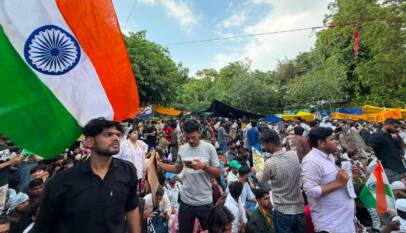


Bangladesh President Mohammed Shahabuddin Resigns, Cites Health Reasons Amid Political Turmoil
Dhaka, July 2026 : Bangladesh President Mohammed Shahabuddin resigned from office on Frida…
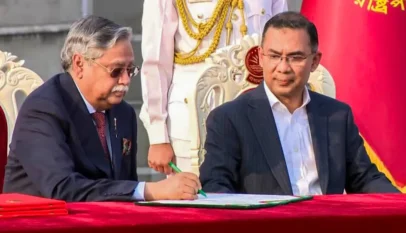
Bangladesh President Mohammed Shahabuddin Resigns, Cites Health Reasons Amid Political Turmoil
Dhaka, July 2026 : Bangladesh President Mohammed Shahabuddin resigned from office on Friday, bringing …