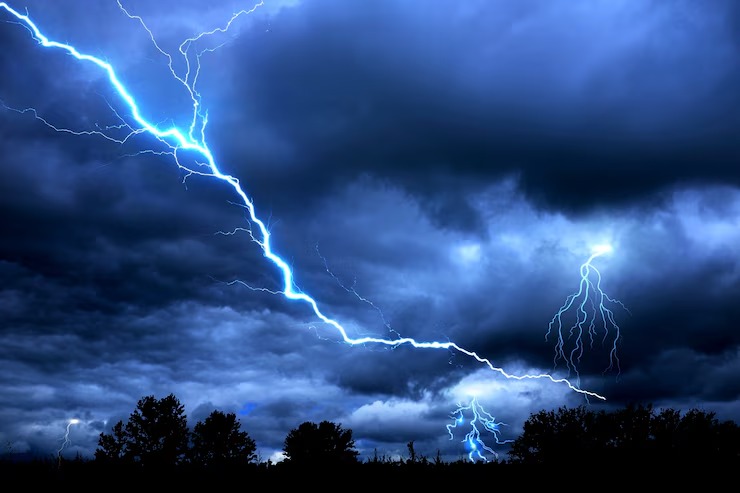
Electricity and Livestock: Effective Protective Measures

Currently, in the state, unseasonal rains and strong winds have increased, and as a result, incidents of lightning strikes have also gone up. In the pre-monsoon period, especially during farming activities, the risk of lightning strikes is higher, increasing the possibility of livestock loss. In India, Maharashtra has the highest number of deaths due to lightning. In regions like Marathwada and Vidarbha, due to geographical structure, sparse tree cover, and climatic changes, this risk is more prominent. Lightning strikes not only cause livestock loss but also cause major damage to farmers and property. Even loss of life occurs. Hence, it is extremely important that livestock owners take proper precautions to protect their livestock from lightning. An article providing information on how to protect livestock from lightning and the measures to be taken…
Causes of Lightning:
Some main causes of lightning are as follows:
- Electric Charge: Friction between water droplets and ice particles in clouds creates positive and negative electric charges.
- Electric Field: Due to the increasing distance of electric charges between clouds and the ground, a powerful electric field is formed. When this field exceeds the resistance of the air, lightning strikes the ground.
- Temperature and Humidity: Hot and humid weather rapidly forms clouds, which quickly increases electric charge.
- Geographical Factors: Tall trees, mountains, or metal objects can attract lightning.
Protective Measures to Safeguard Livestock from Lightning:
Livestock owners must adopt the following measures to protect their animals from the threat of lightning:
- Safe Shelter:
- Animals should never be tied in open spaces.
- During rainy weather and thunder, stop fieldwork immediately and shift animals to a shed, barn, or strong building.
- The roof and walls of the shelter should ideally not be metallic, as metal attracts lightning. If it is made of metal, proper earthing should be ensured.
- Self-Protection During Sudden Storms:
- If the hair on your body stands up or you feel tingling on the skin, it indicates the possibility of a lightning strike. In such a case, immediately squat down, tuck your feet under, wrap your arms around your knees, and press your chin to your knees.
- If possible, make animals sit down.
- Once the weather calms, seek shelter at a safe place.
- If there is sudden thunder and only trees nearby, sit on the ground at twice the height of the tree.
- If animals are in water, immediately take them out, as water is a conductor of electricity.
- Caution with Lightning Conductors:
- Avoid touching metal sheets, electric wires, or electrical appliances in the barn.
- Ensure the barn’s electric connection and earthing are proper and safe. Earthing allows lightning to safely travel to the ground and prevents danger to animals.
- Avoid Electrical Appliances:
- When the sky is covered with dark clouds and thunder occurs, do not operate any electrical equipment in the barn.
- Barns, fodder cutting machines, and other electrical equipment in the barn should be properly earthed.
- Stay Away from Metal Objects:
- Do not keep metal objects (e.g., iron tools) near animals.
- People working in the fields should immediately discard metal objects like axes, sickles, or umbrellas.
- Do not keep metal water containers in elevated or open field areas, as they can attract lightning.
- Pay Attention to Local Weather:
- Regularly follow weather department alerts.
- Damini App: Download the ‘Damini Lightning Alert App’ developed by IITM Pune and the Indian Meteorological Department. This app gives weather forecasts and lightning alerts in the local area, enabling timely safety precautions.
- Keep animals indoors in case of lightning or storm warnings.
- Animal Management:
- Thunder can frighten animals, so handle them gently to calm them.
- Use fans or foggers in barns to maintain appropriate temperature and humidity.
- Provide animals with clean water and a balanced diet including mineral mixtures to boost their immunity.
- Technical Measures:
- Install lightning arresters on barns. These systems safely transfer lightning to the ground.
- Use automated temperature and humidity control systems.
- Other Safety Measures:
- Avoid sheltering under trees: Tall trees attract lightning. During lightning strikes, do not tie yourself or animals under trees. Rain will not kill, but staying under a tree can be fatal.
- While working in the fields, maintain a distance of at least 50 feet from electric wires.
- While plowing with bullocks, immediately detach iron yokes.
- Emergency Treatment:
- If any animal is struck by lightning, immediately seek veterinary assistance.
- Awareness:
- Livestock owners should be informed about the risks of lightning and the safety measures to follow.
- Assistance for Losses Due to Natural Disasters:
- Victims affected by natural disasters are provided assistance from central and state disaster response funds.
- In case of livestock death due to lightning, small and marginal landholders and landless livestock owners receive aid as per government norms. For this, the panchanama report by the village officer, post-mortem report by a veterinary officer, and other necessary documents must be submitted to the revenue department.
By following all these measures, livestock owners can protect their animals from the danger of lightning. So stay alert and take care of your animals!






PM Modi Begins Three-Nation Tour to Indonesia, Australia and New Zealand, Focus on Indo-Pacific Cooperation
New Delhi, July 2026: Prime Minister Narendra Modi on Monday embarked on a significant thr…

PM Modi Begins Three-Nation Tour to Indonesia, Australia and New Zealand, Focus on Indo-Pacific Cooperation
New Delhi, July 2026: Prime Minister Narendra Modi on Monday embarked on a significant …