Muslim Pilgrims Pray at Mount Arafat in Hajj Apex Amid Heat Warnings

Mount Arafat, Saudi Arabia – Muslim pilgrims gathered in the early hours of Thursday atop Mount Arafat and its surrounding plains, marking the spiritual high point of the annual hajj pilgrimage. Under the blazing desert sun, Saudi authorities issued heat warnings and urged worshippers to stay indoors during the hottest hours of the day.

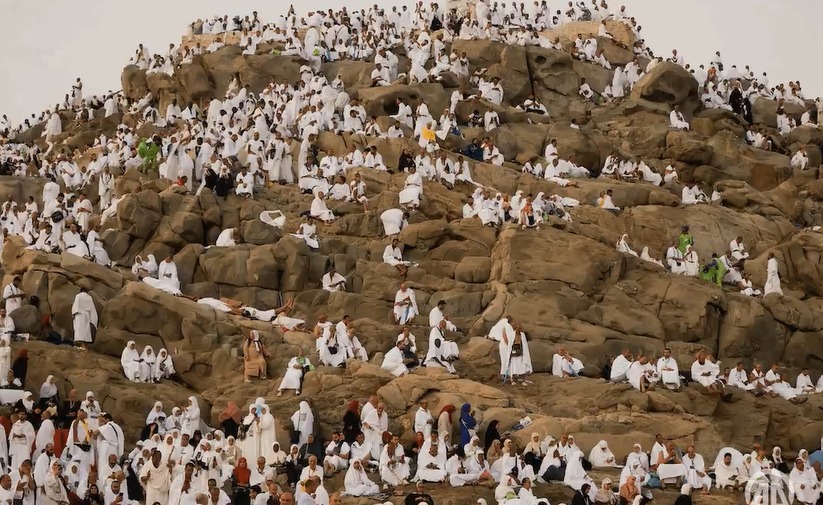
The hill of Arafat, also known as Jabal al-Rahma or the Mount of Mercy, holds deep religious significance in Islam as the site where the Prophet Mohammed is believed to have delivered his final sermon. Thousands of faithful began assembling before dawn, some arriving early to benefit from the relatively cooler morning hours, holding colorful umbrellas to shield themselves from the sun.
For many, this day represents the most physically and spiritually demanding segment of the five-day pilgrimage. Pilgrims spend hours on the plains of Arafat engaged in prayers, religious contemplation, and the recitation of the Koran. The atmosphere is one of solemn devotion, with many worshippers overcome with emotion as they fulfill what for many is a once-in-a-lifetime religious duty.
“This is something that I used to see every year on the TV screen during hajj and I always thought: ‘I wish I could be here,’” said 33-year-old Ali from Pakistan. “I’ve been trying to get here for the past three years. I feel very blessed.” He was among the 1.5 million pilgrims from around the world who have journeyed to the kingdom for the sacred ritual.
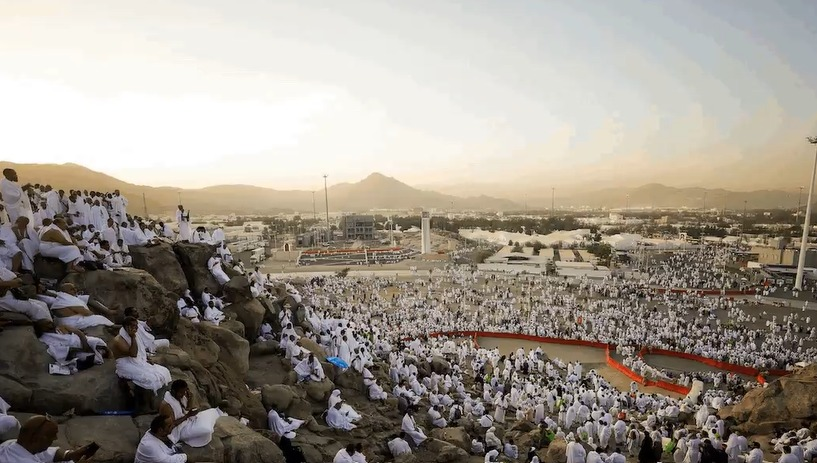
Hundreds of white-clad pilgrims dotted the slopes of Mount Arafat, with many more at its base, deep in prayer or capturing the moment in photographs. While devotion was the day’s focus, concern for safety was paramount. Saudi officials issued repeated advisories for pilgrims to avoid exposure to extreme heat between 10:00 a.m. and 4:00 p.m., when temperatures soar above 40°C (104°F).
Mist-spraying fans, cooling stations, and shaded areas were set up around the site to offer relief. This year’s precautions have been notably more intense following the deadly heatwave during last year’s hajj, which saw 1,301 pilgrims die, with temperatures soaring to an unprecedented 51.8°C (125.2°F).
Pilgrims like 54-year-old Adel Ismail from Syria planned their day carefully to avoid the sun. “I came here early to avoid the heat, and later I will pray inside my tent,” he said. Authorities have taken major steps to prevent a repeat of last year’s tragedy. Over 250,000 officials from more than 40 government agencies have been deployed for the pilgrimage. Shaded areas have been expanded by an additional 50,000 square meters, over 400 cooling units installed, and thousands of medics placed on high alert.
The day at Arafat concludes at sunset, after which pilgrims will travel to Muzdalifah, a site situated between Arafat and the tent city of Mina. There, they will collect pebbles for the symbolic “stoning of the devil,” another major ritual of the pilgrimage, performed in Mina over the next few days.
For many, reaching Arafat represents the culmination of years of longing and spiritual preparation. “Through tears of joy, I stepped onto Arafat,” said Iman Abdel Khaleq, a woman in her fifties. “I have been waiting ten years to be here. It’s a dream I had almost given up on.”
To further ensure safety, Saudi Arabia has ramped up efforts to prevent unregistered pilgrims—who typically lack access to air-conditioned facilities—from participating. Last year’s casualties were largely among such pilgrims. This year, the government has launched a crackdown involving surveillance drones, frequent raids, and mobile alerts to prevent unauthorized access to Mecca.
Hajj permits are issued based on a quota system for each country and distributed to individuals through a lottery process. Still, the high costs and limited availability drive many to attempt the pilgrimage without official permits, risking arrest and deportation.
Saudi Arabia, which derives billions of dollars annually from hajj and the year-round umrah pilgrimage, has invested heavily in infrastructure and crowd management technology. These efforts reflect both the country’s religious stewardship of Islam’s holiest sites and its economic dependence on pilgrimage-related tourism.
As the sun set on Mount Arafat, millions of hearts were lifted in prayer, united in one of the most sacred moments of the Islamic faith—an enduring testament to faith, endurance, and devotion in the face of nature’s extremes.
Team Maverick.


After Punjab Minister Sanjeev Arora, AAP Goa Co-incharge Deepak Singla arrested for refusing to join BJP: Arvind Kejriwal
Deepak Singla was arrested not for any wrongdoing, but for working against BJP: Arvind Kej…

After Punjab Minister Sanjeev Arora, AAP Goa Co-incharge Deepak Singla arrested for refusing to join BJP: Arvind Kejriwal
Deepak Singla was arrested not for any wrongdoing, but for working against BJP: Arvind …