Yogi govt transforms Dalits’ lives through a slew of initiatives, ensuring their dignity, and empowerment

• Yogi government to set up leather parks in two districts in the name of Sant Ravidas
•   Education made the most powerful tool for Dalit upliftment; several schemes benefiting Dalit students

•   Yogi government focusing on economic self-reliance of Dalit youth

•   Social dignity and cultural identity of Dalits being preserved
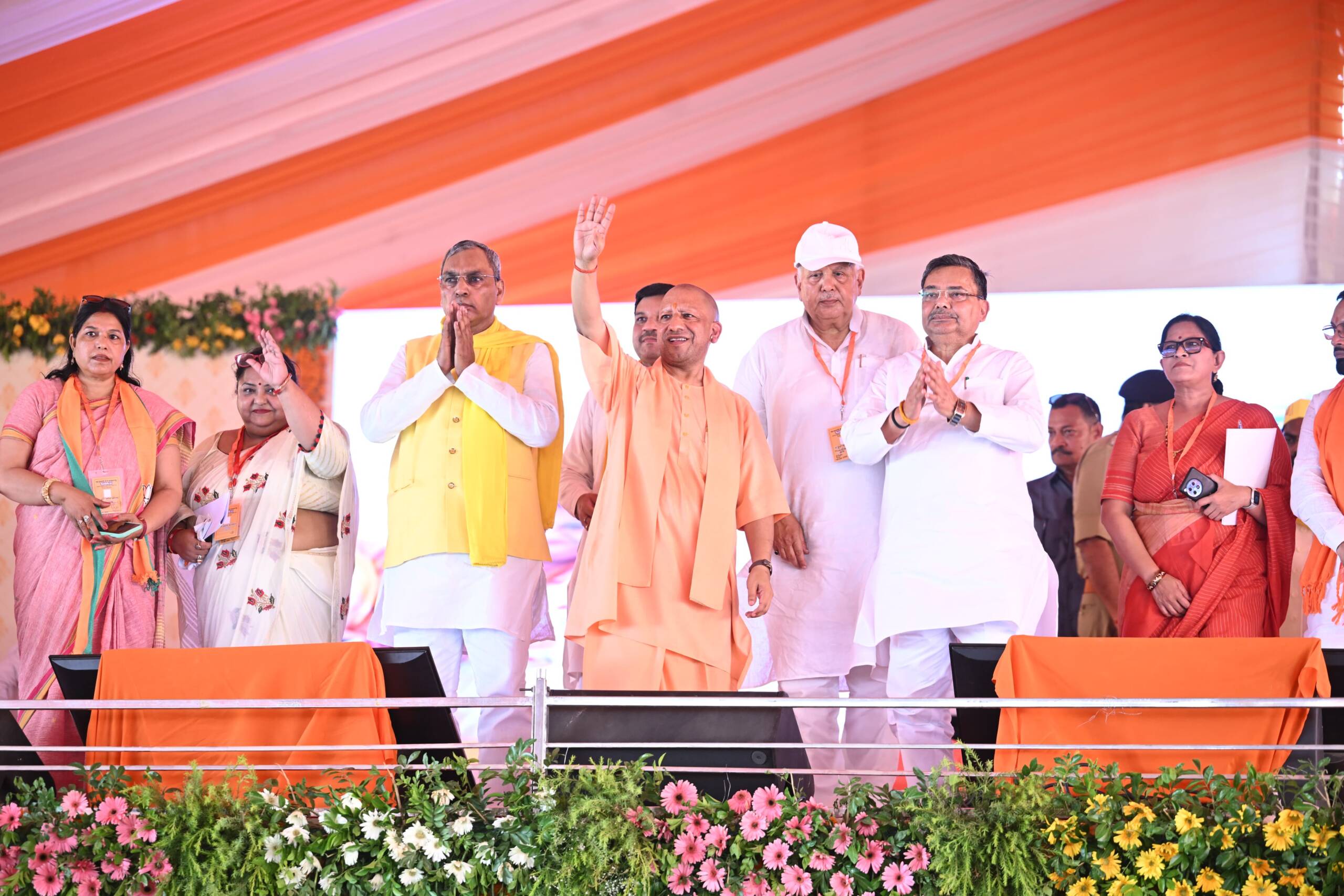
Lucknow : Under the leadership of Chief Minister Yogi Adityanath, Uttar Pradesh’s double-engine government has taken several commendable steps for the upliftment of Dalits and the underprivileged. These efforts are not only inspiring, but are laying the foundation for a new era of social transformation. As part of this commitment, the Yogi government is setting up leather parks in two districts named after Sant Ravidas, which will generate employment for communities associated with the leather industry. Under the Sant Kabir Das CM Mitra Park Yojana, 10 textile parks are also planned. Additionally, canteens and rest houses will be built in all krishi mandis in the name of Mata Shabari.
In line with the vision of Dr. Bhimrao Ambedkar, the Yogi government has undertaken several initiatives focused on education, economic empowerment, and social dignity to integrate the Dalit community into the mainstream.
In March this year, CM Yogi inaugurated a satsang bhawan constructed at a cost of ₹1.15 crore by the state government at the Ravidas Temple in Ayodhya. Sant Ravidas’ campaign to free India from invaders, uphold Sanatan values and ideals, and build a self-reliant and awakened society remains an inspiration today. Similarly, the construction of the Bharat Ratna Dr. B.R. Ambedkar Memorial and Cultural Centre in Lucknow is becoming a source of pride for the Dalit community. CM Yogi also announced that the “Zero Poverty Programme” would be named after Babasaheb—a historic step in this direction.
The Yogi government has made education the most powerful weapon for Dalit empowerment. The Sant Ravidas Shiksha Sahayata Yojana provides financial assistance to children of laborers through scholarships to ensure uninterrupted education. Atal Residential Schools have been established at all 18 divisional headquarters to provide free residential education for underprivileged children.
In Jayaprakash Narayan Sarvodaya Vidyalayas, meritorious poor students are receiving quality education, with 60% of seats reserved for Scheduled Caste/Tribe students. Through the Mukhyamantri Abhyuday Yojana, free coaching for competitive exams likhe IAS, PCS, JEE, and NEET is available in every district. Free residential coaching centers operate in Gorakhpur, Lucknow, Agra, Aligarh, Varanasi, and Hapur, while a dedicated center for judicial services exam preparation is functional in Prayagraj.
Under the Dr. B.R. Ambedkar Hostel Scheme, 264 hostels are operational for students from SC, ST, and OBC backgrounds—188 for boys and 76 for girls—providing free accommodation, electricity, furniture, newspapers, and competitive exam material. In addition, the Babasaheb Ambedkar Social Welfare Hostel Reconstruction and New Construction Sch lleme has been launched during the Amrit Mahotsav Year of the Constitution.
CM Yogi Adityanath has placed a strong emphasis on making Dalit youth economically self-reliant. Over the past eight years, this vision has taken shape across the state through various programs. Under the Ambedkar Social Innovation Incubation Mission, venture capital funding has been arranged for SC students in higher education institutions to support innovation and entrepreneurship.
Through the Stand-Up India Scheme, SC/ST youth are being provided loans ranging from ₹10 lakh to ₹1 crore. ₹35 crore has been allocated for ‘O’ Level computer training, benefiting 34,000 candidates. The Vishwakarma Shram Samman Yojana has extended benefits to 3,68,076 artisans. The Adarsh Gram Yojana is being implemented in SC-dominated villages to ensure adequate infrastructure and services, while livelihood support is being provided through the Grant-in-Aid scheme.
Over the past eight years, CM Yogi has also worked to preserve and promote the cultural identity of the Dalit community. A tribal museum for the Tharu tribe has been established in Balrampur, and another museum in the name of Birsa Munda in Mirzapur-Sonbhadra.
Leather parks in two districts named after Sant Ravidas will create jobs for leather artisans. The Sant Kabir Das CM Mitra Park Yojana also aims to establish 10 textile parks. In all krishi mandis, canteens and rest houses will be built in the name of Mata Shabari.
CM Yogi’s initiatives are bringing visible change to the lives of Dalits. Under the Mukhyamantri Samuhik Vivah Yojana, 4.76 lakh couples have been married so far, with the financial assistance increased from ₹51,000 to ₹1 lakh. Under the CM Awas Yojana (Gramin), vulnerable communities like Vantangiyas, Musahars, Kols, Sahariyas, Tharus, Nats, Cheros, and destitute women are being supported. Uttar Pradesh is the first state in the country to issue residential leases to landless beneficiaries.
Under the Scheduled Caste and Scheduled Tribe (Prevention of Atrocities) Act, compensation of ₹2.85 lakh to ₹8.25 lakh is provided to victims. The scope of recognized atrocities has also been expanded—from 22 to 47 categories after the recent amendment. In 2024–25 alone, ₹167.46 crore has been disbursed to 13,436 beneficiaries.
These initiatives are not only empowering the Dalit community, but also positioning Uttar Pradesh as a model of inclusive development.
Trump Vows Continued Military Pressure on Iran, Expresses Doubts Over Diplomacy
Washington, Aug 2026: US President Donald Trump has vowed to maintain military pressure on…

Trump Vows Continued Military Pressure on Iran, Expresses Doubts Over Diplomacy
Washington, Aug 2026: US President Donald Trump has vowed to maintain military pressure on …