CEC Shri Gyanesh Kumar Highlights India’s Electoral Integrity at Stockholm Conference

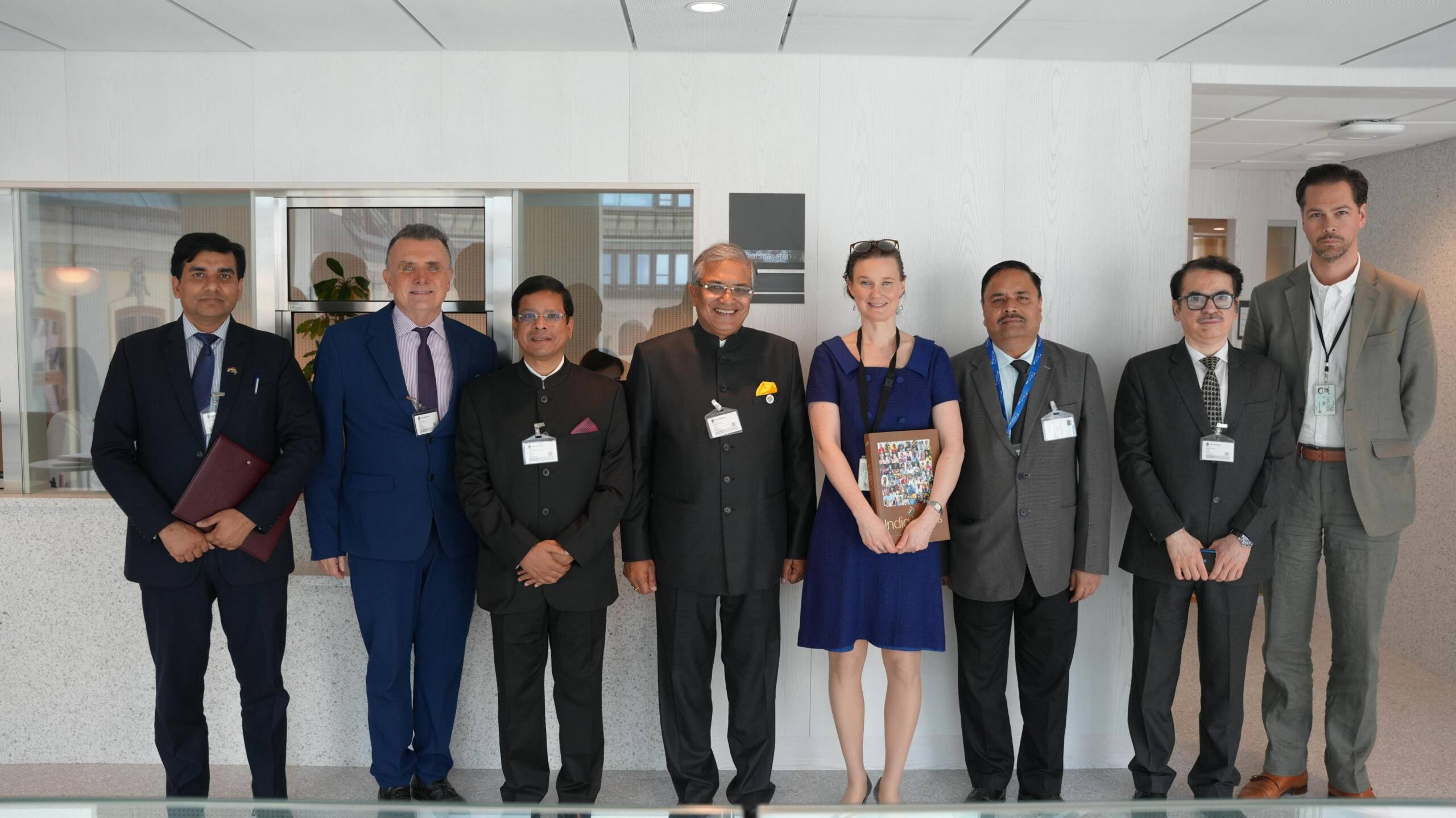
Yesterday evening, during the International Conference on Electoral Integrity held in Sweden, Chief Election Commissioner (CEC) of India, Shri Gyanesh Kumar, addressed participants on India’s robust and inclusive electoral process. The conference, organized by the International Institute for Democracy and Electoral Assistance (International IDEA), brought together over 100 senior representatives from Election Management Bodies (EMBs) of more than 50 countries.
In his speech, Shri Gyanesh Kumar detailed the Election Commission of India’s (ECI) extensive efforts to ensure transparent, free, and fair elections across a country as diverse and populous as India. Emphasizing that electoral integrity is a cornerstone of Indian democracy, he described how elections in India are conducted with rigorous mechanisms to uphold transparency and trust. He noted the ECI’s collaboration with political parties, candidates, the police, observers, media, and the public, making India’s electoral process a model of large-scale democratic participation.
Shri Kumar highlighted that during elections, the ECI deploys approximately 20 million personnel, including polling staff, police, observers, and party agents, making it one of the largest democratic exercises globally. He said this extensive coordination ensures that every eligible citizen, no matter how remote, is able to cast their vote freely and fairly.
He also presented a historical overview of India’s electoral growth—from 173 million registered voters in the first general election in 1951–52 to 979 million in the 2024 elections. The number of polling stations has increased from 200,000 to over 1.05 million. These figures reflect not only the scale of India’s democratic journey but also the ECI’s evolving capability to manage it effectively. The 2024 elections saw participation from 743 political parties, including 6 national and 67 state parties, and over 20,000 candidates. Approximately 6.2 million Electronic Voting Machines (EVMs) were used, demonstrating India’s commitment to credible and inclusive electoral practices.
He spoke about the annual updating of electoral rolls since 1960 and emphasized that the ECI has consistently worked to ensure voter awareness, particularly among new voters, the elderly, women, and marginalized communities. Voters in remote areas—such as Tashigang in Himachal Pradesh, India’s highest polling station—are also empowered to vote without difficulty, showcasing India’s determination to include every citizen in the democratic process.
Shri Kumar reiterated India’s guiding principle: “One person, one vote,” regardless of age, gender, socio-economic status, or geography. He explained that India’s elections are not about organizing grand events but about ensuring every voter, especially those in challenging locations, can participate meaningfully and securely.
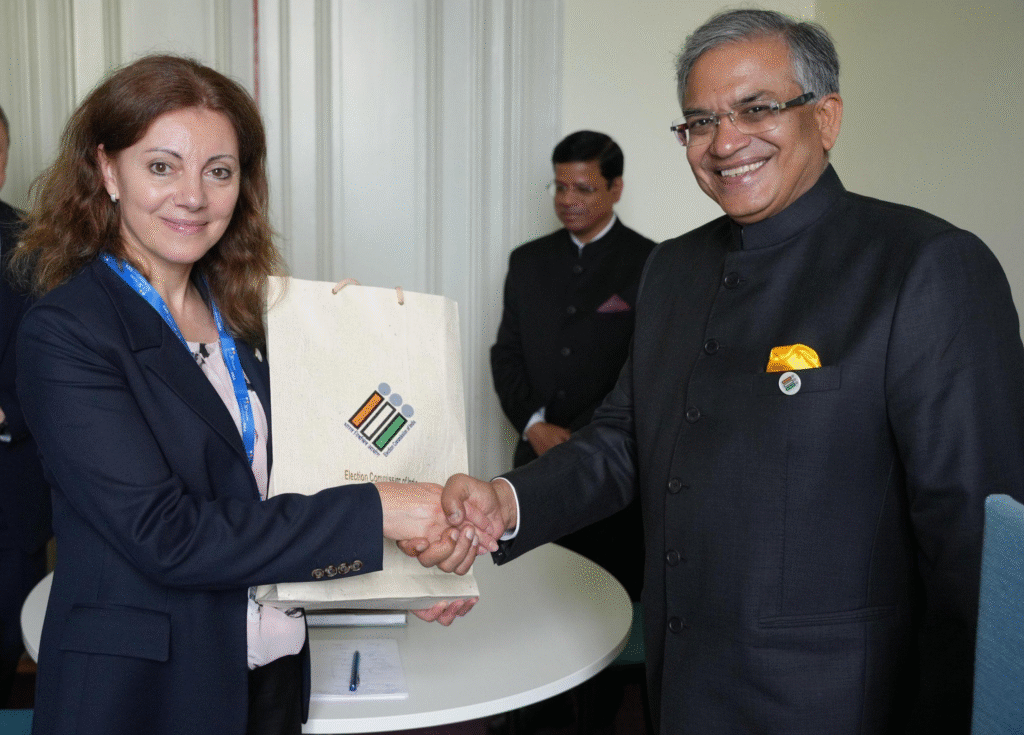
During the conference, Shri Gyanesh Kumar also held discussions with key representatives from countries including Indonesia, Mongolia, South Africa, Switzerland, Moldova, Lithuania, Mauritius, Germany, Croatia, Ukraine, and the United Kingdom. The discussions focused on voter participation, the role of electoral technologies, enabling remote voting, and strengthening the institutional capacity of Election Management Bodies.






Dewald Brevis Stars with 44 as CSK Post 180/7 Against SRH in IPL 2026 Clash
Chennai, May 2026 : Chennai Super Kings produced a strong batting effort led by Dewald Bre…

Dewald Brevis Stars with 44 as CSK Post 180/7 Against SRH in IPL 2026 Clash
Chennai, May 2026 : Chennai Super Kings produced a strong batting effort led by …