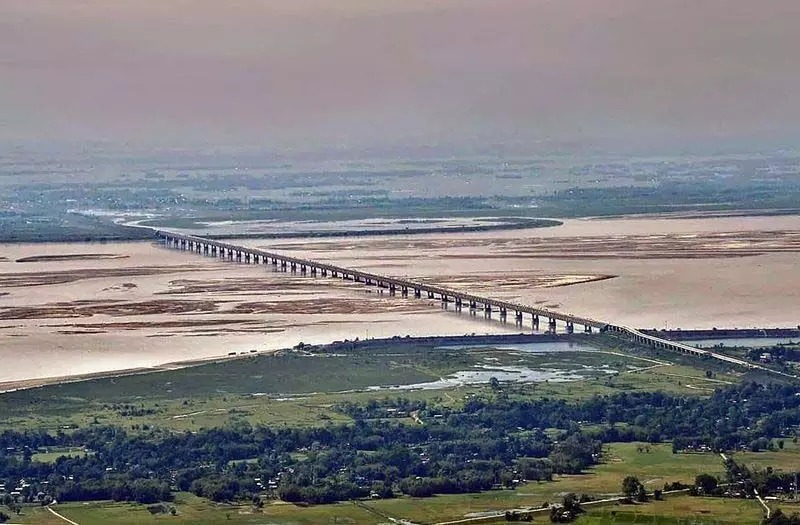
China Begins Construction of $167.8 Billion Dam Near Arunachal Border

Massive hydroelectric project on Brahmaputra River raises concerns in India and Bangladesh over water security
Beijing — China has officially commenced the construction of a massive hydroelectric dam project on the Yarlung Zangbo River (known as the Brahmaputra in India), near the Arunachal Pradesh border, sparking concerns in India and Bangladesh. The groundbreaking ceremony was held on Saturday in the Tibetan city of Nyingchi and attended by Chinese Prime Minister Li Qiang, according to state media.
The ambitious project, located at the Menling Hydroelectric Station site, is expected to be the world’s largest hydro-infrastructure initiative, with a total investment of 1.2 trillion yuan (approximately $167.8 billion). The dam is part of a broader plan to build five hydroelectric stations along the lower reaches of the Yarlung Zangbo in Tibet, a region China officially refers to as Shizang.
According to the official news agency Xinhua, the dam could generate over 300 billion kilowatt-hours of electricity annually, which is sufficient to power more than 300 million people. While China asserts that the electricity will primarily support external power supply needs and local consumption in Tibet, the move has drawn sharp attention from downstream nations.
India and Bangladesh, located downstream along the Brahmaputra, fear potential disruptions to water flow, especially during dry seasons. The river, which flows through Arunachal Pradesh as the Siang before becoming the Brahmaputra in Assam, is vital to agriculture, ecology, and livelihoods in both countries.
Officials from China’s National Development and Reform Commission, the Power Construction Corporation of China, and local representatives were present at the event, highlighting the project’s national significance.
The construction of the dam comes amid broader geopolitical tensions between India and China, particularly along their shared Himalayan border. Environmentalists and water experts have also raised alarms over the project’s potential ecological impact, sediment disruption, and flood risk downstream.
As construction begins, regional stakeholders are likely to call for transparency and dialogue to safeguard shared river resources.
(The content of this article is sourced from a news agency and has not been edited by the Mavericknews30 team.)








Israel Rejects Gaza Disarmament Plan, Says IDF Will Stay Until Hamas Fully Disarmed
Jerusalem, July 2026 : Israel has reiterated its strong opposition to the US-backed plan f…

Israel Rejects Gaza Disarmament Plan, Says IDF Will Stay Until Hamas Fully Disarmed
Jerusalem, July 2026 : Israel has reiterated its strong opposition to the US-backed plan …