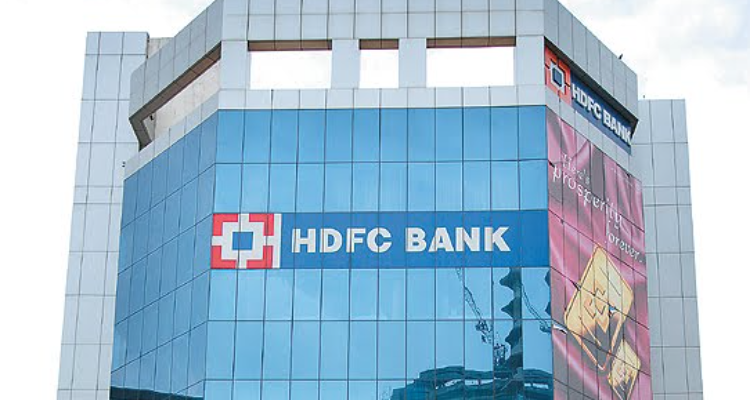
HDFC Bank and ICICI Bank have posted a Surge in first-quarter results.

HDFC Bank, India’s largest private sector lender, posted first quarter profits that beat estimates despite increased provisions on its balance sheet. Net income rose 12% to Rs 18,155 crore in the three months ending June from a year earlier. That beat the average estimate of 176.18 billion rupees, as per Bank sources. The bank’s shares have gained 10% so far this year as the banking sector outperformed the broader market, with investors encouraged by lenders’ limited exposure to global trade and tariff tensions.
HDFC Bank’s interest income increased 6.1% year-on-year. The lender’s loan book has grown tepidly over the last few years as it focused on raising deposits to strengthen its balance sheet after its merger with parent HDFC Ltd. in 2023. Gross non-performing assets stood at 1.4% compared with an estimate of 1.33%. It has also made necessary floating provision of 90 billion rupees during the first quarter, saying they are “not specific to any portfolio, nor meant for any specific anticipated risks, but act as a countercyclical buffer for making the balance sheet more resilient”.
Similarly, ICICI Bank’s first-quarter profits also beat estimates, driven by growth in its business and corporate lending divisions. ICICI Bank has reported a standalone net profit of Rs 12,768.21 crore, marking a 15.5% year-over-year increase. The bank’s net interest income also saw a 10.6% rise, reaching Rs 21,635 crore. While net interest margin slightly decreased to 4.34%, core operating profit grew by 13.6% to Rs 17,505 crore.
While the overall bank credit growth has slowed in India, lenders are optimistic about a recovery following the RBI’s move to cut rates by 100 basis points since February.
In an order to strengthen the investment trajectories, Securities Exchange Board of India (SEBI) is proposing changes to current mutual fund scheme rules, allowing asset managers to offer both value and contra funds, provided the overlap in their investment portfolios does not exceed 50%.
Meanwhile, RBI is close to finalise rules for banks and financial institutions to disclose and manage risks from climate change, sources of the RBI said. The move is an counter to several top global banks including JP Morgan, Citibank, Morgan Stanley and HSBC, which have decided to scale back their climate commitments with the re-election of climate-sceptic U.S. President Donald Trump being seen as a trigger.
Getting a better idea of how, and to what extent, money is flowing to green investments is a central part of global efforts to move to a low-carbon economy, with countries from the UK to Japan making such disclosures mandatory. The Indian central bank’s norms, which have are in effects since 2022, are expected to ask banks and financial institutions to make regular disclosures about climate-related risks in their loan portfolios along with mitigation strategies and targets, the sources said. The disclosures are likely to be on a voluntary basis from fiscal year 2027 and then mandatory from fiscal year 2028. India’s financial year runs from April till March.
The RBI’s decision to move ahead with climate disclosures for its banks comes soon after India released a draft framework aimed at facilitating a greater flow of resources to climate-friendly sectors.
India is also gearing up to publish a new national emissions-reduction target ahead of the next round of global climate talks in Brazil in November. India, the world’s third largest polluter behind China and the United States, currently aims to achieve a net zero emissions target by 2070.
Team Maverick







Trump Ties US-Saudi Civil Nuclear Deal to Israel Normalisation Under Abraham Accords
Washington, July 2026 : US President Donald Trump has made Saudi Arabia’s participation in…

Trump Ties US-Saudi Civil Nuclear Deal to Israel Normalisation Under Abraham Accords
Washington, July 2026 : US President Donald Trump has made Saudi Arabia’s participation in …