Annual Floods in Assam threatens Local Arts of Majuli Islands.

The Majuli, an island district between the Subansiri and the mighty Brahmaputra rivers in India’s northeastern state of Assam, is the home to nearly 200,000 people, which includes people from other ethnic groups. To the states utter dismay, Majuli has shrunk from 1,300 square kilometres (502 square miles) to 483 square kilometres (186.5 square miles) in a century due to erosion caused by annual monsoon rains and floods.
During the monsoon season, which stretches from May to September, the floodwaters rise more than 1.5 metres (5 feet) high, forcing the local inhabitants to either seek shelter at the highway bordering the village or stay trapped inside their homes. Last week, the Assam State Disaster Management Authority (ASDMA) said there were more than 72,000 people taking shelter in 355 relief camps across the state due to the floods, which have also killed at least 24 people this year.
The state-run Brahmaputra Board, which supervises the government’s response to the floods and soil erosion, began building river embankments in 2018, preventing the local artisans from digging the riverbank for clay. “While the Brahmaputra Board deeply respects this traditional craft of making pottery, extracting clay directly from the exposed riverbanks causes severe soil erosion, hindering the board’s efforts to protect Majuli island”, a spokesperson for the board told the Reporters.
A local artisan, Makon Kumar’s wrinkled fingers are covered in dried-up clay. She squats on the damp dirt outside her one-room, bamboo-stilted home and spins a pottery wheel – a palm-sized grey bowl – with her left toe, which contains lump of newly-bought wet clay, which Kumar slaps, flattens and curves into the pot’s base. Makon belongs to the Kumar community of about 540 people, whose women have been known for their unique pottery work since the 16th century. These women avoid machinery or a potter’s wheel but rely on their toes to spin a plate or bowl with clay.
During the monsoon, the local government denies access to the riverside clays, causing Kumars’ pottery business reaching a point of halt, interrupting their main source of income. Moreover, the lack of flood prevention efforts by the authorities has worsened their condition. Kumar men traditionally dug 18 to 21 metres (60 to 70 feet) deep on the riverbank to extract a glutinous, dark grey clay that locals call Kumar “Mati” (soil).
The Brahmaputra Board has provided an alternative to the Kumar potters by making clay available through designated pits or boreholes that could be accessed after filling an application form. The board, however, did not say how many Kumars applied. It was Makon who said that the embankment on the Brahmaputra forced her to buy clay from mainland Assam, increasing her expenses for a business already lacking commercial value or organised marketing.
November is their best month when floodwaters recede and foreign and Indian tourists take a 90-minute ferry from Jorhat, a city in mainland Assam, to Majuli’s Salmora village, where the Kumar women sculpt pots with their hands and feet. The tour brings extra cash for Makon’s two daughters studying in a secondary school.
On other days, the Kumars sculpt and sell pots of various sizes to local vendors. Tekelis, the most popular and smallest pot used for storing milk, is sold for just 10 rupees ($0.12) to vendors, who resell them for 20 to 100 rupees ($0.23-$1.15) at shops across Majuli and mainland Assam.
Salmora has long, narrow dirt roads, with rows of bamboo and concrete houses built on stilts. When the island is not flooded, hundreds of dried tekelis lie stacked on top of each other on a road bordering the village. The men bake those pots and sell them in the market.
Team Maverick


Drone Strike Shuts US Embassy in Saudi Arabia as Iran–Israel Conflict Intensifies
New York, March 2026 : The escalating conflict in the Middle East took a sharper turn on T…
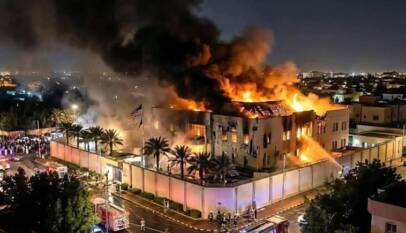
Drone Strike Shuts US Embassy in Saudi Arabia as Iran–Israel Conflict Intensifies
New York, March 2026 : The escalating conflict in the Middle East took a …