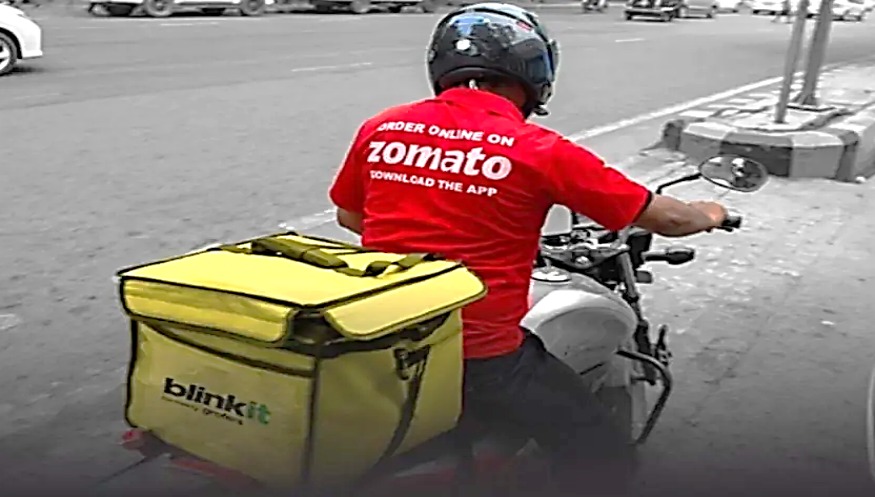
Blinkit to deliver Prescription Medicine within certain areas of Bengaluru.

Quick commerce platform Blinkit is running pilots for prescription medicine delivery, including antibiotics, eyedrops, and anti-histamines, expanding its earlier assortment of over-the-counter drugs, while Blinkit’s pharmacy service is currently available in select areas of Bengaluru, offering prescription medicines for heart diseases, lung diseases, neurocare, and antibiotics, among others
The offering, which includes medicines for respiratory, heart, eye and ear conditions as well as neurocare, is currently available in select pin codes of Bengaluru. Eternal’s Blinkit is the second entrant in the league of horizontal quick commerce platforms enabling quick medicine deliveries. Swiggy was the first one to enter the space, after partnering with Pharmeasy in a shop-in-shop concept by setting up its stores inside Swiggy’s dark stores and app interface. Partnering with a registered medical distributor allowed Swiggy to fast-track permits and licenses associated with the sale of drugs.
Alike other players, Blinkit is also offering free doctor consultations after placing an order on the app if consumers are unable to upload a prescription for select medicines.
These developments come at a time when the parent company Eternal relies strongly on Blinkit as a growth wheel. The segment overtook the company’s core food delivery business in gross order value (GOV) for the first time in the first quarter, suggesting a broader consumer shift and strategic pivot within the company.
In the quarter ended June 2025, Blinkit reported a GOV of Rs 11,821 crore, up 140% year-over-year, compared to Rs 10,769 crore from Zomato’s food delivery business. A year earlier, food delivery still accounted for the larger share of the company’s transaction volume.
The rise in Blinkit’s order volumes comes alongside aggressive store expansion and supply chain investments. Blinkit added 243 new stores in the quarter, bringing its total to 1,544 stores, and increased its overall supply chain area to 10.4 million square feet. Monthly transacting users reached 16.9 million, more than doubling over the previous year.
As the quick commerce business expands, Eternal says the operational demands are significantly more complex than food delivery or traditional retail. “We are solving two large problems in parallel, building a retail business with a just-in-time supply chain, and an internet-and-logistics business similar to food delivery”, the company stated in an exchange filing. “Each of these is complex on its own. Addressing both simultaneously makes quick commerce more demanding operationally”.
The company also shared its perspective on customer behaviour, suggesting that speed and service consistency are more important than price. The customers tend to be value-conscious rather than price-conscious. Blinkit aims to deliver value through speed, assortment, customer support, and price, in an order. According to the company, revenue per order, net of subsidies, exceeds Rs 100 even in the first month following customer acquisition and improves over time.
As a result, Eternal claims that new customer cohorts become contribution-margin break-even within the first month. “We may be performing better than some of our peers, but we don’t view that as the benchmark. Our standard is based on customer expectations, and we continue to work toward meeting those”.
From the financial standpoint, Blinkit’s expansion has required sizable capital expenditure. Eternal reported investing approximately Rs 1,000 crore over the past five quarters to open around 1,000 net new stores and build 2.5 million square feet of warehouse space. “Each store requires roughly Rs 1 crore of capital expenditure, including warehousing”, said CFO Akshant Goyal. “At current productivity, Rs. 7.00 lakhs in net order value per (NOV) store per day, this results in an annual NOV of Rs. 26 crores per store. That implies a capex intensity of about 4% of NOV”.
Goyal has also outlined the working capital profile of the business. As a marketplace that currently does not fully own its inventory, Blinkit operates with a net working capital requirement of about 1% of NOV. In a scenario where it owns 100% of the inventory, that figure could rise to about 5%. “If we achieve 5-6% adjusted EBITDA margins (as a percentage of NOV), our return on capital employed (ROCE) could exceed 40%”, Goyal said.
Separately, Eternal’s board has approved the incorporation of Blinkit Foods, a wholly-owned subsidiary with an initial capital of Rs. 10 lakhs. The new entity is expected to engage in food services, including the sourcing, preparation, innovation, sale, and delivery of food to customers. Blinkit Foods could house a brand like Bistro. While Blinkit’s GOV growth marks a turning point in Eternal’s business mix, the company has emphasised that it is still investing in foundational infrastructure and capabilities to support long-term scalability and efficiency.
Team Maverick





Israel, Lebanon Agree on Ceasefire Framework Amid Continued Cross-Border Hostilities
Washington/Beirut, June 2026 : Israel and Lebanon on Wednesday agreed to move forward with…

Israel, Lebanon Agree on Ceasefire Framework Amid Continued Cross-Border Hostilities
Washington/Beirut, June 2026 : Israel and Lebanon on Wednesday agreed to move forward with …