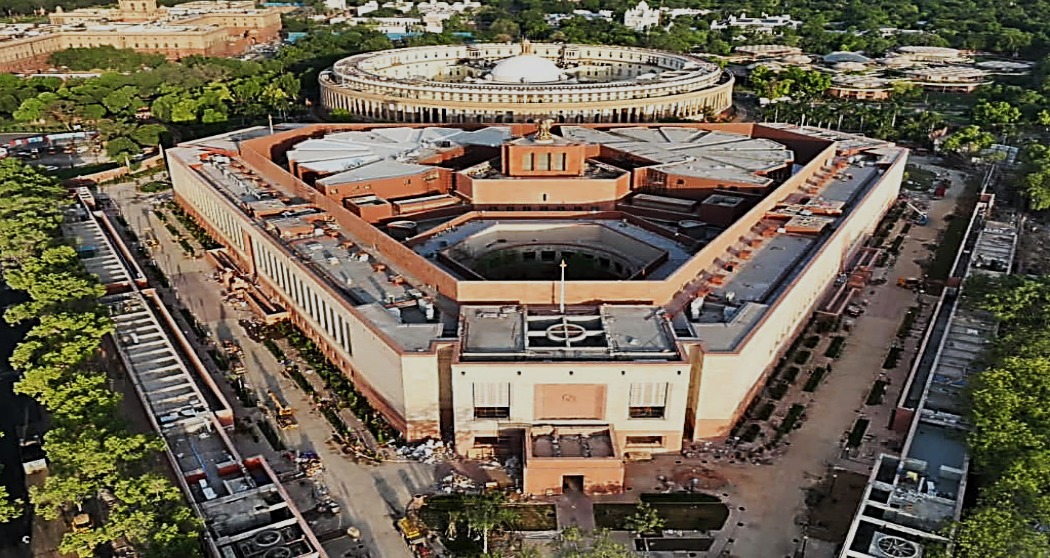
Government Introduces Bills to Mandate Resignation of Prime Minister, Ministers, and Chief Ministers Detained Beyond 30 Days

New Delhi, Aug 2025 : The Union government is set to table three significant bills in Parliament on Wednesday, aimed at creating a legal framework for the automatic removal of the Prime Minister, Union ministers, state chief ministers, and ministers of states or Union Territories if they are arrested and remain in custody for 30 consecutive days on serious criminal charges.
Under the proposed legislation, any such office bearer will be compelled to resign or will automatically cease to hold office on the 31st day of continuous detention, provided the charges involve offences carrying a minimum punishment of five years’ imprisonment or more.
The Three Proposed Bills
The legislative package includes:
- The Government of Union Territories (Amendment) Bill, 2025
- The Constitution (One Hundred and Thirtieth Amendment) Bill, 2025
- The Jammu and Kashmir Reorganisation (Amendment) Bill, 2025
Union Home Minister Amit Shah will also move a motion in the Lok Sabha to refer these three bills to a joint committee of Parliament for further examination before being passed into law.
Key Provisions
According to the draft text, a Union or state minister who is arrested and detained for 30 consecutive days for an offence punishable with a minimum of five years in prison will be removed from office automatically by the President, acting on the advice of the Prime Minister.
The bill further stipulates that if the Prime Minister does not tender such advice to the President by the 31st day, the minister in question shall automatically cease to hold office.
When it comes to the Prime Minister, the language of the bill is explicit:
- If the Prime Minister is arrested and detained for 30 consecutive days on serious criminal charges, he or she must tender their resignation by the 31st day.
- If the resignation is not submitted, the Prime Minister will automatically cease to hold office from the following day.
A similar framework applies to chief ministers and ministers of states and Union Territories.
Background and Context
The proposal comes against the backdrop of recent controversies surrounding political leaders who continued to hold office despite facing prolonged detention. Former Delhi Chief Minister Arvind Kejriwal and Tamil Nadu minister V. Senthil Balaji are prominent examples, both of whom remained in office following their arrests on separate charges, sparking debates on constitutional propriety and governance ethics.
The government argues that the absence of clear legal provisions in existing laws and the Constitution has created a grey area, allowing arrested leaders to retain power while in custody.
Bill-wise Objectives
- Government of Union Territories (Amendment) Bill, 2025:
This bill amends Section 45 of the Government of Union Territories Act, 1963, which currently has no mechanism for the removal of a chief minister or minister detained on serious criminal charges. The amendment seeks to fill this legal gap. - Constitution (One Hundred and Thirtieth Amendment) Bill, 2025:
This bill proposes amendments to Articles 75, 164, and 239AA of the Constitution. Its aim is to establish a clear framework for the removal of the Prime Minister, Union ministers, and chief ministers or ministers of states and the National Capital Territory of Delhi when they face prolonged detention. - Jammu and Kashmir Reorganisation (Amendment) Bill, 2025:
This bill proposes an amendment to Section 54 of the Jammu and Kashmir Reorganisation Act, 2019. At present, no provision exists for the removal of a chief minister or minister detained for serious criminal offences. The amendment would introduce such a safeguard.
Implications
The proposed laws are being projected as a step toward enhancing accountability in governance. By setting a clear timeline of 30 days, the government seeks to ensure that individuals facing serious legal scrutiny do not continue to influence policy or governance while in custody.
Critics, however, may argue that the bills could open the door to potential misuse, as politically motivated arrests might be used to destabilize governments. Concerns about due process and the principle of “innocent until proven guilty” are likely to surface during parliamentary debates.
Moving Forward
Once introduced, the three bills will be referred to a joint parliamentary committee for scrutiny, where members of different political parties will have the opportunity to suggest amendments and deliberate on potential safeguards.
If passed, this legislative framework would mark a historic shift in India’s political accountability structure, making it the first time that automatic removal provisions are tied directly to the duration of detention of top political leaders.


Prime Minister Addresses the Indian Diaspora in New Zealand
Prime Minister Shri Narendra Modi addressed a huge gathering of the Indian diaspora New Ze…
Prime Minister Addresses the Indian Diaspora in New Zealand
Prime Minister Shri Narendra Modi addressed a huge gathering of the Indian diaspora New …