Nepal Reimposes Curfew in Kathmandu Valley as Gen Z Protests Intensify; Two Ministers Resign

Kathmandu, Sept 2025 : The Kathmandu Valley was placed under curfew on Tuesday as sporadic protests continued following Monday’s violent crackdown on Gen Z demonstrators that left at least 19 people dead. The government’s handling of the unrest has triggered fresh political turmoil, with two cabinet ministers resigning in less than 24 hours and widespread criticism mounting at home and abroad.
Resignations in Protest Against Violence
Home Minister Ramesh Lekhak tendered his resignation late Monday after the violence, and on Tuesday, Minister for Agriculture and Livestock Development Ram Nath Adhikari followed suit.
In his resignation statement, Adhikari said he could not remain in office while the state unleashed such brutality on its citizens. He warned that the government’s violent response raised questions about whether Nepal was drifting toward a totalitarian system.
Curfew Across the Valley
Amid the deepening crisis, local administrations in Kathmandu Valley reimposed curfew orders, targeting areas seen as flashpoints for further unrest.
The District Administration Office (DAO) of Kathmandu announced that movement, gatherings, demonstrations, or sit-ins would be banned within the boundaries of Kathmandu Metropolitan City from 8:30 a.m. Tuesday until further notice. The order was specifically designed to control access to the city’s core areas from the Ring Road and other key entry points.
Exceptions were granted for essential services. Security forces were instructed to allow ambulances, fire trucks, hearses, vehicles carrying healthcare workers, journalists, human rights activists, tourists, and diplomatic staff. Air passengers would also be permitted to move with valid tickets.
Similar prohibitory orders were issued in Lalitpur and Bhaktapur districts. The DAO in Lalitpur said the measures were based on the recommendation of the District Security Committee to prevent potential riots or unrest. The orders barred all rallies, sit-ins, group movements, and gatherings in designated areas. The DAO in Bhaktapur likewise imposed curfews and prohibited protests.
Protests Spread Beyond Kathmandu
Despite the curfews, demonstrations continued to flare across Kathmandu and other parts of Nepal on Tuesday morning. Protesters accused the government of committing state violence against unarmed youth and branded Prime Minister KP Sharma Oli’s administration as a “murderer government.”
Social media, which had been banned last week under new regulations but restored after Monday’s bloodshed, became a platform for citizens to vent anger and mobilize support for the protests. Images and testimonies circulated widely, amplifying the outrage.
Government’s Response and Blame Game
Prime Minister Oli, in a late-night address on Monday, expressed sorrow over the deaths but blamed “infiltration of unwanted groups” for the escalation. He argued that the violence was not solely the government’s responsibility but a result of outside elements exploiting the demonstrations.
However, the explanation has done little to quell public anger. Critics accuse the government of using excessive force, including rubber bullets, tear gas, and batons, against largely peaceful protesters, many of whom were students.
International Concern
The violent crackdown has also drawn sharp international scrutiny. Embassies of Australia, Finland, France, Japan, the Republic of Korea, the United Kingdom, Norway, Germany, and the United States issued a rare joint statement on Tuesday.
The statement urged all sides to “exercise maximum restraint, avoid further escalation, and ensure that fundamental rights are respected.” Western diplomats emphasized that freedom of assembly and expression are essential democratic rights that must be protected even in times of political tension.
Deepening Political Crisis
The resignations of Lekhak and Adhikari signal cracks within Prime Minister Oli’s cabinet and have further emboldened protesters demanding accountability. Political observers warn that the crisis could destabilize the government at a time when Nepal is already grappling with economic challenges and growing public discontent.
With anger intensifying both on the streets and online, Oli’s government faces a mounting test of legitimacy. The reimposed curfews, though intended to restore order, risk further inflaming public sentiment if perceived as an attempt to silence dissent.
As protests spread and international pressure mounts, Nepal’s leadership confronts a stark choice: open dialogue with the aggrieved youth or double down on repression. The path it takes may well determine the country’s political trajectory in the months to come.
Team Maverick

Djokovic Outlasts Auger-Aliassime in Record Wimbledon Thriller, Storms into 15th Semi-final
Score: Novak Djokovic bt Felix Auger-Aliassime 7-6(10), 3-6, 6-3, 6-7(4), 7-6(10-4) London…
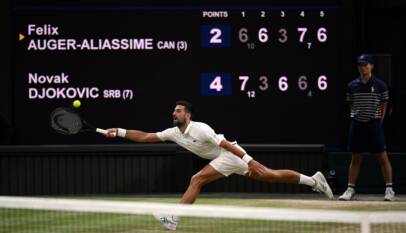
Djokovic Outlasts Auger-Aliassime in Record Wimbledon Thriller, Storms into 15th Semi-final
Score: Novak Djokovic bt Felix Auger-Aliassime 7-6(10), 3-6, 6-3, 6-7(4), 7-6(10-4) London, July 2026 …