UK-US Friendship develops a Crevasse on the Russian Invasion of Ukraine.

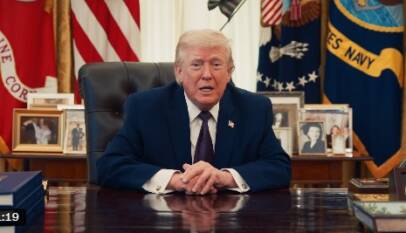
Sept 2025 : For all their declarations of mutual admiration and close alignment, President Donald Trump and British Prime Minister Keir Starmer were unable to maintain a united front on the war between Russia and Ukraine. Although both the leaders insisted that they want a ceasefire but were at odds over the best way to pressure Russian President Vladimir Putin, who has in recent weeks amped up attacks on Ukraine and sent drones into NATO airspace.
Trump, during a joint press conference outside London on Thursday, told reporters that he remains disappointed in Putin but evaded multiple questions about what he planned to do next. “He has really let me down”, Trump said of Putin, before pivoting to the “seven wars” he’s worked to end.
Starmer, who said Trump has “led the way” in trying to end the war in Ukraine, was far firmer about the need for increasing economic pressure on Moscow, and was abruptly blunt in pointing out that Putin has ramped up his attacks on Ukraine after his summit with Trump last month.
“In recent days, Putin has shown his true face mounting the biggest attack since the invasion began, with yet more bloodshed, yet more innocents killed, and unprecedented violations of NATO airspace”, Starmer said. “These are not the actions of someone who wants peace”.
In an implicit rebuttal to Trump’s claim that the United States and Britain were geographically distant from the fighting and that the war “doesn’t affect” either country, Starmer noted that Russia in recent days has targeted the British Council in Kyiv as well as the European Union’s embassy there, as well as the drone incursions into NATO air space.
Putin’s latest targets, Starmer said, show a new “recklessness”, as he called for a stronger response. “We have to put extra pressure on Putin. It’s only when the President has put pressure on Putin that he’s actually shown any inclination to move”.
Trump, asked again toward the end of the press conference about whether he’s ready to impose additional sanctions on Russia, said that Europe needed to take action first to end oil purchases from Russia.
“If the price of oil comes down, Putin’s going to drop out. He’s going to have no choice. I’m willing to do other things, but not when the people that I’m fighting for are buying oil from Russia”, the US President affirmed.
In a major development, The European Union is planning to present member states with its latest package of proposed sanctions on Russia as early as Friday, following a phone call between Ursula von der Leyen and US President Donald Trump. After Tuesday’s call, the European Commission president said the package, the bloc’s 19th since Moscow’s full-scale invasion of Ukraine, would target crypto, banks, and energy.
The US has pressured its allies in the Group of Seven to impose tariffs as high as 100% on China and India for their purchases of Russian oil to push President Vladimir Putin to the negotiating table with Kyiv. That request will likely face resistance in the bloc’s capitals. Trump has repeated his preference for tariffs over sanctions on the call, said the people, who spoke on condition of anonymity to discuss private deliberations.
G-7 officials are currently working on a package of proposals that they’re aiming to finalize in the next two weeks. Other measures would seek to target major Russian oil companies and the networks and services that enable Moscow to move crude, including through entities in third countries garnering profit from the trade. The EU is also considering restrictions on several firms in India and China for handling Russian oil, as previously reported.
Trump has repeatedly said the EU should stop buying Russian oil. Nearly all member states have halted pipeline and seaborne imports, but Hungary and Slovakia have been reluctant to do so, while several others continue to buy liquefied natural gas from Russia. Most EU nations have also committed to gradually phasing out all imports of Russian fossil fuels by the end of 2027, a deadline that von der Leyen has said she wants to shorten further.
The US and EU have also been making progress on using some $300 billion in frozen Russian central bank assets to support Ukraine and proposals on how to do that are expected soon. Meanwhile, Germany backed a push to make further use of the assets. The G-7 has previously said that the funds will remain immobilised until there is a peace deal and Russia pays for the damage it has inflicted on Ukraine.
Team Maverick
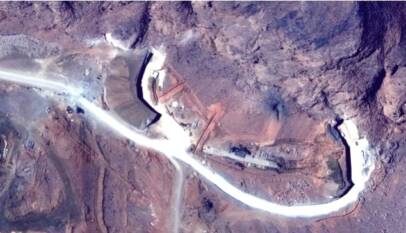


Lebanon At ‘Breaking Point’ As Displacement Soars And Strikes Intensify.
Beirut; April 2026: The UN’s top humanitarian official warned the Security Council (USA – …
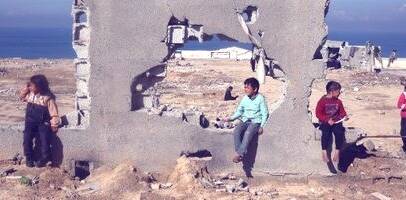
Lebanon At ‘Breaking Point’ As Displacement Soars And Strikes Intensify.
Beirut; April 2026: The UN’s top humanitarian official warned the Security Council (USA – …