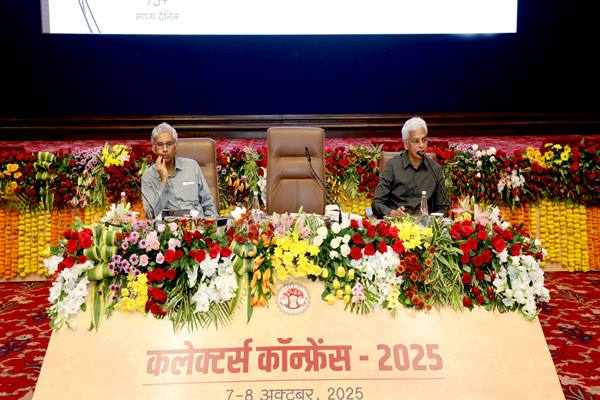
Jabalpur Revenue Archives Innovation Recognized as Useful and Exemplary

On the second day of the Collectors-Commissioners Conference, the innovative transformation of the Revenue Record Room in Jabalpur was recognized as both useful and exemplary. The innovation has significantly improved public access to revenue records, completely transforming their experience.
Shri Deepak Saxena, Commissioner of Public Relations and former Collector of Jabalpur, showcased the initiative through a short film presentation. He explained that the newly renovated Jabalpur Revenue Archive now resembles a modern bank locker room in its environment and organization. This initiative has freed both the public and archive staff from the previously unhygienic and cluttered conditions, and greatly reduced the effort required to locate specific records. This archive holds revenue records of generational significance for families, which are now not only securely stored, but also easily traceable with full transparency. A newly developed digital portal allows users to locate records by just a few entries, identifying the exact rack, shelf, box, and file number. Applicants can access this information from home, or through a kiosk installed outside the record room.
Chief Minister Dr. Mohan Yadav, during his visit to Jabalpur, appreciated the district administration for this citizen-centric innovation, commending the effort to simplify access to vital public documents.
Commissioner Shri Saxena shared that the condition of revenue record rooms across the state is usually similar—overcrowded and disorganized, with information about file locations known only to a few clerks or assistants. This made it extremely difficult for citizens to retrieve even their own records. To address this issue, the record room in Jabalpur was renovated and modernized. Old iron racks were repaired and repainted, and traditional cloth bundles were replaced with durable plastic boxes. Every case file was individually packed in plastic sleeves, then placed inside the labeled plastic boxes.
Color-coded stickers were used for tehsil-wise classification, while each box was labeled with year-wise and category-wise details. Every rack, shelf, plastic box, and file was assigned a unique location code. These codes were affixed as stickers on boxes and files.
An online application was developed to host all location-related information, enabling users to easily access case file data. This step toward good governance has made the retrieval of revenue records simpler, faster, and more transparent for citizens and officials alike.







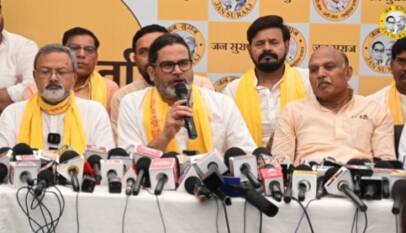
Prashant Kishor to Contest Bankipur Bypoll, Jan Suraaj Eyes Breakthrough in BJP Stronghold
Patna, July 2026 : Election strategist-turned-politician Prashant Kishor will contest the …
Prashant Kishor to Contest Bankipur Bypoll, Jan Suraaj Eyes Breakthrough in BJP Stronghold
Patna, July 2026 : Election strategist-turned-politician Prashant Kishor will contest the upcoming by-election from …