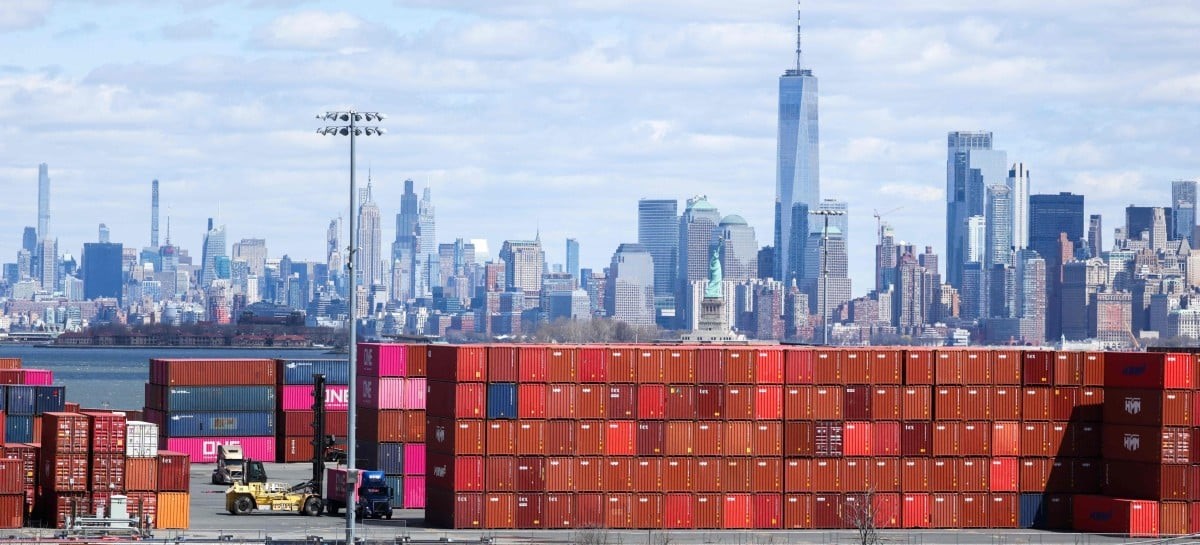
Why are investigations pertinent to ‘Section 337’ wooing the Chinese investors.

The Section 337 investigation is one of the United States’ most potent legal weapons for policing intellectual property disputes. Conducted by the US International Trade Commission (USITC), they can lead to the total exclusion of a product from the American market.
And the tool is often used to target China: more than 40% of the Section 337 investigations completed in 2024 involved a Chinese company, according to USITC data. In September, the commission initiated a probe into smart televisions made by Chinese electronics maker TCL. Just a month earlier, it began investigating telecommunications devices made by TCL and three other Chinese manufacturers.
What is a Section 337 investigation?
The USITC, an independent federal agency, has the power to initiate investigations into unfair trade practices involving imported products under Section 337 of the United States’ Tariff Act of 1930.
An investigation can be undertaken when a private party files a proper complaint with the body. In the vast majority of cases, the disputes involve infringements of intellectual property rights, such as patents, trademarks or trade secrets.
The most common subjects of Section 337 investigations are computer and telecommunications products, which accounted for 42% of new cases filed in 2024, according to USITC data. Pharmaceuticals and medical devices were the next most common.
How do Section 337 investigations differ from other US trade probes?
Section 337 is primarily focused on IP infringements committed by a specific company or importer, rather than a foreign government’s broader trade policies or unfair pricing.
And unlike Section 301 and anti-dumping investigations, which usually lead to additional tariffs, Section 337 investigations can impose the ultimate trade penalty: a complete ban on the related products. If a violation is found, the USITC may issue an exclusion order directing US Customs to bar the infringing products from entering the country. This can come in the form of a Limited Exclusion Order targeting only certain companies, or a broader General Exclusion Order that bans all infringing products regardless of the importer.
Which Chinese companies have been targeted?
Section 337 complaints often target industries where Chinese companies compete heavily with US firms, with a growing number focusing on strategic sectors like telecommunications and semiconductors. Recent General Exclusion Orders have imposed bans on certain high-density fibre optic equipment used in data centres and industrial automation systems, after American manufacturers filed complaints against several companies from China and other markets.
The USITC also issued a Limited Exclusion Order in November 2024 that barred the import of some semiconductor devices made by the Chinese firm Innoscience. A similar order from August this year bars imports of the RingConn smart ring, a competitor to the Oura Ring produced by the Chinese wearables maker Ninenovo.
However, not all complaints result in exclusion orders: mounting a successful defence against a Section 337 claim is rare but not impossible. Chinese steel firms defeated three unfair trade claims in 2018, while telecoms giants Huawei and ZTE won patent disputes in 2013.
China’s response to the threat of Section 337 investigations:
In March, China’s State Council unveiled a set of regulations on resolving foreign-related IP disputes that have been widely compared to the US’ Section 337 mechanism.
The rules include a clause stating that imported goods infringing IP rights may be investigated under China’s foreign trade law. They also state that authorities may impose countermeasures against unfair trade practices, such as “using IP disputes as a pretext to contain or suppress China”.
Meanwhile, enterprises should step up their efforts to develop IP and relevant government departments should support this push by providing training and strengthening foreign IP-related legal services, the document said.
Team Maverick



Museums will be named after India’s National Heroes, not invaders: Chief Minister
Grand museum named after Chhatrapati Shivaji Maharaj being constructed at a rapid pace: CM…
Museums will be named after India’s National Heroes, not invaders: Chief Minister
Grand museum named after Chhatrapati Shivaji Maharaj being constructed at a rapid pace: CM …